
INTRODUCTION
Safety is a fundamental consideration when designing and installing controlled airflow systems for hospitals, pharmaceutical facilities, laboratories, electronics manufacturing units, and other contamination-sensitive environments. A professional Laminar Airflow System Engineering Company should incorporate safety measures throughout system design, equipment selection, installation, testing, commissioning, and maintenance. These measures help control airborne particles, protect personnel, support equipment reliability, and maintain suitable environmental conditions for the intended application. Effective engineering requires more than installing HEPA filters and fans; it involves airflow planning, electrical protection, pressure management, fire safety, hygienic construction, monitoring systems, and documented maintenance procedures. By integrating these safeguards into the project from the beginning, organizations can establish a controlled environment that operates reliably and meets applicable technical and regulatory requirements.
Understanding Safety in Laminar Airflow Engineering
A laminar airflow system is designed to deliver filtered air in a controlled, generally unidirectional pattern across a defined working zone. Depending on the application, the system may use HEPA filtration, an air handling unit, supply plenums, fans, ductwork, control panels, and monitoring instruments.
These systems are used in applications such as cleanrooms, pharmaceutical production, laboratory workstations, medical facilities, and specialized manufacturing environments. However, the required safety measures differ according to the activities performed and the hazards present.
For example, a clean workstation intended to protect a product may not provide the same personnel protection as a properly selected biological safety cabinet. Similarly, laminar airflow alone does not eliminate every contamination risk or guarantee sterility.
A comprehensive engineering plan should therefore begin with a risk assessment that identifies the intended use, required cleanliness level, personnel hazards, environmental conditions, and applicable standards.
1. Conduct a Comprehensive Risk Assessment
Risk assessment should be the first step in any laminar airflow engineering project. It helps identify potential hazards before equipment is purchased or installation begins.
The engineering team should evaluate:
- Intended application and cleanliness requirements
- Airborne particle and contamination risks
- Chemical, biological, or process-related hazards
- Electrical and mechanical risks
- Heat generation and ventilation requirements
- Personnel movement and access
- Emergency response requirements
- Cleaning and maintenance procedures
The assessment should also identify whether the system is intended to protect the product, the operator, the surrounding environment, or a combination of these.
Where hazardous chemicals, infectious materials, or toxic substances are involved, the appropriate containment and exhaust arrangements must be determined separately. A conventional laminar airflow workstation should not be assumed to provide adequate personnel protection.
2. Ensure Proper HEPA Filtration
HEPA filtration is an important component of many laminar airflow systems because it removes airborne particles from the air passing through the filter. However, effective filtration depends on correct filter selection, installation, sealing, and maintenance.
A safety-focused engineering design should consider:
- Required filter efficiency
- Appropriate filter dimensions and capacity
- Compatible filter housing
- Reliable gasket sealing
- Acceptable pressure drop
- Suitable airflow volume
- Safe filter replacement access
- Filter integrity testing requirements
Leaks around a filter or its housing can allow unfiltered air to bypass the filtration medium. Therefore, filter performance should be verified after installation and whenever required by the maintenance or change-control program.
Filters should be replaced according to performance measurements, manufacturer recommendations, and applicable procedures rather than relying solely on a fixed calendar interval.
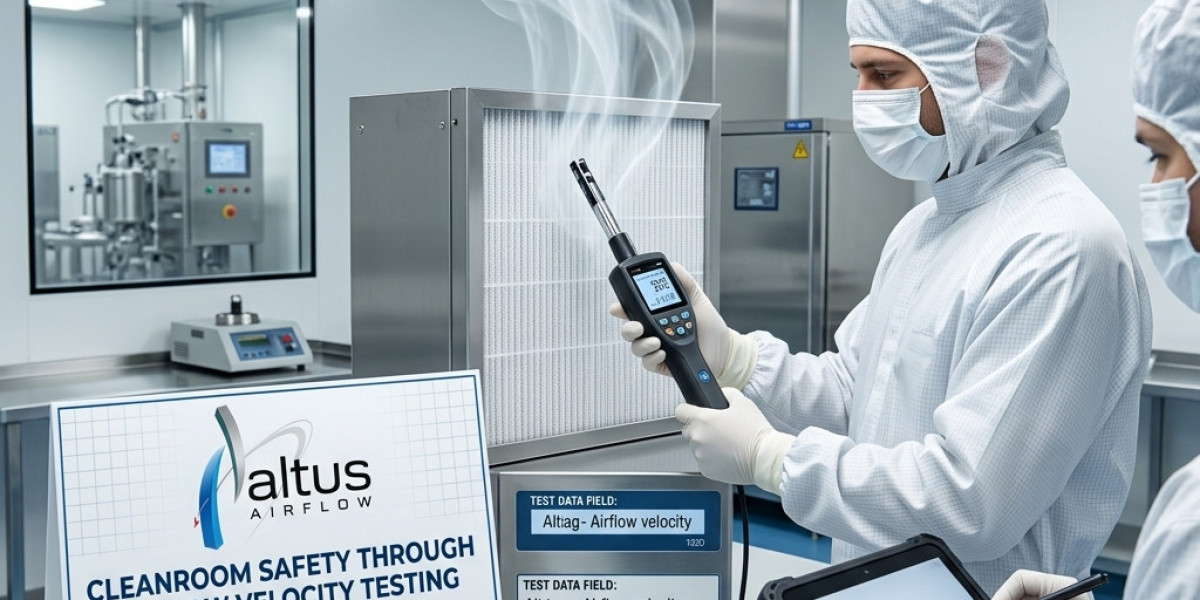
3. Maintain Correct Airflow Velocity and Distribution
Airflow must be engineered for the application rather than selected using a universal velocity value. Excessive airflow can create turbulence, while insufficient airflow may fail to provide the intended protection or cleanliness performance.
The design team should assess:
- Required airflow volume
- Air velocity within the working zone
- Uniformity of airflow distribution
- Supply and return air locations
- Potential turbulence around equipment
- Obstructions caused by personnel or materials
- Performance under normal operating conditions
Airflow visualization and velocity measurements can help identify dead zones, unexpected turbulence, or areas where the intended airflow pattern is disrupted.
Testing should be performed using appropriate calibrated instruments and documented against the project’s acceptance criteria. The final configuration should be evaluated with relevant equipment installed, since work surfaces, machines, and operator positions can influence airflow.
4. Integrate Safe HVAC and Pressure Management
An effective laminar airflow installation must be coordinated with the wider heating, ventilation, and air conditioning (HVAC) system.
The HVAC design should provide suitable temperature, humidity, ventilation, filtration, and pressure conditions for the intended application. Pressure relationships between rooms should be established according to the process and contamination-control strategy.
Safety measures include:
- Correctly sized air handling equipment
- Suitable supply and return air arrangements
- Pressure monitoring where required
- Protection against unintended airflow reversal
- Moisture and condensation control
- Accessible ducts and service components
- Documented HVAC maintenance procedures
In healthcare environments, airflow and pressure requirements should be based on the specific room function and applicable healthcare engineering guidance. Positive pressure is not suitable for every situation; hazardous processes may require containment and carefully designed exhaust systems.
The design should also address what happens if fans stop, filters become excessively loaded, or the building HVAC system experiences a failure.
5. Provide Electrical and Mechanical Protection
Fans, motors, sensors, control panels, and monitoring equipment must be installed with appropriate electrical and mechanical safeguards.
The electrical design should account for the connected load, equipment specifications, earthing, circuit protection, and the operating environment. Qualified personnel should perform electrical installation and verification.
Important safeguards include:
- Correctly rated cables and components
- Appropriate grounding and protective devices
- Secure electrical enclosures
- Safe isolation switches
- Emergency shutdown arrangements where required
- Protection against accidental contact with moving parts
- Clearly identified control panels
Fans and other rotating components should have suitable guards and safe access arrangements. Maintenance personnel should follow lockout or isolation procedures before servicing equipment where unexpected energization or movement could cause injury.
Emergency power requirements should be established through a risk assessment. Where continuous airflow is critical, backup power and restart procedures should be tested and documented.
6. Incorporate Fire and Emergency Safety
Fire safety must be coordinated with the building design and the materials used in the airflow system.
Electrical faults, overheating motors, unsuitable materials, and poorly managed maintenance activities can create hazards. The project should therefore comply with applicable building, electrical, fire, and occupational safety requirements.
Relevant precautions include:
- Selecting suitable construction materials
- Preventing electrical overloads
- Providing appropriate fire detection and protection
- Maintaining clear emergency exits
- Coordinating ductwork with fire compartmentation
- Providing safe access for emergency responders
- Establishing shutdown and recovery procedures
Duct penetrations through fire-rated walls or floors should be treated according to the applicable fire strategy. Fire dampers, smoke control provisions, and other protective devices should be included where required by the building design and local regulations.
Emergency procedures should clearly define who is authorized to shut down the system, how affected areas are managed, and what checks are necessary before operations resume.
7. Select Hygienic and Safe Construction Materials
Materials used in controlled environments should be suitable for the application, durable, and compatible with cleaning and maintenance procedures.
Poorly selected materials may release particles, deteriorate under cleaning chemicals, absorb moisture, or create gaps where dust accumulates.
Depending on the installation, appropriate materials may include:
- Smooth, cleanable work surfaces
- Sealed wall and ceiling panels
- Corrosion-resistant components
- Compatible filter housing materials
- Low-particle-generating finishes
- Suitable seals and gaskets
- Chemical-resistant flooring where necessary
Material selection should consider fire performance, chemical compatibility, moisture resistance, durability, and the possibility of particle shedding.
In healthcare and pharmaceutical facilities, the material specification should align with the intended cleanliness classification and cleaning or disinfection procedures. Materials alone cannot guarantee a sterile environment; operational controls and validated cleaning practices remain essential.
8. Install Reliable Monitoring and Alarm Systems
Monitoring systems help operators detect changes that could affect airflow performance or equipment safety.
Depending on the project, monitoring may include:
- Air velocity
- Differential pressure
- Filter pressure drop
- Room temperature
- Relative humidity
- Fan and motor status
- System operating alarms
- Particle concentration where required
Sensors should be selected according to the parameter being monitored and installed in suitable locations. Instruments that are used for acceptance testing or critical monitoring should be calibrated at defined intervals.
Alarm limits should reflect the approved design and operating requirements. A pressure-drop alarm, for example, may indicate that a filter needs inspection, but the cause should be investigated before maintenance action is decided.
Monitoring records also help engineering teams identify performance trends and plan preventive maintenance.
9. Follow Safe Installation and Commissioning Procedures
Installation work can introduce risks such as falling objects, electrical hazards, dust exposure, manual-handling injuries, and damage to building services.
A safe installation plan should include site risk assessment, approved work methods, suitable personal protective equipment, and coordination with other contractors.
Key precautions include:
- Inspecting the installation area before work begins
- Using safe lifting and access equipment
- Isolating electrical supplies when necessary
- Protecting installed filters from construction dust
- Controlling dust generated by drilling and cutting
- Maintaining clear access and emergency routes
- Verifying that components are installed correctly
Before handover, the system should undergo appropriate commissioning and performance verification. This may include airflow measurements, airflow visualization, filter integrity testing, pressure checks, alarm verification, and functional testing, depending on the project specifications.
Results should be recorded, deviations corrected, and final acceptance documented before the system is placed into routine operation.
10. Establish Preventive Maintenance and Filter Replacement Procedures
Safety does not end at commissioning. Filters, fans, sensors, ducts, seals, and control systems require ongoing inspection and maintenance.
A preventive maintenance plan should define responsibilities, inspection frequencies, performance limits, and recordkeeping requirements.
Maintenance activities may include:
- Inspecting filters and their housings
- Checking filter pressure drop
- Verifying airflow performance
- Examining fan and motor condition
- Testing alarms and sensors
- Checking seals and duct connections
- Inspecting electrical components
- Cleaning accessible surfaces and grilles
Filter replacement should be planned to minimize exposure to accumulated contaminants and avoid contamination of downstream areas. Personnel should use appropriate protective equipment and follow site-specific procedures for handling and disposing of used filters.
Where maintenance requires shutdown, the facility should assess whether the affected activity must stop or be moved until the required environmental conditions are restored.
11. Train Operators and Maintenance Personnel
Even a well-engineered system can perform poorly if personnel use it incorrectly. Training should cover routine operation, monitoring, cleaning, maintenance, and emergency response.
Staff should understand:
- The intended purpose and limitations of the system
- Correct working-zone practices
- How equipment placement affects airflow
- Alarm recognition and reporting
- Safe shutdown and restart procedures
- Filter and equipment maintenance requirements
- Documentation and escalation procedures
Training should be documented and refreshed when equipment, processes, or operating procedures change.
Operators must also understand that a laminar airflow system is not automatically a substitute for a biological safety cabinet, fume hood, or other specialized containment device. The correct equipment depends on the hazards involved.
12. Follow Applicable Standards and Document Compliance
A safety-focused engineering project should identify relevant standards, local regulations, and application-specific requirements before design approval.
ISO 14644-4:2022 provides guidance for cleanroom design, construction, and start-up. ISO 14644-3 addresses cleanroom test methods. Healthcare installations may also need to consider applicable ventilation guidance, while electrical and fire safety must comply with the relevant jurisdictional requirements.
The engineering team should maintain documentation covering:
- Design specifications and risk assessments
- Equipment and filter details
- Installation records
- Commissioning and test reports
- Calibration and maintenance records
- Training documentation
- Change-control procedures
- Corrective and preventive actions
Not every standard applies to every installation. The applicable requirements should be determined by the facility’s use, risk profile, and governing regulations.
Conclusion
A safe laminar airflow installation requires comprehensive planning across filtration, airflow distribution, HVAC integration, electrical protection, fire safety, hygienic materials, monitoring, commissioning, and preventive maintenance. Risk assessment and documented performance verification help ensure that the system is appropriate for its intended application and remains reliable throughout its service life. By coordinating engineering disciplines and following applicable standards, organizations can reduce avoidable hazards and maintain controlled operating conditions. For organizations seeking professional laminar airflow design, installation, testing, and turnkey engineering support, Altus Airflow provides specialized solutions tailored to the needs of controlled environments.
Frequently Asked Questions
1. What safety measures should be included in a Laminar Airflow System Engineering Company?
A Laminar Airflow System Engineering Company should incorporate risk assessment, HEPA filter integrity, controlled airflow, HVAC and pressure management, electrical protection, fire safety, monitoring, commissioning, and preventive maintenance.
2. Why is HEPA filter integrity testing important?
A Laminar Airflow System Engineering Company should arrange appropriate filter integrity testing to identify leaks or bypass around the filter installation and verify performance against the project’s acceptance criteria.
3. How can airflow-related safety risks be reduced?
A Laminar Airflow System Engineering Company can reduce airflow risks through correct system sizing, suitable air distribution, airflow visualization, velocity measurements, and periodic performance verification.
4. What electrical protections are needed in a laminar airflow system?
A Laminar Airflow System Engineering Company should specify suitable grounding, circuit protection, safe isolation, appropriate enclosures, and mechanical guards according to the equipment and installation requirements.
5. Are monitoring and alarm systems necessary?
A Laminar Airflow System Engineering Company should include suitable monitoring and alarms where required to identify airflow deviations, abnormal filter pressure drop, equipment faults, or other critical operating conditions.
Read Our Previous Blog------>How can IVF Lab Design Services accommodate advanced embryo monitoring systems?