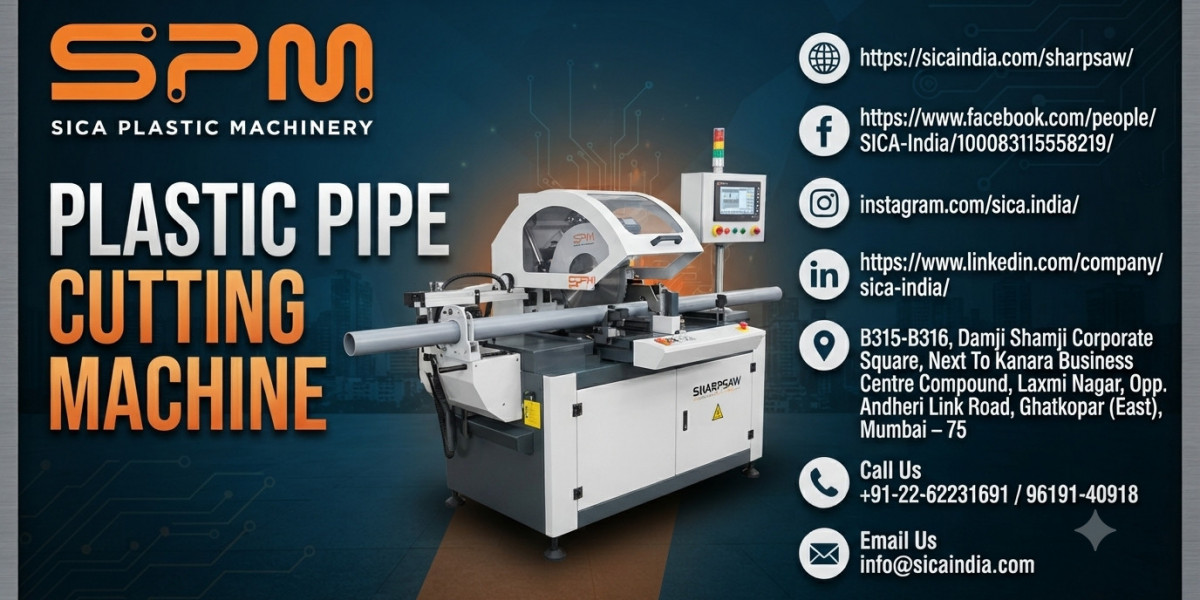

A plastic pipe cutting machine is an essential piece of equipment used across plumbing, construction, irrigation, and industrial manufacturing to slice PVC, CPVC, HDPE, PP, and PPR pipes cleanly and accurately. Manual cutting with hacksaws or basic shears often leads to uneven edges, micro-cracks, oval deformation, and wasted material, especially when working with thick walls or large diameters. By automating or stabilizing the cutting motion, a dedicated plastic pipe cutting machine ensures square, burr-free ends that fit securely into joints, couplings, and fittings.
Why A Plastic Pipe Cutting Machine Matters In Modern Workshops
Precision at the cutting stage sets the foundation for every downstream process, including solvent welding, heat fusion, threading, and chamfering. When a pipe end is crooked or crushed, installers spend extra time trimming, deburring, or re-cutting lengths on site.
- Cleaner cut faces: Reduces jagged burrs and rough edges so pipes seat smoothly into sockets and fittings.
- Higher repeatability: Delivers uniform lengths across batch production runs without operator fatigue.
- Lower scrap rates: Minimizes angled misalignments that ruin expensive large-diameter pipe sections.
- Safer operation: Keeps hands away from blades and secures pipes firmly during rotation or clamping.
- Faster workflow: Speeds up repetitive cutting tasks compared to manual hand tools.
Key Types Of Plastic Pipe Cutting Machines
Different thermoplastics behave differently under heat and mechanical stress. Rigid PVC can chip or crack if fed too aggressively, while tougher HDPE or thick-walled industrial pipes require sturdy clamping and controlled blade speed.
- Guillotine and shear cutters: Commonly used for smaller to medium PVC and conduit pipes where fast, clean square cuts are needed.
- Circular blade cutting machines: Ideal for medium and large diameter pipes, using high-tooth or carbide-tipped blades to slice smoothly through thicker walls.
- Planetary and orbital cutters: Rotate the cutting head around a stationary pipe, making them well suited for large-diameter pipes where spinning the pipe itself is impractical.
- Benchtop and portable units: Benchtop models support steady shop-floor production, while portable units help technicians cut pipes directly at job sites or assembly stations.
Essential Features To Look For Before Buying
Selecting a plastic pipe cutting machine comes down to matching the machine's mechanical capacity with the pipe materials and diameters you process every day.
- Pipe diameter and wall thickness range: Verify both minimum and maximum outside diameters as well as wall thickness limits.
- Clamping mechanism: Look for firm, non-marring jaws or rollers that hold round pipes steady without distorting their shape.
- Blade quality and feed control: Sharp, properly spaced teeth and smooth feed rates prevent melting or chipping on heat-sensitive plastics.
- Length stop and measurement guide: Built-in stoppers and scales make repeat cuts faster and more accurate.
- Dust and chip management: Effective guards and collection points keep work areas cleaner and protect moving components.
Best Practices For Safe And Accurate Operation
Even a well-built plastic pipe cutting machine requires proper setup and routine care to maintain clean cuts over time. Securing long pipes with roller supports prevents sagging that can bind the blade or skew the cut angle. Operators should inspect blades regularly for dull teeth or resin buildup, use appropriate personal protective equipment such as eye protection, and keep moving parts clear of loose clothing or debris. Routine alignment checks and lubrication of sliding guides help preserve cut squareness and extend service life.
Frequently Asked Questions About Plastic Pipe Cutting Machines
What pipes can a plastic pipe cutting machine handle?
Most models are designed for rigid and semi-rigid thermoplastics such as PVC, CPVC, HDPE, PP, and ABS across various diameters and wall thicknesses, depending on the specific machine rating.
How does a machine cut compare to manual hand cutting?
A plastic pipe cutting machine produces straighter, cleaner ends with far less effort and higher consistency than manual saws or ratcheting cutters, especially on thicker walls or high-volume jobs.
Can one machine cut both small and large pipes?
Some adjustable models cover a moderate range of sizes, while larger industrial diameters often require dedicated heavy-duty frames, wider clamping jaws, or orbital cutting mechanisms.
Why do cut edges sometimes melt or look rough?
Excessive friction, a dull blade, or pushing the cut too fast can generate heat that smears or melts plastic rather than shearing it cleanly.
What maintenance does the machine need?
Regularly cleaning plastic shavings, checking blade sharpness plastic pipe cutting machine, inspecting clamping alignment, and lubricating guide rails keep performance consistent and safe.
Follow Us More Social Media Links:-
Follow Us On Facebook:- https://www.facebook.com/people/SICA-India/100083115558219/
Follow Us On Instagram:- https://www.instagram.com/sica.india/
Follow Us On Linkedin:- https://www.linkedin.com/company/sica-india/
Add:- B315-B316, Damji Shamji Corporate Square, Next To Kanara Business Centre Compound, Laxmi Nagar, Opp. Andheri Link Road, Ghatkopar (East), Mumbai 75
Call Us:- +91-22-62231691 / 96191-40918
Email Us:- info@sicaindia.com