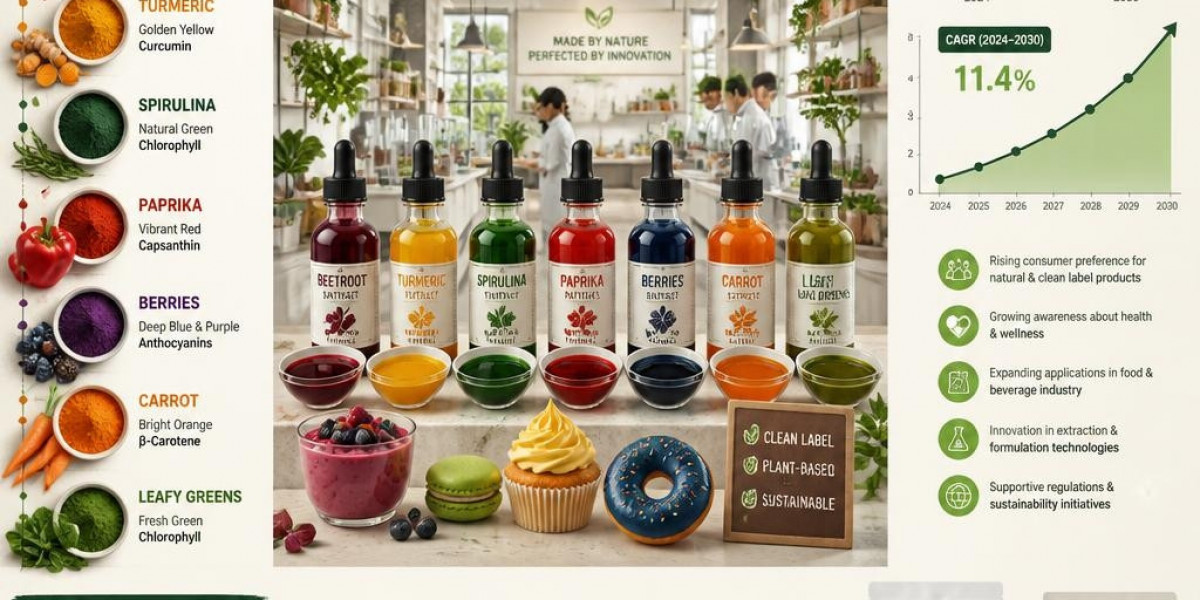

The growing preference for natural ingredients is changing how food manufacturers approach product development. Consumers are paying closer attention to the ingredients used in everyday food products, including the colors that make packaged foods visually attractive. This shift has encouraged manufacturers to explore alternatives to conventional synthetic coloring agents. Plant-based food colors are gaining attention because they can be obtained from fruits, vegetables, flowers, roots, and other botanical sources. Their appeal is closely connected to changing expectations around ingredient transparency, product quality, and natural food experiences.
The expanding interest in natural food coloring ingredients is encouraging food producers to consider botanical alternatives when developing colorful products. Plant-derived colors can support different visual requirements, ranging from gentle natural shades to vibrant tones. Their application is not limited to a particular food category, making them relevant to beverages, bakery products, confectionery, dairy alternatives, snacks, sauces, and other packaged foods. As manufacturers continue exploring ingredient options, plant-based coloring solutions are becoming an important part of conversations about food innovation.
One of the major factors supporting this market is the growing interest in clean-label products. Consumers increasingly prefer food items with recognizable ingredients and straightforward product descriptions. This preference has encouraged manufacturers to review their formulations and consider ingredients that align with natural positioning. Food color is an important part of this process because appearance strongly influences how consumers perceive a product. A naturally colored product can communicate an ingredient-focused approach when its formulation and labeling accurately reflect its composition.
Botanical ingredients offer manufacturers a broad selection of coloring possibilities. Different plants provide different shades, making ingredient selection an important part of product development. Beetroot can contribute red and pink tones, turmeric is associated with yellow coloring, and leafy plants can provide green shades. Fruit and vegetable extracts can also be explored for different visual effects. Manufacturers must evaluate each ingredient according to the desired shade, food application, processing conditions, and overall product formulation.
Product stability remains an important consideration. Food products may experience changes during heating, cooling, storage, and exposure to light. These conditions can influence the appearance of plant-based colors. Manufacturers therefore need to select suitable ingredients and test them within the intended product formulation. Careful development can help maintain a consistent appearance while supporting the desired taste, texture, and quality of the finished food.
Another important development is the increasing collaboration between food manufacturers and ingredient suppliers. Suppliers can support product developers by offering different botanical extracts, application guidance, and formulation knowledge. This cooperation helps manufacturers identify suitable coloring ingredients for specific food categories. It also encourages the development of new combinations that can create distinctive shades and improve product presentation.
Sustainability is another consideration influencing interest in botanical coloring solutions. Many manufacturers are exploring ingredients that fit their broader environmental and responsible sourcing objectives. Plant-based colors can become part of this strategy when their raw materials are obtained through appropriate agricultural and processing practices. Responsible sourcing, ingredient traceability, and efficient production methods can strengthen the value of these solutions.
The future of plant-based food coloring will depend on manufacturers' ability to combine attractive appearance, formulation performance, and consumer expectations. As food companies continue improving product transparency and exploring natural ingredients, botanical colors are likely to remain relevant to food innovation. Their role extends beyond appearance because they also contribute to how brands communicate ingredient choices and product identity.
FAQs
Q1. What are plant-based food colors?
Plant-based food colors are coloring ingredients obtained from botanical materials such as fruits, vegetables, flowers, roots, and leaves. They are used to provide different shades in food and beverage products.
Q2. Why are food manufacturers interested in plant-based colors?
Manufacturers are interested in plant-based colors because they can support natural product positioning, clean-label development, and changing consumer preferences for recognizable ingredients.