
Introduction
An Intensive Care Unit (ICU) is a specialised hospital department where critically ill patients receive continuous monitoring and advanced medical support. Its infrastructure must accommodate essential medical equipment, bedside utilities, ventilation systems and organised clinical workflows. Every element should be planned carefully to support healthcare professionals in delivering timely and effective patient care.
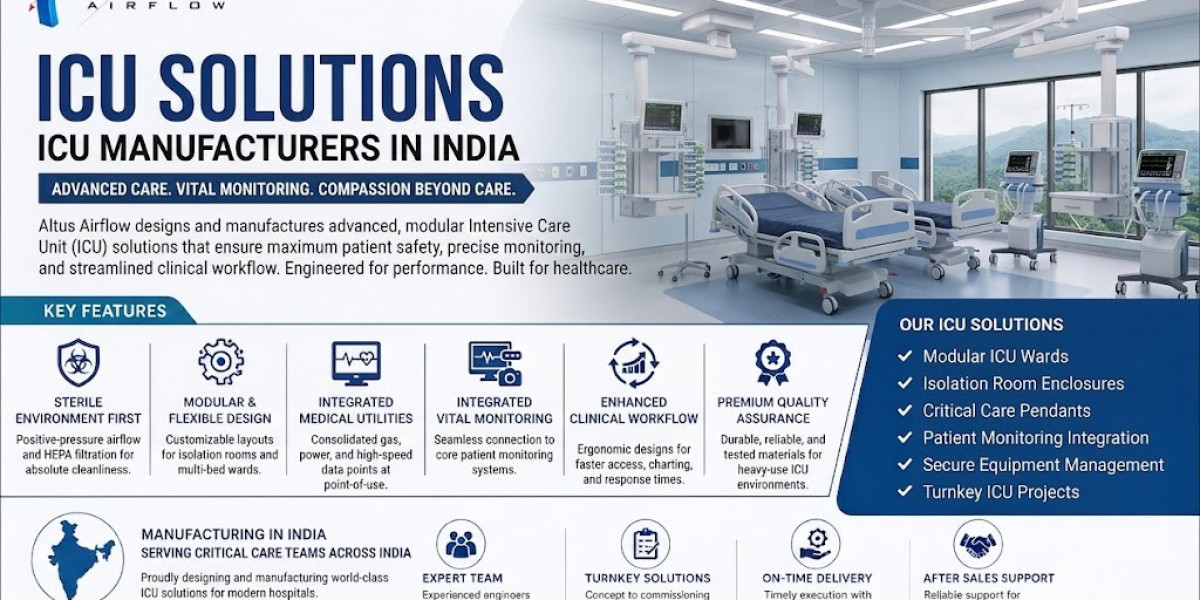
Finding dependable ICU Manufacturers In India requires hospitals to look beyond product specifications and initial project quotations. They should evaluate a manufacturer's healthcare infrastructure experience, technical capabilities, material quality, installation processes and ability to coordinate different systems. A reliable infrastructure partner can help translate a hospital's clinical and operational requirements into a practical ICU environment.
Understanding the Role of ICU Manufacturers
ICU development involves more than arranging patient beds and installing monitoring equipment. Hospitals must plan the physical environment, medical gas connections, electrical outlets, ventilation, lighting, storage and support areas according to the intended level of care.
Manufacturers contribute by helping develop and install the infrastructure required for these functions. Depending on the agreed scope, their services may include site assessment, modular wall and ceiling systems, bedside service panels, utility coordination, equipment interfaces and project commissioning.
The design should be developed in consultation with intensivists, nursing teams, biomedical engineers, architects and hospital facility managers. Their combined input helps ensure that the infrastructure reflects actual patient-care requirements.
Where Hospitals Can Find Reliable ICU Manufacturers in India
Hospitals can identify potential manufacturers through several practical channels:
1. Healthcare Infrastructure Companies
Specialised healthcare infrastructure companies are an important starting point. These providers may work on modular ICUs, intensive care interiors, medical utility systems and other specialised hospital environments.
Hospitals should review their service portfolios to determine whether they have experience with ICU-specific requirements rather than only general commercial interiors.
2. Previous Hospital Projects and References
Reviewing completed healthcare projects can help hospitals understand a manufacturer's practical capabilities. Ask for details about previous ICU installations, the scope of work and the systems supplied.
Where possible, request references from hospitals that have used the manufacturer's services. Feedback about installation coordination, material quality, documentation and post-project support can help with the evaluation.
3. Healthcare Architecture and Engineering Consultants
Hospital architects, healthcare planners and engineering consultants may help identify companies with relevant technical experience. These professionals can also help prepare project specifications and assess whether a manufacturer's proposal addresses the hospital's infrastructure requirements.
4. Industry Exhibitions and Healthcare Events
Healthcare technology exhibitions and medical infrastructure events can provide opportunities to meet manufacturers, review product demonstrations and understand available solutions. Hospitals should use these interactions to gather technical information rather than making decisions based only on promotional presentations.
5. Technical Proposals and Site Assessments
Shortlisted companies should be asked to conduct or review a site assessment and submit a detailed proposal. Comparing proposals against the same requirements makes it easier to identify differences in scope, materials, installation responsibilities and commissioning support.
Essential Features to Evaluate in an ICU Infrastructure Project
1. Patient Bedside Space and Accessibility
Each ICU bed should have enough surrounding space for healthcare professionals to examine patients, operate equipment and perform emergency procedures. The layout should also allow diagnostic devices and nursing services to move without obstruction.
The Indian Society of Critical Care Medicine's consensus statement on ICU planning and design discusses bed spacing, bedside equipment, utility outlets and access for clinical teams. Hospitals should use relevant recommendations alongside their own clinical requirements when reviewing a proposed layout.
2. Medical Gas and Electrical Provisions
ICU beds require reliable access to essential services. Depending on the unit's level and intended functions, these may include oxygen, medical air, vacuum, multiparameter monitoring connections and electrical outlets.
Hospitals should verify the number and positioning of service outlets against the approved equipment schedule. Emergency power backup, UPS provisions and appropriate electrical safety measures should also be included in the engineering review.
3. Ventilation and Environmental Control
Ventilation planning should reflect the ICU's intended use, patient requirements and applicable infection prevention guidance. Hospitals should ask manufacturers to explain the proposed air-handling arrangements, filtration, temperature control and maintenance access.
India's 2026 National Guidelines on Prevention and Control of Airborne Infections discuss controlled ventilation, patient separation and environmental controls for ICU settings. The final system should be designed and validated by qualified professionals rather than relying on generic specifications.
4. Infection Prevention and Isolation Arrangements
The infrastructure should support cleaning, disinfection and appropriate separation of patients when clinically required. Hospitals may need individual patient cubicles or dedicated isolation rooms depending on their services and infection prevention plans.
The layout should also consider hand hygiene facilities, clean and dirty utility areas, waste movement and access for housekeeping teams. These arrangements should be reviewed with the hospital's infection control department.
5. Lighting, Noise and Patient Comfort
ICU lighting should support clinical examinations, procedures and routine monitoring while allowing suitable adjustment for different activities. Noise management is another important consideration because alarms, equipment and conversations can affect the environment.
The Society of Critical Care Medicine's adult ICU design guideline recommends natural lighting and suggests noise-reduction strategies as part of patient-centred ICU design. Hospitals can consider these principles alongside their building conditions and clinical needs.
How to Assess the Technical Capabilities of ICU Manufacturers
Review the Design and Planning Process
A reliable manufacturer should be able to explain how it approaches site assessment, layout development and technical coordination. Hospitals should ask whether the proposed design accounts for patient movement, staff access, equipment placement, support spaces and future requirements.
A detailed plan should identify the location of beds, service panels, electrical points, medical gas outlets and other essential infrastructure before installation begins.
Examine Material Specifications
Hospitals should request technical information about modular panels, ceiling systems, flooring, doors and other proposed components. Important considerations include durability, cleanability, maintenance access and suitability for healthcare environments.
Where relevant, ask for test reports, product documentation and installation details. Material selection should be based on the actual clinical application and project specifications.
Check Equipment Compatibility
The manufacturer should coordinate the infrastructure with the hospital's selected equipment. This includes reviewing device dimensions, power requirements, medical gas connections, mounting arrangements and access for servicing.
The hospital's biomedical engineering team should participate in this review to identify compatibility issues before the project reaches installation.
Clarify Installation and Commissioning Responsibilities
Hospitals should establish whether the manufacturer is responsible for design, fabrication, supply, installation, system integration, testing and commissioning. If some activities are assigned to other contractors, those responsibilities should be documented clearly.
The project handover should include relevant drawings, equipment details, test records, operating instructions and warranty information.
ICU Patient Area and Utility Coordination
An effective ICU design depends on how well patient spaces and essential services work together. ICU Patient Area and Utility Coordination involves planning bedside clearances, medical gas outlets, electrical connections, monitoring equipment and staff access as part of one integrated layout.
Hospitals should review these arrangements with intensivists, nurses, biomedical engineers and facility managers. Their feedback can help identify practical issues before construction or installation, making the proposed infrastructure more suitable for everyday clinical operations.
Common Mistakes Hospitals Should Avoid
When evaluating ICU manufacturers, hospitals should avoid making decisions based only on the initial quotation or product presentation. Common mistakes include:
Ignoring clinical input: Infrastructure decisions should reflect the needs of doctors, nurses and other care teams.
Overlooking equipment clearances: Insufficient space can obstruct patient access and emergency procedures.
Accepting unclear technical specifications: Materials, utility provisions and system responsibilities should be documented.
Neglecting ventilation requirements: Environmental systems should be designed for the unit's actual purpose.
Leaving contractor responsibilities undefined: Hospitals should identify who handles each installation and testing activity.
Skipping commissioning checks: Relevant systems should be inspected and tested before acceptance.
Ignoring future maintenance: Access to service connections and replaceable components should be considered during planning.
Avoiding these issues can help hospitals make better-informed decisions and reduce the likelihood of avoidable changes during project execution.
Why Long-Term Support Matters
ICU infrastructure requires ongoing inspection and maintenance. Hospitals should understand what assistance the manufacturer provides after installation and which responsibilities remain with the facility's engineering team.
Before finalising an agreement, clarify:
Warranty coverage for supplied components.
Availability of replacement parts.
Technical assistance for infrastructure-related issues.
Recommended inspection and maintenance schedules.
Access to installation drawings and system documentation.
Responsibilities for servicing integrated components.
The Indian Society of Critical Care Medicine also highlights the importance of equipment maintenance and considering vendor service records when selecting ICU equipment.
Conclusion
Finding a reliable ICU infrastructure partner requires hospitals to evaluate technical expertise, healthcare project experience, material quality, medical utility coordination and installation capabilities. The manufacturer should understand how patient areas, monitoring equipment, ventilation, electrical services and infection prevention requirements contribute to the overall ICU environment.
Hospitals looking for dependable ICU Manufacturers In India should compare detailed technical proposals, review previous healthcare projects and involve clinical and engineering professionals in the selection process. They should also confirm commissioning procedures, documentation and after-sales support before signing an agreement. A carefully planned infrastructure project can provide a practical foundation for organised intensive care services and future facility requirements.
Frequently Asked Questions
1. Where can hospitals find reliable ICU manufacturers in India?
Hospitals can identify potential manufacturers through specialised healthcare infrastructure companies, professional healthcare consultants, industry exhibitions and referrals from other hospitals. Reviewing completed projects, technical proposals and client references can help assess their suitability.
2. What services do ICU manufacturers typically provide?
Depending on the project scope, services may include site assessment, ICU layout planning, modular wall and ceiling systems, bedside utility arrangements, medical gas coordination, electrical provisions, ventilation planning, installation and commissioning.
3. What should hospitals check before selecting an ICU manufacturer?
Hospitals should evaluate relevant project experience, technical capabilities, material specifications, equipment compatibility, installation responsibilities, testing procedures and post-installation support.
4. Why is bedside utility planning important in an ICU?
Bedside utility planning ensures that essential services such as oxygen, medical air, suction and electrical connections are accessible where required. Proper positioning also helps healthcare professionals access equipment and perform clinical procedures without unnecessary obstruction.
5. Do ICU manufacturers provide complete turnkey infrastructure solutions?
Some manufacturers offer turnkey services covering design, engineering, supply, installation, integration and commissioning. However, the scope varies between providers, so hospitals should confirm included services, exclusions and contractor responsibilities before finalising the agreement.
Read Our Previous Blog-----------> How Do PICU Manufacturers Support Advanced Pediatric Healthcare Facilities?