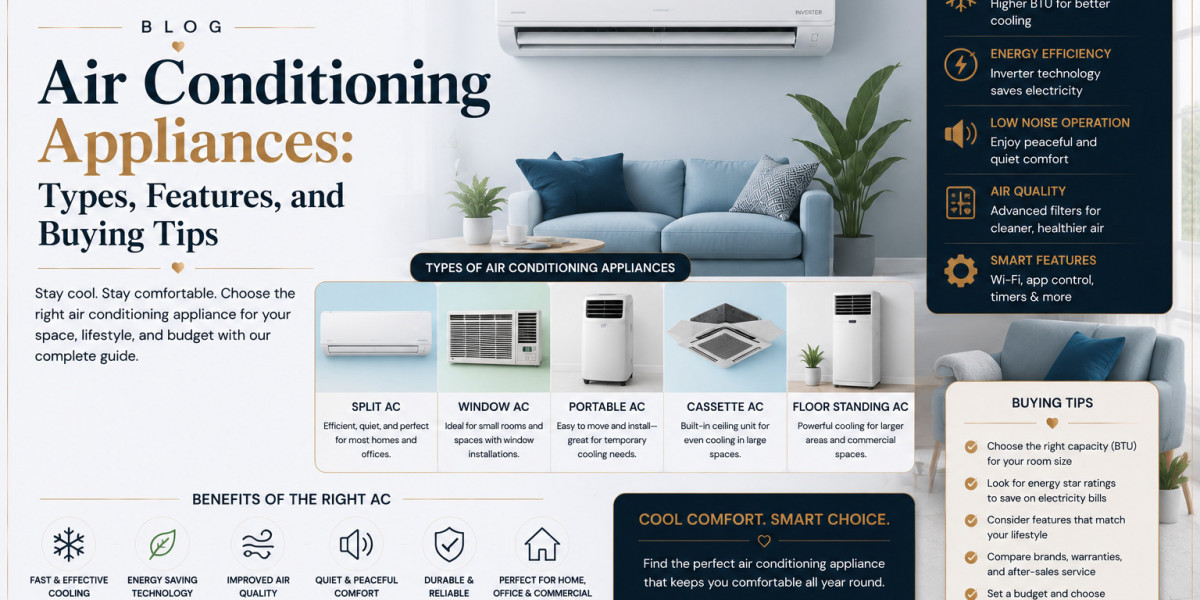

Air conditioning appliances help maintain comfortable indoor temperatures by cooling air and, in many models, reducing excess humidity. They are commonly used in bedrooms, living rooms, offices, and other indoor spaces. Understanding the available designs and features can help you choose an appliance that suits your room, installation requirements, and everyday cooling needs. Explore the Air Conditioning Appliances available for different spaces and requirements.
Understanding Different Types of Air Conditioning Appliances
Air conditioners are available in several designs. Each type has different installation requirements, cooling capabilities, and space considerations.
Split Air Conditioners
Split air conditioners have two main units: an indoor unit and an outdoor unit. The indoor section distributes cooled air, while the outdoor section contains important operating components. These appliances are commonly used in bedrooms, living rooms, and offices where permanent installation is suitable.
Window Air Conditioners
Window air conditioners combine their main components in one compact unit. They are generally installed in a suitable window opening or wall space. Their integrated design makes them an option for individual rooms where the required installation space is available.
Portable Air Conditioners
Portable air conditioners are freestanding appliances that can be moved within a suitable indoor space. Many models require an exhaust hose connected to an appropriate outdoor opening. They may suit temporary cooling needs or rooms where permanent installation is not practical.
Central Air Conditioning Systems
Central air conditioning systems distribute conditioned air through ducts connected to different rooms. They are commonly used in larger homes, offices, and commercial buildings. Their installation requires suitable ductwork and professional planning.
Cassette and Ceiling-Mounted Air Conditioners
Cassette air conditioners are installed in or near the ceiling and distribute air across a wider area. They are often used in offices, meeting rooms, shops, and other spaces where wall-mounted units may not be suitable.
Important Features to Consider
Air conditioning appliances include features designed to support comfort, convenience, and everyday operation.
Cooling Capacity
Cooling capacity indicates how much heat an air conditioner can remove from a space. The appropriate capacity depends on room dimensions, ceiling height, sunlight exposure, insulation, and the number of occupants. A qualified professional can help determine a suitable size.
Energy Efficiency
Energy efficiency is an important consideration because air conditioners can use a significant amount of electricity. Compare the applicable energy-efficiency label and performance information when evaluating different models.
Adjustable Temperature Settings
Adjustable temperature controls allow users to select a comfortable indoor setting. Some appliances also include multiple operating modes for different conditions.
Fan Speed and Airflow Direction
Multiple fan speeds and adjustable air outlets help direct cooled air around the room. These features can be useful when arranging furniture or choosing where to install the appliance.
Timer and Smart Controls
Timer functions allow users to schedule operation. Some models also offer remote controls, digital displays, or smartphone connectivity for additional convenience.
Noise Levels
Noise can be an important factor in bedrooms, study areas, and offices. Compare the manufacturer's noise-level specifications if quiet operation is a priority.
How to Choose the Right Air Conditioning Appliance
Selecting an air conditioner involves more than comparing appearance or price. Consider the following factors before making a decision.
Measure the Room
Check the room's length, width, and height. Also consider windows, sunlight exposure, insulation, and the number of people regularly using the space. These details help determine the required cooling capacity.
Consider Installation Requirements
Different air conditioners need different installation arrangements. Window models require a suitable opening, portable models often need exhaust access, and split systems require indoor and outdoor installation space.
Compare Energy Ratings
Review energy-efficiency labels and manufacturer specifications. Comparing similar models can help you understand their expected electricity use and operating costs.
Check Available Functions
Decide which features are useful for your routine. Temperature controls, timers, adjustable airflow, sleep modes, and remote operation may improve convenience.
Review Maintenance and Warranty Information
Check how filters can be accessed and cleaned, what maintenance is recommended, and which parts are covered by the warranty. Professional servicing may also be required.
Everyday Care and Maintenance
Regular care helps an air conditioning appliance operate as intended and supports consistent airflow.
Clean or replace accessible filters according to the manufacturer's instructions.
Keep the indoor unit's air inlets and outlets free from obstructions.
Keep the outdoor unit area clear of leaves, dust, and other blockages.
Check the appliance for unusual sounds, water leakage, or changes in performance.
Arrange professional servicing at the intervals recommended by the manufacturer.
Follow the user manual when cleaning the appliance and avoid using unsuitable chemicals.
Electrical components, refrigerant systems, and internal repairs should be handled by qualified technicians.
Frequently Asked Questions
What are the main types of air conditioning appliances?
Common types include split, window, portable, central, and cassette air conditioners. They differ in design, installation requirements, and the areas they are intended to cool.
How do I choose the right cooling capacity?
Consider the room's floor area, ceiling height, sunlight exposure, insulation, and occupancy. A qualified air conditioning professional can assess these factors and recommend an appropriate capacity.
Are portable air conditioners suitable for every room?
Portable models can be useful in spaces where permanent installation is difficult. However, many require an exhaust hose and suitable outdoor ventilation, so room layout should be checked before choosing one.
What features should I compare when buying an air conditioner?
Compare cooling capacity, energy efficiency, noise levels, temperature controls, airflow settings, timers, installation requirements, and warranty coverage.
How often should air conditioner filters be cleaned?
Cleaning frequency depends on the appliance, usage, and indoor conditions. Follow the manufacturer's instructions and check filters regularly, especially during periods of frequent use.
Conclusion
Choosing an air conditioning appliance starts with understanding your room size, installation options, cooling requirements, and energy-efficiency needs. Comparing different types and practical features can help you make a suitable choice for your space. Explore useful home and everyday products at Global Swanky and find options that match your requirements.