
In today's competitive business environment, efficient supply chain operations are essential for controlling costs, meeting customer demands, and maintaining consistent product quality. However, many organizations face challenges such as production delays, excess inventory, poor communication, supplier problems, and wasteful processes. These issues can reduce productivity and affect overall business performance. Lean Six Sigma offers a practical approach to solving these problems by combining waste reduction with process improvement.
Lean Six Sigma helps businesses identify inefficiencies, reduce errors, improve workflow, and make better use of available resources. It focuses on understanding how work gets done, finding the causes of problems, and making improvements based on reliable data. As a result, organizations can build more reliable and cost-effective supply chains.
For companies involved in manufacturing, energy, transportation, and other industrial sectors, these improvements can have a significant impact. Strong supply chain industrial operations depend on effective processes, accurate information, and coordination between departments and suppliers. Lean Six Sigma provides a structured way to improve each of these areas.
Moreover, effective supply chain planning becomes easier when businesses understand their operational weaknesses and use accurate performance data. Instead of reacting to problems after they occur, organizations can develop processes that prevent them.
Explores seven ways Lean Six Sigma can transform supply chain operations, improve business performance, and support long-term growth. It also explains practical applications, common challenges, and how professional guidance can help organizations achieve meaningful improvements.
1. Reduces Waste Across Supply Chain Operations
Waste is one of the biggest challenges affecting supply chain performance. It can appear in different forms, including unnecessary transportation, excess inventory, waiting time, overproduction, and repeated work. These activities consume resources without adding value for customers.
Lean Six Sigma combines Lean principles with Six Sigma methods to help businesses identify and eliminate waste while improving process quality.
Identifying Common Types of Supply Chain Waste
Lean thinking recognizes several types of waste that can affect business operations:
Overproduction: Producing more goods than customers need.
Waiting: Delays caused by equipment problems, missing materials, or slow approvals.
Transportation: Unnecessary movement of products or materials.
Excess inventory: Storing more materials than required.
Overprocessing: Performing unnecessary steps during production or order handling.
Unnecessary movement: Requiring employees to move excessively between work areas.
Defects: Producing items that require repairs, replacement, or additional inspection.
Unused employee skills: Failing to use workers' knowledge and experience effectively.
For example, a manufacturing company may keep large quantities of raw materials because its purchasing and production departments do not share accurate information. This can increase storage expenses and create unnecessary pressure on working capital.
Lean Six Sigma helps identify why this situation occurs. The company can then improve purchasing schedules, coordinate inventory requirements, and establish clearer communication between departments.
Improving Resource Utilization
Reducing waste allows businesses to use their resources more effectively. Employees can spend less time correcting mistakes, equipment can operate with fewer interruptions, and materials can move through production more efficiently.
Additionally, reducing unnecessary activities can improve delivery performance and lower operating costs.
Therefore, waste reduction should be an important part of every supply chain improvement strategy.
2. Improves Supply Chain Planning and Inventory Management
Accurate supply chain planning helps businesses maintain the right balance between product availability and operating costs. Poor planning can lead to excess stock, material shortages, delayed production, and missed customer commitments.
Lean Six Sigma improves planning by using data analysis to identify problems in forecasting, purchasing, inventory control, and production scheduling.
Creating Better Inventory Control
Inventory management requires businesses to maintain sufficient materials without purchasing more than necessary.
Lean Six Sigma helps organizations examine inventory levels, material usage, supplier lead times, and demand patterns. This information supports better purchasing decisions.
For example, an industrial company may regularly experience shortages of critical spare parts. An analysis could reveal that the purchasing department uses outdated demand information or does not account for supplier delivery delays.
By reviewing historical consumption and supplier performance, the company can establish more suitable reorder points and safety stock levels.
This approach can help prevent shortages while avoiding unnecessary inventory accumulation.
Improving Demand Forecasting
Demand forecasting is another important part of supply chain planning. Inaccurate forecasts can create serious problems throughout the supply chain.
Lean Six Sigma encourages businesses to measure forecasting errors and investigate their causes. It also supports better coordination between sales, procurement, production, and logistics teams.
For instance, if production schedules regularly differ from actual customer demand, the organization can review its forecasting methods and improve the information used to make decisions.
Moreover, improved planning helps businesses respond to changing market conditions without creating unnecessary operational pressure.
Connecting Planning With Business Goals
Effective planning should support broader business objectives, including cost control, customer satisfaction, and operational reliability.
Lean Six Sigma provides a structured way to connect daily planning activities with measurable performance targets.
As a result, businesses can make more informed decisions about purchasing, production, storage, and distribution.
3. Improves Product Quality and Reduces Operational Errors
Product quality plays a major role in supply chain success. Defective materials, incorrect orders, damaged products, and production mistakes can create delays and increase operating expenses.
Lean Six Sigma focuses on reducing process variation and preventing defects. Rather than treating each mistake as an isolated problem, it encourages organizations to identify the underlying causes.
Understanding the DMAIC Method
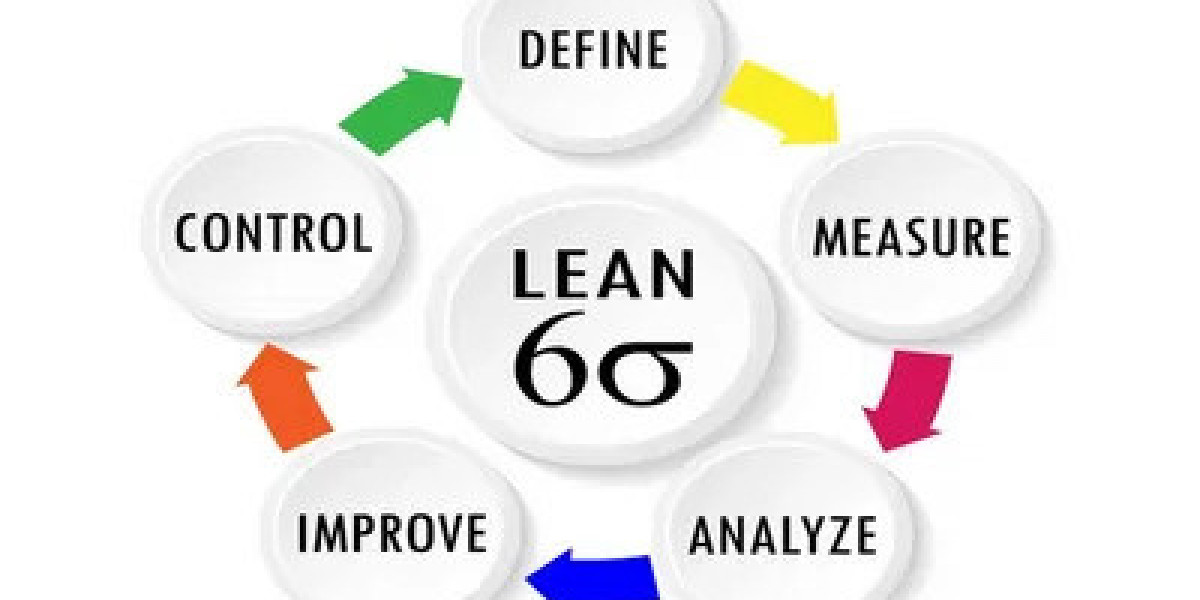
One of the most widely recognized Six Sigma improvement frameworks is DMAIC. It provides five structured stages for solving process problems.
The five stages include:
Define: Identify the problem, its impact, and the improvement goals.
Measure: Collect information about current process performance.
Analyze: Investigate the causes of errors and inefficiencies.
Improve: Develop and test solutions to address the identified causes.
Control: Monitor the improved process to maintain consistent results.
For example, a company may experience repeated errors in warehouse order preparation. Employees might select incorrect items, enter inaccurate quantities, or send products to the wrong destinations.
Using DMAIC, the company can study order records, observe warehouse activities, identify common mistakes, and introduce better procedures.
Possible improvements may include clearer product labels, standardized picking instructions, employee training, and additional verification steps.
Preventing Problems Instead of Correcting Them
Traditional problem-solving often focuses on fixing errors after they happen. However, repeated corrections consume time and resources.
Lean Six Sigma encourages preventive thinking.
For example, if a supplier repeatedly delivers materials with quality issues, the business should investigate the supplier's processes, inspection methods, and quality requirements.
Additionally, clear quality standards and regular performance reviews can reduce the likelihood of recurring problems.
This approach helps organizations improve product consistency, reduce rework, and maintain stronger customer relationships.
4. Strengthens Supplier Performance and Coordination
Suppliers play an important role in supply chain industrial operations. Their performance affects material availability, production schedules, product quality, and delivery commitments.
Even when internal operations are efficient, unreliable suppliers can create serious disruptions.
Lean Six Sigma helps organizations evaluate supplier performance using measurable information rather than assumptions.
Establishing Supplier Performance Measures
Businesses can monitor suppliers through several performance indicators, including:
On-time delivery rates.
Material quality and defect levels.
Order accuracy.
Supplier lead times.
Response times to quality problems.
Compliance with agreed specifications.
These measures help procurement teams understand which suppliers consistently meet business requirements and which require improvement.
For example, a manufacturing organization may discover that one supplier regularly delivers materials late. Instead of immediately changing suppliers, the business can examine delivery records and investigate the reasons for the delays.
The problem may involve inaccurate order information, production capacity limitations, or transportation issues.
Building Better Supplier Relationships
Lean Six Sigma encourages collaboration between businesses and their suppliers.
Organizations can share performance expectations, discuss recurring problems, and develop improvement plans together.
For example, a company may work with a supplier to standardize order documents and improve communication about delivery schedules. This can reduce misunderstandings and make purchasing activities more predictable.
Moreover, supplier performance reviews can help identify opportunities for long-term improvement.
Strong supplier coordination supports better production planning, reduces supply disruptions, and improves the reliability of the entire supply chain.
5. Enhances Operational Efficiency in Industrial Environments
Industrial businesses often manage complex operations involving equipment, raw materials, employees, maintenance activities, and transportation networks.
These activities require careful coordination. Even small process weaknesses can affect production schedules, equipment availability, and operating costs.
Lean Six Sigma helps organizations examine these processes and identify opportunities for improvement.
Improving Equipment and Process Reliability
Equipment downtime can interrupt production and delay customer orders.
Lean Six Sigma can help businesses examine downtime records, maintenance activities, equipment performance, and production interruptions.
For example, an industrial facility may experience frequent delays because a particular machine requires repeated repairs.
An improvement team can review maintenance records to identify recurring failure patterns. It may discover that inspections are inconsistent or that certain replacement parts are not available when needed.
The organization can then improve maintenance schedules, spare-parts planning, and equipment inspection procedures.
This can support more reliable operations and reduce avoidable interruptions.
Standardizing Daily Work Processes
Different employees may perform the same task in different ways. Without clear procedures, this can create inconsistent results and increase the risk of mistakes.
Standardized work establishes clear steps for completing important activities.
For example, warehouse teams can follow consistent procedures for receiving materials, checking quantities, recording inventory, and preparing shipments.
Similarly, production teams can use documented work instructions to reduce process variation.
Standardization also makes employee training easier because workers have clear guidance about their responsibilities.
Supporting Continuous Improvement
Lean Six Sigma is not limited to one improvement project. It encourages businesses to review performance regularly and continue finding better ways to complete work.
Employees can identify operational problems, suggest solutions, and participate in improvement activities.
Consequently, organizations can develop a stronger culture of accountability and continuous improvement.
6. Uses Data and Performance Metrics for Better Decisions
Effective supply chain management depends on accurate information. Without reliable data, businesses may struggle to understand why delays occur, where costs increase, or which processes require attention.
Lean Six Sigma places strong importance on measurement and analysis. It helps decision-makers replace assumptions with evidence.
Tracking Important Supply Chain KPIs
Key performance indicators (KPIs) help businesses measure whether their supply chain activities are meeting expectations.
Several useful indicators include:
Supply Chain KPI | What It Measures |
|---|---|
Order fulfillment rate | The ability to complete customer orders |
On-time delivery | The percentage of deliveries completed as scheduled |
Inventory turnover | How frequently inventory is used or sold |
Defect rate | The frequency of quality problems |
Order cycle time | The time required to complete an order |
Supplier lead time | The time between placing and receiving an order |
Equipment downtime | Time when equipment is unavailable for operation |
Lean Six Sigma helps businesses select relevant measurements and use them to understand operational performance.
For example, a company may notice that order cycle times are increasing. By examining different stages of the process, it may identify delays in purchasing approvals, material handling, or shipment preparation.
This makes it easier to target the actual source of the problem.
Using Root Cause Analysis
Root cause analysis helps organizations understand why a problem occurs instead of repeatedly treating its symptoms.
Common tools include:
Fishbone diagrams: Help organize possible causes of a problem.
The 5 Whys: Encourage teams to ask why a problem occurs until they identify an underlying cause.
Pareto analysis: Helps identify the most significant contributors to a problem.
Process mapping: Shows how work moves through different stages.
Statistical process control: Helps monitor process performance and identify unusual variation.
For example, if deliveries are frequently late, a business can map the complete order process and examine where delays occur.
The analysis may reveal that most delays happen during material approval rather than transportation.
Therefore, improving the approval process may provide a more effective solution than changing logistics providers.
Making Decisions More Consistent
Data-driven decision-making improves communication between departments because teams can discuss problems using shared measurements.
Moreover, managers can compare performance over time and determine whether improvement efforts are producing the expected results.
This creates a stronger foundation for long-term supply chain planning.
7. Supports Long-Term Cost Reduction and Business Growth
Businesses need supply chains that can support growth without creating unnecessary costs or operational complexity.
Lean Six Sigma helps organizations improve efficiency by reducing waste, preventing defects, improving productivity, and strengthening process control.
However, sustainable results require more than a single improvement project.
Reducing Total Supply Chain Costs
Supply chain costs extend beyond purchasing prices. They may include transportation, storage, equipment maintenance, quality inspections, rework, and administrative activities.
Lean Six Sigma encourages businesses to examine the entire process rather than focusing on one expense.
For example, selecting a supplier with the lowest material price may appear financially attractive. However, if that supplier regularly delivers defective materials, the business may face additional inspection costs, production delays, and replacement expenses.
A broader cost analysis can help decision-makers understand the total impact of supplier performance.
Similarly, improving warehouse layouts may reduce unnecessary material movement and handling time.
These improvements can support better resource utilization without relying only on budget reductions.
Building Scalable Supply Chain Processes
As organizations expand, their supply chains often become more complex.
They may work with additional suppliers, manage more inventory, serve new markets, or operate across multiple locations.
Processes that work for a smaller operation may become difficult to manage at a larger scale.
Lean Six Sigma helps businesses establish standardized procedures, measurable performance targets, and repeatable improvement methods.
This makes it easier to maintain operational consistency as business requirements change.
Creating a Culture of Continuous Improvement
Long-term success depends on employee participation and management commitment.
Organizations should encourage workers to report recurring problems, recommend improvements, and follow established procedures.
Training can also help employees understand process improvement methods and their role in achieving business objectives.
For companies seeking external expertise, Wolf Supply Chain Advisors can be considered when evaluating supply chain improvement needs. Organizations exploring supply chain consulting services should look for professional guidance that aligns with their operational challenges, business objectives, and available resources.
A structured improvement approach can help businesses develop more reliable processes and prepare their supply chains for future demands.
Frequently Asked Questions
1. What Is Lean Six Sigma in Supply Chain Management?
Lean Six Sigma is a process improvement approach that combines Lean principles and Six Sigma methods. Lean focuses on eliminating waste, while Six Sigma focuses on reducing defects and process variation. Together, they help businesses improve supply chain efficiency, product quality, inventory management, and operational performance.
2. How Does Lean Six Sigma Improve Supply Chain Planning?
Lean Six Sigma improves supply chain planning by helping organizations analyze demand patterns, inventory levels, supplier lead times, and production schedules. It also identifies planning errors and process weaknesses. This allows businesses to make better purchasing decisions, reduce material shortages, and improve coordination between departments.
3. Which Lean Six Sigma Tools Are Useful for Supply Chain Operations?
Several tools can support supply chain improvement, including DMAIC, process mapping, the 5 Whys, fishbone diagrams, Pareto analysis, and statistical process control. These methods help organizations identify problems, understand their causes, measure performance, and develop practical solutions.
4. Can Lean Six Sigma Reduce Supply Chain Costs?
Yes. Lean Six Sigma can help reduce supply chain costs by eliminating unnecessary activities, lowering defect rates, improving inventory control, reducing rework, and increasing resource utilization. The results depend on the organization's existing processes, improvement priorities, and ability to maintain changes over time.
Conclusion
Lean Six Sigma can transform supply chain operations by helping businesses reduce waste, improve product quality, strengthen supplier relationships, and make better operational decisions. Its combination of Lean principles and Six Sigma methods provides a structured approach to identifying problems and developing measurable improvements.
From inventory management and supply chain planning to equipment reliability and supplier coordination, these methods can improve performance across different business functions.
Moreover, successful implementation requires accurate data, employee involvement, management support, and continuous monitoring. Businesses should begin by identifying their most important operational challenges and selecting improvement projects that support measurable business goals.
For organizations seeking stronger supply chain industrial operations, professional guidance can help identify process weaknesses and develop practical improvement strategies. Wolf Supply Chain Advisors can be considered by businesses exploring ways to improve their supply chain processes and operational performance.
By adopting a continuous improvement mindset, organizations can build more efficient, reliable, and adaptable supply chains that support long-term business growth.