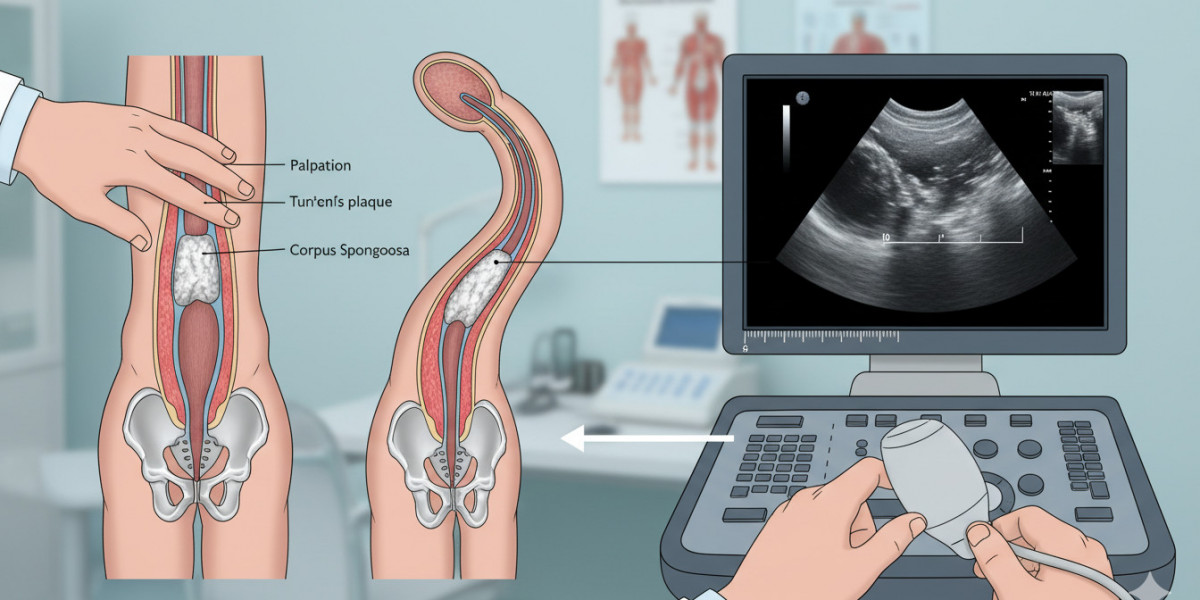

Peyronie's disease is a medical condition that affects the shape and function of the penis. It occurs when fibrous scar tissue develops inside the penile shaft, causing the penis to bend abnormally during an erection. Depending on the severity, this condition can also cause pain, penile shortening, erectile dysfunction, and difficulties with sexual intercourse.
Although penile curvature can sometimes be naturally present, a new or progressively worsening bend may indicate Peyronie's disease. The condition can affect men's physical health, sexual confidence, emotional well-being, and intimate relationships.
Many men hesitate to discuss penile curvature because of embarrassment or concerns about their sexual health. However, Peyronie's disease is a recognized medical condition that can be evaluated and managed by a qualified urologist. Modern treatment approaches offer several options to reduce symptoms, improve penile curvature, and restore sexual function in suitable patients.
This comprehensive guide explains everything men should know about Peyronie's disease, including its causes, early warning signs, stages, diagnostic methods, treatment options, potential complications, and prevention strategies.
What Exactly Is Peyronie's Disease?
Peyronie's disease is a connective tissue disorder characterized by the development of hardened fibrous plaques inside the penis. These plaques usually form within the tunica albuginea, a strong layer of tissue surrounding the two erectile chambers known as the corpora cavernosa.
During a normal erection, these chambers fill with blood, allowing the penis to expand and become firm. However, scar tissue does not stretch like healthy penile tissue. When a plaque forms on one side of the penis, the affected area cannot expand normally, resulting in curvature.
The direction and degree of curvature depend on the location and size of the scar tissue. Some men experience an upward bend, while others develop downward or sideways curvature.
In more complicated cases, Peyronie's disease may cause:
An hourglass-shaped appearance.
Indentation or narrowing of the penile shaft.
A hinge-like deformity.
Reduced penile length.
Painful erections.
Difficulty maintaining erections.
Peyronie's disease is not an infection, sexually transmitted disease, or cancer. It is an abnormal wound-healing condition involving excessive scar tissue formation.
What Are the Main Causes of Peyronie's Disease?
The precise cause of Peyronie's disease is not completely understood. However, specialists believe that penile tissue injury and an abnormal healing response are important contributing factors.
When tissue becomes injured, the body naturally produces collagen to repair the damaged area. In some men, this healing process becomes excessive, resulting in the formation of fibrous plaques.
Several factors may increase the likelihood of developing the condition.
1. Repeated Penile Trauma
One possible cause is repeated minor injury to the penis. Such injuries may happen during sexual intercourse, particularly when an erect penis bends unexpectedly.
Other possible sources include sports injuries, accidents, and physical trauma.
Not every man remembers experiencing an injury before developing symptoms. Minor tissue damage may occur without noticeable pain or immediate symptoms.
2. Abnormal Collagen Production
Collagen is an important protein that helps maintain the structure of connective tissues. However, excessive collagen accumulation can contribute to abnormal scar formation.
In Peyronie's disease, this process may produce plaques that become thick, hardened, and less flexible than surrounding tissue.
3. Genetic Factors
Genetics may influence a person's susceptibility to fibrous tissue disorders.
Men with a family history of Peyronie's disease or certain connective tissue conditions may have an increased risk of developing similar problems.
4. Connective Tissue Disorders
Peyronie's disease is associated with Dupuytren's contracture, a condition in which scar-like tissue develops in the palm and causes fingers to bend inward.
The relationship between these conditions suggests that some men may have an underlying tendency toward abnormal fibrous tissue formation.
5. Age-Related Changes
Peyronie's disease is more frequently diagnosed in middle-aged and older men. Changes in tissue elasticity and healing responses may contribute to its development.
Nevertheless, younger men are not completely protected from the condition.
6. Associated Medical Conditions
Certain health problems may occur alongside Peyronie's disease, including:
Diabetes.
High blood pressure.
Cardiovascular disease.
Erectile dysfunction.
Smoking-related vascular problems.
These conditions are not necessarily direct causes, but they may influence overall sexual health and treatment outcomes.
Early Signs and Symptoms of Peyronie's Disease
Recognizing the early symptoms of Peyronie's disease can help men seek appropriate medical assessment before the condition causes significant functional problems.
Symptoms differ between individuals, depending on plaque location, disease activity, and severity.
Abnormal Penile Curvature
The most recognizable symptom is an unusual bend during an erection. The penis may curve upward, downward, or toward either side.
Some men notice a small change initially, while others experience progressively worsening curvature.
Painful Erections
Pain is relatively common during the active phase. It may occur when the penis becomes erect or when the affected tissue stretches.
Some men also experience discomfort when the penis is not erect.
Development of Hard Plaques
A firm lump or hardened area may develop beneath the penile skin. This represents the fibrous plaque responsible for restricting normal tissue expansion.
A specialist can evaluate the plaque through physical examination and, when appropriate, ultrasound imaging.
Changes in Penile Length
Scar tissue can prevent the affected part of the penis from expanding normally. As a result, some men notice shortening during erections.
This change may negatively affect sexual confidence and body image.
Hourglass Deformity
In certain cases, the penis develops a narrowed area around its middle or another section.
This creates an hourglass-like appearance and may reduce penile stability during intercourse.
Erectile Dysfunction
Some men with Peyronie's disease also experience erectile dysfunction. They may have difficulty achieving or maintaining an erection suitable for sexual activity.
Erectile dysfunction can result from associated vascular problems, structural changes, pain, or psychological stress.
Difficulties During Sexual Intercourse
Significant curvature may make penetration uncomfortable or difficult for one or both partners.
In severe cases, men may avoid sexual activity because of pain, anxiety, or concerns about injury.
Understanding the Two Main Stages of Peyronie's Disease
Peyronie's disease generally progresses through two clinical stages: the active phase and the stable phase.
Understanding these stages helps doctors determine the most appropriate treatment strategy.
Active Phase of Peyronie's Disease
The active phase is the period when scar tissue is developing and penile curvature may continue changing.
Common symptoms include:
Pain during erections.
Increasing penile curvature.
Changes in penile shape.
Development of fibrous plaques.
Progressive penile shortening.
This phase may last several months and sometimes extends to approximately 12–18 months.
Treatment during this period generally focuses on pain management, monitoring disease progression, and addressing associated erectile dysfunction.
Stable Phase of Peyronie's Disease
The stable phase begins when penile curvature and deformity stop changing significantly.
Pain often decreases during this stage, although some men continue to experience discomfort.
Typical characteristics include:
Stable penile curvature.
Established scar tissue.
Persistent penile shortening.
Reduced or absent pain.
Ongoing sexual difficulties in some patients.
A specialist may consider more definitive interventions, including selected injections or surgery, depending on the patient's condition.
How Do Doctors Diagnose Peyronie's Disease?
An accurate diagnosis is important because several conditions can cause changes in penile shape.
A urologist generally evaluates the patient's medical history, symptoms, penile structure, and erectile function.
Medical History and Symptom Assessment
The doctor may ask when the curvature started, whether it has changed, whether erections are painful, and whether sexual intercourse has become difficult.
Information about previous injuries, erectile dysfunction, and associated medical conditions may also be useful.
Physical Examination
The specialist examines the penis to identify hardened plaques, tenderness, and structural abnormalities.
The examination may also involve measuring stretched penile length.
Erection Evaluation
Assessing the penis during an erection helps determine the degree and direction of curvature.
The patient may provide photographs taken at home from different angles. Alternatively, the doctor may induce an erection using medication under medical supervision.
Penile Ultrasound
Ultrasound imaging can identify the location and characteristics of fibrous plaques.
Penile Doppler ultrasound may also be performed to assess blood flow when erectile dysfunction is suspected.
The results help the urologist evaluate the condition and recommend suitable treatment.
What Are the Best Treatment Options for Peyronie's Disease?
There is no single treatment that works for every patient. The appropriate approach depends on penile curvature, pain, erectile function, disease stage, and the effect of symptoms on daily life.
Some men with mild symptoms require observation only, while others benefit from medication, injections, traction devices, or surgery.
1. Medication for Pain and Erectile Dysfunction
Oral medications may help manage symptoms associated with Peyronie's disease.
Anti-inflammatory medications can reduce pain during the active phase when medically appropriate.
Men experiencing erectile dysfunction may benefit from medications such as sildenafil or tadalafil.
These medications improve erectile function but do not directly remove fibrous plaques or reliably correct penile curvature.
No oral medication has been consistently proven to reverse established Peyronie's disease.
2. Collagenase Injections
Collagenase clostridium histolyticum is an injectable treatment that breaks down collagen within fibrous plaques.
It may reduce penile curvature in carefully selected patients.
Treatment generally involves injections directly into the plaque by a trained healthcare professional, followed by prescribed penile modelling.
Potential benefits include:
Reduction in penile curvature.
Improvement in penile appearance.
Better sexual function in suitable patients.
Reduced mechanical difficulty during intercourse.
However, collagenase injections can cause bruising, swelling, pain, and, rarely, serious penile injury.
Eligibility, availability, and regulatory approval differ between countries.
3. Verapamil Injections
Verapamil is sometimes injected directly into Peyronie's plaques.
It is believed to influence collagen production and scar tissue formation.
Some studies suggest potential benefits, but the overall evidence is inconsistent. Patients should discuss its limitations with their specialist.
4. Interferon Injections
Interferon-alpha-2b is another injectable treatment that has been investigated for Peyronie's disease.
It may influence the biological processes involved in scar tissue formation.
Potential benefits include improvements in plaque characteristics and penile curvature in selected patients.
Possible side effects include flu-like symptoms, swelling, and discomfort at the injection site.
5. Penile Traction Therapy
Penile traction therapy uses a specialized medical device to apply controlled stretching force to the penis.
When used correctly and consistently, traction therapy may help improve curvature and preserve or increase penile length in some patients.
Potential benefits include:
Modest curvature improvement.
Better penile length preservation.
A nonsurgical treatment approach.
Possible improvement in certain penile deformities.
Treatment requires patience and proper medical guidance. Excessive force or incorrect device use can cause injury.
6. Vacuum Erection Therapy
Vacuum erection devices use controlled suction to draw blood into the penis and help produce an erection.
They are primarily used for erectile dysfunction. Their role in correcting Peyronie's curvature remains uncertain.
A urologist can advise whether vacuum therapy is appropriate as part of an individual treatment plan.
7. Shockwave Therapy
Extracorporeal shockwave therapy has been investigated for managing pain associated with Peyronie's disease.
Some patients may experience pain relief, particularly during the active phase.
However, current evidence does not establish shockwave therapy as a reliable treatment for correcting penile curvature or removing established plaques.
Surgical Treatment for Advanced Peyronie's Disease
Surgery may be recommended when penile curvature becomes severe enough to interfere with sexual intercourse or when other treatments do not provide satisfactory results.
Surgical correction is generally considered after the condition has become stable.
Three main procedures are used.
Penile Plication Surgery
Penile plication involves placing sutures on the longer side of the penis to correct curvature.
The procedure shortens the opposite side, allowing the penis to become straighter.
It is commonly considered for men with adequate penile length, good erectile function, and relatively uncomplicated curvature.
Possible disadvantages include penile shortening, suture discomfort, and recurrent curvature.
Plaque Incision and Grafting
This procedure may be considered for men with severe curvature, significant shortening, or complex deformities.
The surgeon makes an incision in the plaque to release the tension causing the bend. A graft is then used to cover or reconstruct the affected area.
The procedure can help correct complex curvature and may preserve more penile length than plication in selected patients.
However, potential complications include erectile dysfunction, changes in sensation, and recurrent deformity.
Penile Prosthesis Implantation
Penile prosthesis surgery may be recommended for men with Peyronie's disease and significant erectile dysfunction that does not respond adequately to other treatments.
An implant is surgically placed inside the penis to provide rigidity for sexual activity.
Additional surgical techniques may be used to correct remaining curvature.
Potential benefits include improved erectile function and correction of significant penile deformity.
As with other surgical procedures, risks include infection, pain, mechanical failure, and changes in penile sensation.
Can Peyronie's Disease Be Cured Permanently?
Peyronie's disease can often be managed successfully, but complete restoration of the original penile shape is not guaranteed.
Some men experience improvement in pain and curvature, while others continue to have some degree of deformity after treatment.
The main treatment goals are to:
Reduce significant curvature.
Improve penile function.
Relieve pain.
Address erectile dysfunction.
Improve sexual confidence.
Make intercourse more comfortable.
The best results depend on appropriate patient selection, disease severity, and the treatment approach.
Can Lifestyle Changes Help Manage Peyronie's Disease?
Lifestyle modifications cannot directly eliminate scar tissue, but they can support general health and improve factors associated with erectile function.
Maintain a Healthy Weight
Excess weight can contribute to metabolic and cardiovascular problems that affect sexual health.
Regular physical activity and balanced nutrition can support overall well-being.
Control Diabetes and Blood Pressure
Uncontrolled diabetes and hypertension can damage blood vessels and contribute to erectile dysfunction.
Regular health assessments and appropriate treatment are important.
Stop Smoking
Smoking negatively affects blood circulation and cardiovascular health.
Quitting smoking may help improve overall vascular function.
Avoid Further Penile Injury
Avoid activities that place excessive bending pressure on the penis.
If sexual activity causes pain, stop and seek medical advice.
Manage Psychological Stress
Counselling, relaxation techniques, and open communication with a partner may help reduce anxiety related to Peyronie's disease.
Follow Medical Recommendations
Avoid unproven creams, oils, supplements, and aggressive stretching techniques.
Follow the treatment plan recommended by a qualified specialist.
What Complications Can Peyronie's Disease Cause?
If the condition causes significant deformity or remains untreated, several complications may develop.
Persistent curvature: Established scar tissue may cause long-term penile bending.
Erectile dysfunction: Structural changes, vascular problems, and psychological stress can affect erectile function.
Penile shortening: Scar tissue can reduce the penis's ability to expand normally.
Sexual difficulties: Severe curvature may make penetration uncomfortable or impossible.
Emotional distress: Changes in sexual function and appearance may contribute to anxiety, depression, and reduced self-esteem.
Relationship difficulties: Pain and reduced sexual activity may affect intimacy between partners.
Appropriate treatment can help address these problems and improve quality of life.
When Should You Consult a Urologist?
Men should seek medical evaluation if they notice a new penile curve, painful erections, a hard lump beneath the skin, or changes in penile length or shape.
A consultation is especially important when symptoms become worse or begin interfering with sexual activity.
A urologist can determine whether the condition is active or stable and recommend appropriate treatment.
A sudden popping sensation during an erection, followed by severe pain, swelling, bruising, or immediate loss of erection, requires emergency assessment because it may indicate a penile fracture.
Frequently Asked Questions About Peyronie's Disease
1. What is the first sign of Peyronie's disease?
The first noticeable sign is often a change in penile shape or curvature during an erection. Some men also develop pain or a firm lump beneath the penile skin.
2. Is Peyronie's disease a serious condition?
It is generally not life-threatening, but it can cause significant sexual and psychological problems. Severe cases may interfere with intercourse and erectile function.
3. Can Peyronie's disease disappear without treatment?
Pain may improve naturally, but established penile curvature frequently persists. Men with noticeable or worsening symptoms should consult a urologist.
4. Does Peyronie's disease affect fertility?
It does not normally affect sperm production. However, severe curvature or erectile dysfunction may make sexual intercourse and conception more difficult.
5. Can Peyronie's disease cause permanent penile shortening?
Yes. Scar tissue can restrict normal penile expansion, resulting in persistent shortening.
6. Is Peyronie's disease associated with erectile dysfunction?
Yes. Both conditions can occur together. Structural changes, blood flow problems, pain, and anxiety may contribute to erectile difficulties.
7. Which treatment is best for Peyronie's disease?
There is no universal best treatment. The choice depends on curvature, disease stage, erectile function, and individual treatment goals.
8. Are injections effective for Peyronie's disease?
Collagenase injections can reduce curvature in eligible patients. Other injections, including verapamil and interferon, have also been investigated, although their evidence differs.
9. Is surgery always required?
No. Many men can manage the condition without surgery. Surgical correction is generally reserved for stable disease causing significant functional problems.
10. How long does Peyronie's disease last?
The active phase commonly lasts several months and may extend to 12–18 months. Curvature may remain after the condition becomes stable.
11. Can a young man develop Peyronie's disease?
Yes. Although it is more common in middle-aged and older men, younger adults can also develop the condition.
12. Which specialist treats Peyronie's disease?
A urologist is the appropriate specialist. Men with complex penile deformities may benefit from consulting a urologist experienced in male sexual medicine and reconstructive surgery.
Final Thoughts
Peyronie's disease is a condition that can significantly affect penile appearance, sexual function, and emotional well-being. It develops when fibrous scar tissue forms inside the penis, restricting normal expansion and causing abnormal curvature.
Although the condition can be distressing, several treatment options are available. Depending on the patient's symptoms and disease stage, management may include observation, medication for associated symptoms, collagenase injections, penile traction therapy, or surgical correction.
The most important step is obtaining an accurate diagnosis and discussing treatment options with a qualified urologist. Early assessment, realistic expectations, and individualized medical care can help men manage symptoms and maintain a better quality of life.
Medical Disclaimer: This article is intended for educational purposes only. It does not replace professional medical advice, diagnosis, or treatment. Always consult a qualified healthcare professional before starting any treatment for Peyronie's disease.