
INTRODUCTION
Yes, families can experience Antarctica’s extraordinary wildlife and icy landscapes through carefully selected expedition cruises and guided nature excursions. However, Antarctica is a remote, cold, and unpredictable destination, so family suitability depends on the child’s age, the operator’s minimum-age rules, and the activities included. A well-planned Antarctica tour package may offer wildlife observation, guided shore landings, Zodiac boat excursions, and educational presentations that introduce children to penguins, seals, seabirds, glaciers, and polar ecosystems. Parents should check the physical requirements and safety arrangements before booking, as not every expedition or optional activity is suitable for younger travellers
What Makes Antarctica a Special Destination for Families?
Antarctica offers an experience unlike a conventional family holiday. Instead of theme parks, busy cities, or shopping districts, families discover vast icebergs, snow-covered mountains, icy bays, and remarkable wildlife in one of the world's most extraordinary natural environments.
Children and adults can learn about the connections between climate, oceans, wildlife, and conservation through direct observation and expert-led explanations. Seeing penguins in their natural habitat or watching seals resting on ice can make the lessons from books and documentaries feel real.
However, Antarctica is not an ordinary family destination. There are no conventional towns, extensive visitor facilities, or hospitals readily available at landing sites. Weather conditions can change rapidly, and excursions may be altered or cancelled for safety reasons.
Families should therefore choose an expedition designed around their children's ages, comfort levels, and interests. The best experience is not necessarily the one with the greatest number of activities, but one that allows everyone to explore safely and enjoy the environment at a comfortable pace.
Which Family-Friendly Nature Excursions Are Available?
The excursions available depend on the expedition vessel, weather, landing location, and operator's rules. Many Antarctic trips focus on observing wildlife and landscapes rather than strenuous adventure activities.
1. Guided Shore Landings
Shore landings allow passengers to step onto selected Antarctic beaches or landing sites under the supervision of expedition staff. These visits may offer views of glaciers, mountains, snowfields, and wildlife colonies.
Guides explain where visitors can walk, how to recognise sensitive habitats, and how to maintain a safe distance from animals. Families should expect uneven ground, slippery surfaces, cold temperatures, and possible changes to the planned route.
Shore landings are not guaranteed at every stop. Weather, sea conditions, and environmental restrictions can affect whether a landing is possible.
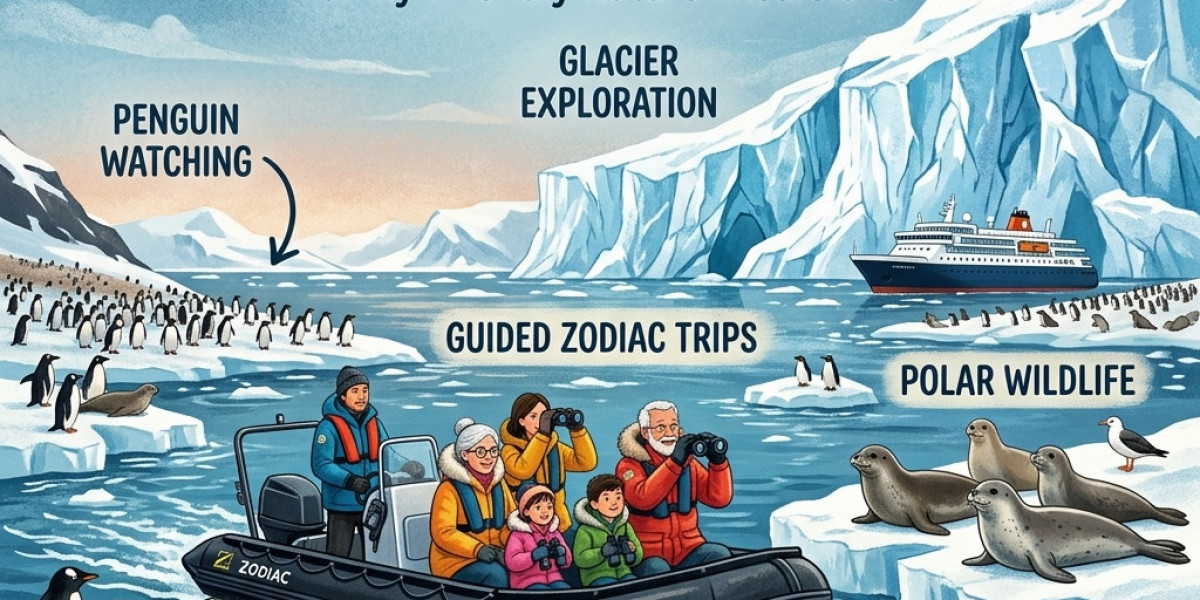
2. Zodiac Boat Excursions
Zodiacs are small inflatable boats commonly used by Antarctic expedition operators to transfer passengers between ships and landing sites or explore coastal scenery.
During a guided boat excursion, families may see floating ice, dramatic rock formations, glaciers, seabirds, and seals resting near the water. Depending on the location, whales may also be spotted from the boat.
These excursions can be memorable, but they require passengers to follow crew instructions and use the supplied safety equipment. Minimum-age, height, mobility, and other requirements vary by operator, so parents should confirm eligibility before booking.
3. Penguin and Seabird Observation
Penguins are among Antarctica's most recognisable animals. Depending on the itinerary and season, families may observe species such as gentoo, chinstrap, and Adélie penguins.
Guided visits can help children understand how penguins move, feed, nest, and care for their young. They may also learn about seabirds that depend on the Southern Ocean for food.
Wildlife encounters must remain respectful. Visitors should never touch, feed, chase, or deliberately approach animals. Guides determine where visitors can walk and how close they can safely remain to wildlife.
4. Seal and Whale Watching
Antarctic waters and shorelines support several marine mammal species, including seals and whales. Depending on the location and season, travellers may see seals resting on ice or whales surfacing near an expedition vessel.
These encounters can introduce children to marine food webs, migration, and the importance of healthy ocean ecosystems.
Sightings are never guaranteed, however. Families should treat wildlife observation as an opportunity to learn and appreciate nature rather than expecting a particular animal to appear on demand.
5. Scenic Expedition Cruises
Some of the most rewarding Antarctic experiences happen without leaving the vessel. Families can watch icebergs drift past, observe glaciers from the deck, and enjoy changing views of mountains and bays.
These scenic periods can also provide time to rest between excursions. For children who find the cold or outdoor conditions challenging, viewing the landscape from a sheltered indoor area may be a comfortable alternative.
Can Children Join an Antarctica Tour Package?
Children can join some Antarctic expeditions, but there is no single minimum age that applies to every operator and itinerary. Age requirements differ considerably, and some optional excursions have additional restrictions.
Before selecting an Antarctica tour package, parents should check the minimum age for the entire voyage, the rules for shore landings, and the eligibility requirements for Zodiac rides or other activities.
Families should also consider the length of the expedition. Some voyages last around a week or longer, and travel to Antarctica may involve crossing the Drake Passage, where sea conditions can be rough. Some itineraries offer alternative routes or flight-assisted options, but availability and conditions vary.
Younger children may need more frequent rest periods, predictable meal arrangements, and access to comfortable indoor spaces. Older children and teenagers may particularly enjoy wildlife photography, geography sessions, and discussions with expedition specialists.
Parents should ask whether children must be accompanied by an adult during all activities and whether the operator provides any dedicated family programming. Do not assume that every expedition has a children's club or childcare service.
Educational Experiences That Make the Journey Memorable
Antarctica provides a natural classroom where children can explore subjects such as geography, biology, ocean science, and climate.
Learning from Expedition Guides
Expedition teams may include naturalists, marine specialists, historians, and other knowledgeable staff. Their presentations can explain how Antarctica's ice sheets form, why the Southern Ocean is important, and how polar wildlife survives in extreme conditions.
Parents can encourage children to prepare questions before the voyage. A simple wildlife journal can help them record animals seen, weather conditions, and interesting facts learned during each excursion.
Photography and Nature Journals
Children can document the journey through photographs, sketches, or written observations. They might compare iceberg shapes, record bird sightings, or describe how the landscape changes from one location to another.
These activities encourage careful observation and make the experience more engaging for different age groups.
Photography should never take priority over safety or wildlife welfare. Children should remain with their group and follow the guide's instructions.
Understanding Conservation
Antarctica is protected through an international system of treaties, environmental agreements, and visitor guidelines. Families can learn why visitors must prevent pollution, avoid disturbing animals, and protect fragile habitats.
The Australian Antarctic Program and the Antarctic Treaty Secretariat provide guidance explaining the importance of safe, environmentally responsible visits. These rules apply to tourism as well as other activities in the Antarctic Treaty area.
How to Prepare Children for Antarctica's Weather
The Antarctic environment can be extremely cold, windy, and unpredictable. Even during the main tourist season, families should prepare for sudden changes in weather and temperature.
Packing suitable clothing is essential. Depending on the operator's instructions, families may need thermal base layers, insulating mid-layers, waterproof outerwear, warm socks, gloves, hats, and suitable footwear.
Some expedition operators provide selected outerwear or boots, while others require passengers to bring specific items. Confirm what is included before departure.
Parents should also consider how their children respond to cold conditions. Younger travellers may need shorter outdoor periods, regular warm-up breaks, and extra spare clothing.
Sunscreen and sunglasses are useful because sunlight can reflect strongly off snow and ice. A small daypack can hold essential items, although baggage restrictions for landings or boat transfers may apply.
Choosing the Best Season for a Family Expedition
Most Antarctic tourism takes place during the Southern Hemisphere summer, broadly from October or November through March. Conditions and wildlife opportunities change throughout this period.
- Early season: Snowy landscapes and developing wildlife activity may appeal to families interested in the scenery and the changing polar environment.
- Mid-season: Longer daylight hours and active wildlife colonies can provide excellent opportunities for observation, although the experience depends on location and weather.
- Late season: Penguin chicks and changing wildlife behaviour may be visible at some sites, while whale encounters can remain an attraction depending on the region and timing.
These are general seasonal patterns, not guarantees. Each itinerary follows its own route, and wildlife presence varies naturally.
Families should choose dates based on their preferred experience, school schedules, budget, and the operator's available departures.
Safety and Environmental Rules for Families
Safety planning is particularly important when travelling with children to such a remote destination. Parents should carefully review the operator's medical guidance, emergency arrangements, physical requirements, and travel insurance recommendations.
During excursions, families should:
- Stay with the expedition group and follow guide instructions.
- Wear required life jackets and other safety equipment.
- Keep the prescribed distance from wildlife.
- Avoid walking onto glaciers or snowfields without authorised guidance and appropriate equipment.
- Never leave rubbish behind or remove natural objects.
- Clean clothing and equipment as instructed to help prevent introducing non-native organisms.
The Antarctic environment can be hazardous, and rescue resources are limited. Visitors must be prepared for changing conditions and accept that planned activities may be modified or cancelled.
Families should also discuss seasickness prevention with a healthcare professional if needed and check the operator's medical and fitness requirements before making a booking.
How to Select Suitable Antarctica Tour Packages
Choosing the right itinerary involves more than comparing prices and destinations. Families should examine the practical details of the expedition and the support available to younger passengers.
Check age restrictions: Confirm the minimum age for the voyage and each activity your family wants to experience.
Review the itinerary: Find out how many shore landings and Zodiac excursions are planned, while remembering that weather may change the schedule.
Ask about accommodation: Check cabin occupancy, bedding arrangements, onboard facilities, and whether family cabins are available.
Understand what is included: Clarify meals, expedition equipment, transfers, pre- or post-cruise accommodation, and optional activities.
Assess travel duration: Consider the complete journey, including international flights, transfers, embarkation arrangements, and time spent at sea.
Review cancellation conditions: Weather and operational circumstances can affect Antarctic travel, so understand the terms before paying a deposit.
Families departing from India should also check transit visa requirements for any connecting country, passport validity, international travel insurance, and the arrangements for reaching the expedition's departure port.
Conclusion
Family-friendly nature excursions can make Antarctica an extraordinary learning experience, offering opportunities to observe penguins, seals, whales, glaciers, and dramatic polar scenery. The key is to select an expedition that matches children's ages, physical abilities, and comfort levels while prioritising safety and environmental responsibility. Parents should verify age restrictions, onboard facilities, excursion requirements, and seasonal conditions before confirming their travel plans. With careful preparation and realistic expectations, Anubhav Vacations can help families explore suitable Antarctic travel options and create lasting memories of this remarkable wilderness.
Frequently Asked Questions
1. Are family-friendly nature excursions available in Antarctica?
Yes, some Antarctic expeditions offer guided shore landings, Zodiac cruises, wildlife observation, and educational presentations. Availability depends on the itinerary, weather, and the operator's age and safety requirements.
2. What animals can children see during an Antarctic expedition?
Depending on the location and season, children may observe penguins, seals, seabirds, and whales. Wildlife sightings are not guaranteed, and visitors must follow guides' instructions to avoid disturbing animals.
3. Is Antarctica suitable for young children?
It depends on the child's age, health, comfort with cold conditions, and the expedition operator's minimum-age policy. Parents should review the voyage's physical requirements, medical guidance, and activity restrictions before booking.
4. What should families pack for an Antarctic nature excursion?
Families generally need warm thermal layers, insulating clothing, waterproof outerwear, gloves, hats, warm socks, sunglasses, and sunscreen. Exact requirements vary, so follow the operator's packing list and check which equipment is supplied.
5. What activities may be included in an Antarctica tour package for families?
An Antarctica tour package may include guided wildlife watching, selected shore landings, Zodiac boat excursions, scenic cruising, and expert-led educational sessions. The specific activities depend on the operator, itinerary, weather, and each passenger's eligibility.