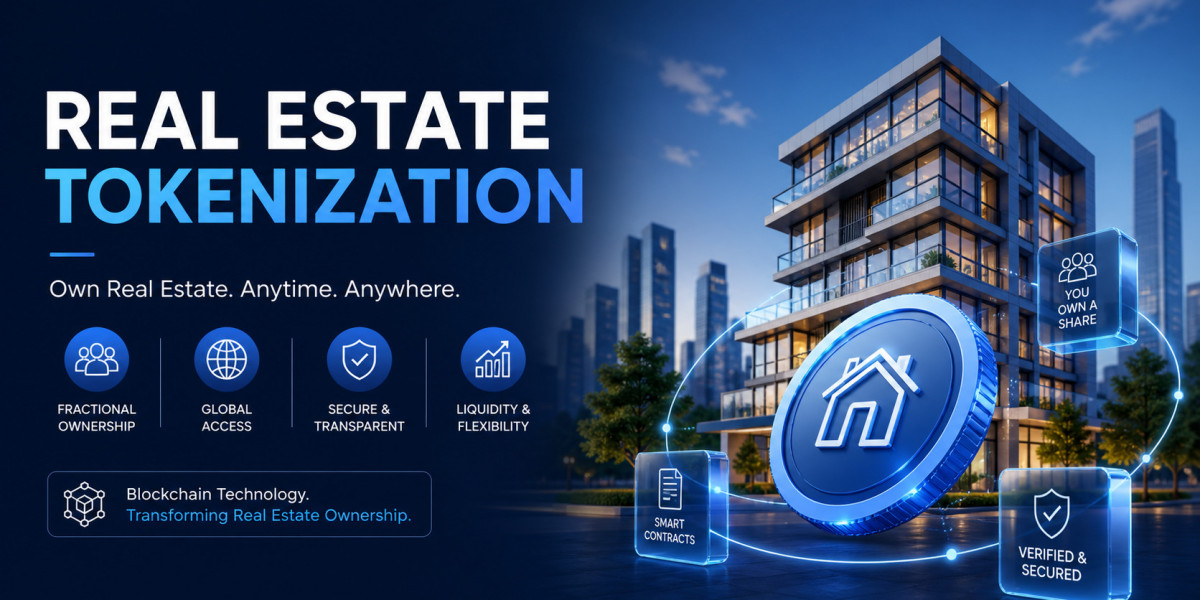

Real estate developers often face a common challenge: unlocking capital to move projects forward without relying entirely on traditional financing methods. Land acquisition, construction expenses, regulatory approvals, and marketing costs can place significant pressure on project budgets. At the same time, valuable properties may remain underutilized because their financial potential is difficult to access through conventional investment structures.
Real estate tokenization offers developers an alternative approach to capital formation by representing eligible property interests, investment rights, or contractual claims as digital tokens on a blockchain. Instead of depending exclusively on bank loans, private equity, or a limited group of investors, developers can explore structured investment opportunities that appeal to a broader range of eligible participants.
By connecting real estate projects with digital investment infrastructure, tokenization can create new ways to raise funds, structure ownership interests, and manage investor relationships. When supported by appropriate legal frameworks and sound financial planning, it can help developers turn project value into new capital while building more flexible funding strategies.
Why Real Estate Developers Are Exploring Tokenization
Property development requires substantial upfront investment, while financial returns may take months or years to materialize. Traditional funding sources remain important, but they may involve lengthy approval processes, collateral requirements, strict repayment schedules, or complex negotiations.
Real estate tokenization introduces another potential funding structure by dividing eligible economic interests in a project into digital units. These tokens can represent specific rights defined by the underlying legal agreements, such as an interest in a project-owning entity, a share of eligible rental income, or a contractual claim on investment proceeds.
For developers, this approach can offer several potential advantages:
Broader investor access: Structure investment opportunities for multiple eligible investors instead of depending on a small number of funding partners.
Flexible capital structures: Design offerings around equity, debt, or other legally permissible investment arrangements.
Fractional investment opportunities: Allow investors to participate at different investment levels, subject to minimum investment requirements and applicable regulations.
Improved recordkeeping: Use blockchain infrastructure to maintain transaction records and track token holdings.
Potentially streamlined administration: Automate certain activities, such as distribution calculations and investor eligibility checks, through integrated systems.
Tokenization does not eliminate financing risks or guarantee access to capital. Its value depends on the project's commercial fundamentals, the legal rights attached to tokens, investor demand, and the quality of the underlying platform.
How Tokenization Converts Project Value Into Capital
The central idea behind real estate tokenization is to connect a project's economic potential with a clearly defined investment structure.
Consider a developer planning a commercial property project valued at $10 million. The developer needs additional funding to complete construction but wants to avoid relying entirely on a traditional bank loan.
The developer could evaluate whether a legally compliant tokenized investment offering is appropriate for the project.
A possible process includes the following steps.
Step 1: Identify the Project and Its Funding Requirements
The developer assesses the property's current value, development costs, expected revenue, projected completion date, and total funding gap.
For example, a project may require $3 million in additional capital to complete construction and prepare the property for tenants. Establishing this requirement helps determine the size and purpose of the proposed offering.
Step 2: Select the Investment Structure
The developer determines what investors will receive in exchange for their capital. Depending on the jurisdiction and transaction structure, the offering could involve equity in a project-owning entity, debt linked to the project, or contractual rights to specified financial proceeds.
Each structure has different implications for control, repayment, distributions, investor protections, and legal obligations.
Step 3: Establish the Legal Framework
Before issuing tokens, the developer must establish the relationship between the digital tokens and enforceable legal rights.
This may involve creating a special purpose vehicle (SPV), preparing offering documents, defining investor rights, completing required disclosures, and meeting applicable securities, property, tax, and anti-money-laundering requirements.
The tokens themselves do not automatically transfer legal title to the underlying property. Their actual rights depend on the governing documents and applicable law.
Step 4: Develop and Configure the Platform
The tokenization platform provides the digital infrastructure for issuing tokens, onboarding investors, recording ownership interests, and managing transactions.
Smart contracts can support functions such as token issuance, transfer restrictions, distribution calculations, and compliance-related rules. However, legal reviews, identity verification, and other controls may require off-chain processes or integrations with specialized service providers.
Step 5: Raise Capital From Eligible Investors
Once the offering is ready, the developer introduces it to its intended investor audience through appropriate channels.
Investors review the project information, financial assumptions, risk disclosures, and investment terms before deciding whether to participate. Following the applicable subscription and compliance procedures, funds can be collected and allocated according to the offering structure.
This process connects a real estate project's funding requirements with a digitally managed investment framework.
Real Estate Tokenization Models Developers Can Consider
Different development projects require different financing arrangements. The most suitable tokenization model depends on the project's stage, risk profile, expected cash flows, and desired level of investor involvement.
1. Equity-Based Tokenization
Developers can structure tokens to represent equity interests in a project-owning company or another investment vehicle. Investors may benefit from eligible profits, distributions, or changes in the value of their investment, depending on the agreement. This model can suit projects seeking growth capital without fixed debt repayments, although it may involve sharing ownership and economic upside.
2. Debt-Based Tokenization
A developer may explore tokenized debt instruments to raise funds for construction, redevelopment, or refinancing. Investors receive repayment and interest according to the instrument's terms. This can help structure funding around defined repayment obligations, but the developer must carefully assess debt service capacity, maturity dates, and default risks.
3. Rental-Income-Linked Investments
Completed or income-producing properties can support investment structures linked to rental revenue or net operating income. Tokenization may allow investors to participate in specified cash flows without directly managing the property. The underlying agreements must explain how expenses, vacancies, maintenance, and distributions are handled.
4. Project-Specific Tokenization
Developers can establish separate investment structures for individual developments, such as a residential complex, office building, or mixed-use project. This can make project-level financial reporting and risk allocation easier to define, provided the legal and operational arrangements clearly separate each project's assets and obligations.
These models are not interchangeable. A development-stage project with uncertain completion timelines may require a different investment structure from a completed property generating stable rental income.
A Practical Example: Funding a Residential Development
Imagine a property developer planning a residential complex with an estimated total development value of $12 million.
The project has secured the land and completed initial planning, but the developer needs another $2 million to fund construction and associated expenses.
Instead of using only conventional financing, the developer considers a tokenized investment offering through a legally established project entity.
The following figures illustrate how the funding arrangement might work.
Project component | Illustrative amount |
|---|---|
Estimated project value | $12 million |
Additional capital required | $2 million |
Illustrative tokenized capital target | $2 million |
Number of investors | 200 |
Average investment per investor | $10,000 |
In this hypothetical example, 200 investors contributing an average of $10,000 each would collectively provide the $2 million target.
The tokens could represent equity interests in the project entity or another clearly documented investment right. The developer would use the raised capital according to the disclosed project budget, while investor returns would depend on the agreed structure and actual project performance.
For instance, an equity-based arrangement might distribute eligible profits after the property is completed and sold. Alternatively, a debt-based arrangement could require repayment under a specified schedule.
The key benefit is the potential to organize project funding around a defined digital investment structure. The developer must still establish investor demand, meet applicable regulations, disclose material risks, and deliver the project successfully.
The example is illustrative only. It does not imply guaranteed fundraising, fixed investor returns, or assured liquidity.
How Tokenization Can Improve Capital Planning
Raising capital is only one part of property development. Developers must also manage funding timelines, cost overruns, investor expectations, and financial reporting throughout the project's lifecycle.
Real estate tokenization may support more structured capital planning in several ways.
Align Funding With Development Milestones
Developers can organize their funding requirements around project phases, such as land acquisition, construction, infrastructure completion, and final delivery. Where legally and operationally appropriate, capital can be raised for clearly defined uses rather than presented as a general funding pool.
This approach can help investors understand how their contributions support the development process.
Reduce Dependence on a Single Funding Source
A developer that relies entirely on one lender or investment partner may face significant pressure if financing terms change or additional funds are needed.
Tokenized offerings can provide another potential channel alongside bank financing, institutional investment, joint ventures, and private equity. A diversified funding strategy may improve flexibility, although managing multiple investor groups can also increase administrative complexity.
Create More Structured Investor Reporting
Investors need reliable information about construction progress, project spending, leasing activity, and financial performance.
A tokenization platform can combine blockchain transaction records with project-management and accounting systems to provide more consistent reporting. However, blockchain records alone do not verify that construction has progressed as reported or that a property's valuation is accurate. Independent verification and dependable source data remain essential.
Support Project-Level Financial Management
For developers handling multiple properties, separate investment structures can help distinguish the funding, obligations, and financial performance associated with each project.
This can make it easier to communicate how capital is allocated and how project outcomes affect investors. Appropriate legal segregation and accounting controls are still necessary.
The Role of Smart Contracts in Real Estate Funding
Smart contracts are programs deployed on a blockchain that execute predefined rules when specified conditions are met. In real estate tokenization, they can help automate certain activities associated with investment issuance and administration.
Common applications include:
Token issuance: Creating digital tokens according to the approved offering structure.
Transfer restrictions: Limiting token transfers to eligible investors or permitted jurisdictions.
Distribution calculations: Applying predefined rules to calculate investor allocations.
Transaction records: Maintaining a traceable record of token transfers and balances.
Lifecycle management: Supporting specified actions when an investment reaches defined contractual milestones.
For example, a project entity could use an integrated system to calculate investor distributions from verified financial data and apply the allocation rules defined in the investment documents.
Nevertheless, smart contracts cannot replace legal agreements, professional property valuations, accounting controls, or regulatory oversight. Errors in contract code or inaccurate external data can create financial and operational risks.
Developers should therefore prioritize security audits, access controls, clear upgrade procedures, and appropriate recovery mechanisms when selecting or building tokenization infrastructure.
Challenges Developers Must Address Before Launch
Real estate tokenization creates new possibilities, but it also introduces responsibilities that developers must understand before committing to a platform or fundraising strategy.
Regulatory Compliance
Tokens representing equity, debt, or profit-linked interests may qualify as securities or other regulated financial products. Requirements vary by jurisdiction and may cover registration or exemptions, investor eligibility, disclosures, marketing, custody, and secondary transfers.
Developers must determine which rules apply to the asset, the offering, the investors, and the locations in which the investment is promoted.
Legal Ownership and Investor Rights
A digital token does not automatically establish ownership of land or a building. Developers must clearly document whether investors hold shares in an entity, debt claims, contractual rights, or another form of interest.
The documents should also explain voting rights, distribution policies, exit conditions, default remedies, and dispute-resolution procedures.
Investor Demand and Fundraising Costs
Tokenization does not guarantee that investors will participate. Developers must evaluate whether their projects offer a credible investment case and whether the expected capital raised justifies the costs of legal structuring, technology, compliance, marketing, and ongoing administration.
A smaller development may find a conventional financing arrangement more economical.
Liquidity Limitations
Although digital tokens may be transferable under certain conditions, a tokenized property investment is not automatically liquid. Secondary trading depends on applicable laws, platform capabilities, buyer demand, transfer restrictions, and available market infrastructure.
Investors may be unable to sell when they want or at their preferred price.
Valuation and Project Execution
A tokenized investment remains exposed to familiar property risks, including construction delays, cost increases, interest-rate changes, tenant vacancies, market downturns, and difficulties selling the completed asset.
Transparent financial assumptions, independent valuations where appropriate, and ongoing project reporting are critical to building investor confidence.
Choosing the Right Real Estate Tokenization Development Partner
For developers, selecting a tokenization technology provider is a strategic decision. The platform must support the investment structure, comply with the relevant operating requirements, and integrate with the developer's existing business processes.
Before selecting a partner, evaluate the following factors.
Evaluation area | What developers should assess |
|---|---|
Legal and compliance support | Ability to work with legal and compliance specialists on applicable requirements |
Smart contract security | Independent audits, testing procedures, and vulnerability management |
Investor management | Identity verification, onboarding, eligibility checks, and investor records |
Token functionality | Support for the required equity, debt, or contractual investment model |
Payment integration | Secure handling of subscriptions, distributions, and relevant payment processes |
Reporting tools | Investor dashboards, financial reporting, and transaction histories |
Scalability | Ability to support additional projects and investor volumes |
Ongoing maintenance | Software updates, incident response, and technical support |
A suitable development partner should understand both blockchain technology and the commercial realities of property investment.
Developers evaluating providers such as INORU can consider how a provider's real estate tokenization capabilities align with their project structure, technical requirements, compliance workflow, and long-term operating model. The final decision should be based on documented capabilities, relevant experience, security practices, and the support required after launch.
Building a Real Estate Tokenization Strategy That Works
A successful tokenization initiative begins with a clear business objective rather than a decision to adopt blockchain technology for its own sake.
Developers can use the following framework to evaluate whether tokenization is appropriate.
First, assess the project's financial potential. Determine the amount of capital required, the expected use of funds, the project's risk profile, and the assumptions behind its valuation.
Second, identify the intended investors. Consider whether the offering is designed for institutional investors, eligible private investors, or another permitted audience. Investment minimums, disclosure obligations, and distribution channels should reflect the target market and applicable law.
Third, select a suitable investment structure. Establish whether equity, debt, rental-income-linked rights, or another arrangement best fits the project's cash flows and financing objectives.
Fourth, establish legal and operational readiness. Work with qualified legal, tax, financial, and compliance professionals to prepare the offering, document investor rights, and establish the required controls.
Fifth, choose the technology infrastructure. Select a platform that supports the approved investment structure, secure token issuance, investor management, reporting, and any permitted transfer functionality.
Finally, plan for the entire investment lifecycle. Define how investors will receive updates, how distributions will be calculated, how project changes will be communicated, and how exits or repayments will be handled.
This lifecycle approach helps developers treat tokenization as part of their broader capital strategy rather than simply a digital asset issuance exercise.
The Future of Capital Formation in Real Estate Development
Real estate investment is gradually intersecting with blockchain-based financial infrastructure, creating opportunities to rethink how property interests are structured and administered.
For developers, the most relevant possibilities extend beyond fractional ownership. Tokenization may support new approaches to project-level financing, property-backed debt, cross-border investment access, rental-income-linked structures, and the administration of multiple real estate investment vehicles.
As digital asset infrastructure develops, greater interoperability between investor onboarding systems, payment networks, compliance tools, and property-management platforms may improve the operational experience. Progress will depend on regulatory clarity, institutional participation, reliable data, investor protection, and the availability of suitable secondary-market infrastructure.
Developers should approach these opportunities with realistic expectations. Tokenization is not a substitute for sound project economics, disciplined construction management, or a credible investment proposition. Instead, it can serve as an additional financing and administration mechanism when the underlying asset and legal structure are appropriate.
The strongest opportunities are likely to emerge when developers combine valuable property projects with transparent investment terms, robust governance, and technology designed around genuine business needs.
Conclusion
Real estate tokenization offers developers a potential way to connect property value with new sources of investment capital. By representing eligible investment interests as digital tokens, developers can explore alternative approaches to funding construction, financing income-producing assets, and organizing investor participation.
However, the effectiveness of this model depends on more than blockchain implementation. Legal enforceability, investor demand, regulatory compliance, smart contract security, transparent reporting, and project execution all influence whether a tokenized offering can achieve its objectives.





