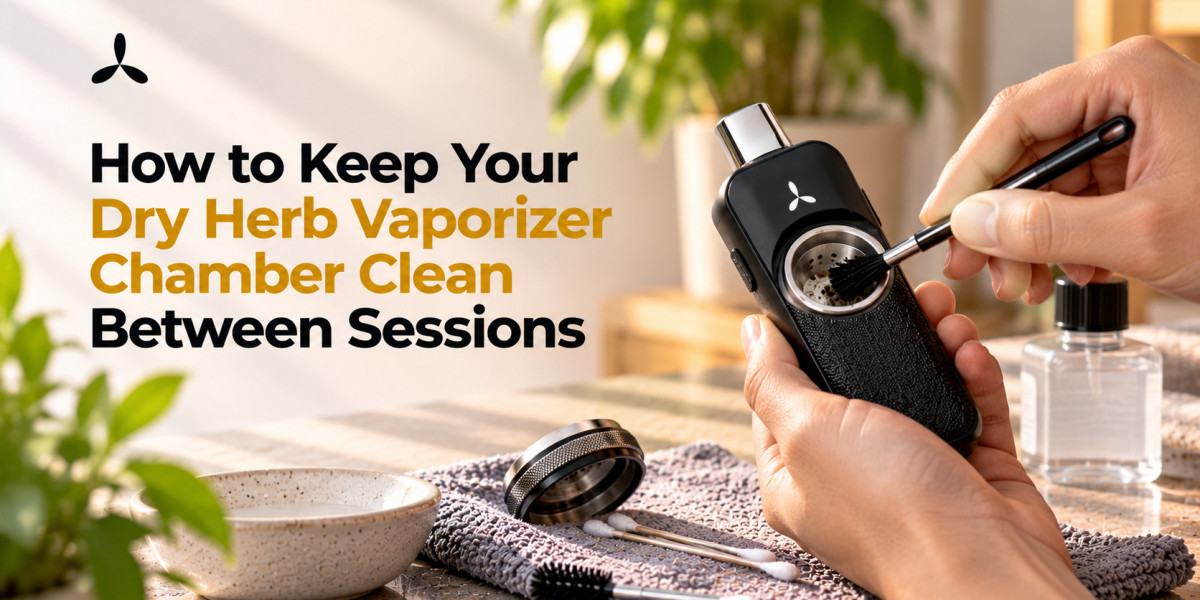

A clean vaporizer chamber can make a noticeable difference to your everyday dry-herb routine. Small particles, oils, and residue naturally build up inside the chamber after repeated use. Left there long enough, that buildup can make loading more difficult, restrict airflow around the chamber, create lingering odors, and eventually turn a simple cleaning job into a much more annoying one.
Fortunately, you do not need to perform a complete deep clean after every session. A short maintenance routine between sessions can prevent much of the buildup before it becomes stubborn.
Here is how to keep your dry herb vaporizer chamber clean with minimal effort.
Why Does a Dry Herb Vaporizer Chamber Get Dirty?
Unlike combustion, a dry herb vaporizer heats plant material without intentionally burning it. However, heating still changes the material inside the chamber.
During a session, heat releases volatile compounds from the dry herb. Fine plant particles can also separate from the material and settle against the chamber walls, screen, or nearby airpath.
Over multiple sessions, you may notice:
Small pieces of dry herb around the chamber
Fine particles collecting near the screen
Sticky or darker residue on chamber surfaces
A persistent aroma after the device has cooled
Material becoming harder to remove
The exact rate of buildup varies according to the device, temperature, herb preparation, packing method, frequency of use, and chamber design.
That makes preventive maintenance more useful than waiting until the chamber looks seriously dirty.
Clean the Chamber After It Cools
One of the easiest habits is also one of the most effective: empty the chamber soon after a session rather than leaving used material inside it for hours or days.
First, switch the vaporizer off and allow it to cool enough to handle safely. Follow the manufacturer's instructions because chamber materials and cleaning recommendations vary between devices.
Once it is safe to handle, remove the used dry herb.
Material is generally easier to clear before it has been repeatedly reheated and compressed against the chamber surfaces. Leaving old material inside can also allow particles and residue to accumulate around the chamber and screen.
The basic routine is simple:
Finish your session.
Turn the vaporizer off.
Allow the chamber to cool.
Empty the used material.
Brush away loose particles.
Check the chamber before reloading.
It takes considerably less time than dealing with several weeks of baked-on residue later.
Use a Small Cleaning Brush Regularly
A small brush is one of the most useful tools for routine vaporizer maintenance.
After emptying the chamber, gently brush its interior to remove loose material. Pay particular attention to edges, corners, screens, and other places where fine particles tend to collect.
Do not aggressively scrape the chamber.
Some vaporizers use ceramic, metal, glass, or other specialized surfaces that can be damaged by unsuitable tools. A soft brush recommended by the manufacturer is generally a better choice than attacking residue with whatever sharp object happens to be nearby.
Regular brushing is particularly useful because it addresses loose debris before heat cycles turn that debris into more stubborn buildup.
Avoid Overpacking the Chamber
More herb does not automatically produce a better session.
Overpacking can compress material against chamber surfaces and may interfere with airflow, depending on the vaporizer's heating system. It can also make the chamber considerably messier.
Instead, follow the loading recommendations provided for your particular device.
The appropriate packing density can differ between conduction, convection, and hybrid vaporizers. Some chambers work well with relatively even contact between the material and chamber wall, while others depend more heavily on hot air moving through the material.
Leaving the chamber correctly loaded can therefore help both routine operation and maintenance.
Pay Attention to Grind Consistency
Extremely fine material can create another cleaning problem.
Small particles are more likely to move into chamber openings, screens, and sections of the airpath. A very powdery grind may therefore leave more debris behind than a preparation appropriate for the particular vaporizer.
There is no single grind size that is ideal for every device.
Check the manufacturer's instructions for your model and avoid grinding material unnecessarily fine. The goal is consistent preparation without turning the herb into dust.
Do Not Let Used Herb Sit in the Chamber
It is tempting to finish a session, put the vaporizer down, and promise your future self that cleaning is tomorrow's problem. Future selves remain tragically unreliable.
Removing spent material promptly is a better habit.
Repeated heating can make remaining residue more difficult to remove. Old material can also retain odor and leave particles sitting against the chamber and screen.
If you regularly use your vaporizer away from home, consider carrying a small container for spent material so that you can empty the chamber without creating a mess.
Check the Chamber Screen
The chamber itself is not the only component worth watching.
Many dry herb vaporizers use screens to prevent plant particles from entering other parts of the device. As those screens collect material, airflow may become more restricted.
During your between-session check, look for visible debris around the screen.
Loose particles may be removable with a brush. More substantial buildup may require removing or replacing the screen, depending on the design.
Always follow the device manufacturer's instructions before taking screens or chamber components apart.
Use Isopropyl Alcohol Only Where Recommended
Isopropyl alcohol is commonly used to clean removable vaporizer components, but that does not mean every part of every vaporizer should be soaked or wiped with it.
Electronic components, seals, finishes, adhesives, chamber materials, and other parts can have different cleaning requirements.
Before using alcohol:
Check the manufacturer's cleaning instructions.
Switch the device off.
Remove the battery where applicable and instructed.
Never pour liquid directly into the vaporizer.
Avoid allowing liquid to reach electronic components.
Allow cleaned components to dry completely before reassembly or use.
For routine between-session cleaning, alcohol may not even be necessary. Brushing and emptying the chamber consistently can handle much of the everyday debris.
Save more involved cleaning for when residue actually begins accumulating.
Keep Moisture Away From the Chamber
Water and electronic vaporizers are not an inspiring partnership.
Unless the manufacturer specifically identifies a component as washable, avoid rinsing the assembled device or allowing water to enter the heating chamber, electronics, battery compartment, or airpath.
If removable components can be washed, remove them first and follow the manufacturer's drying instructions before putting the vaporizer back together.
A component that looks dry on the surface may still contain moisture in small openings, so adequate drying time matters.
Consider Dosing Capsules or Pouches When Compatible
Some vaporizer systems support accessories that separate loose material from the chamber.
Compatible dosing capsules, for example, can make preparation more organized and reduce direct contact between dry herb and parts of the oven. Newer approaches such as disposable dosing pouches can serve a similar purpose when specifically designed and approved for compatible vaporizers.
These systems do not eliminate maintenance completely. Screens, airpaths, mouthpieces, and chamber surfaces can still accumulate particles or condensed residue.
They can, however, reduce loose material inside the chamber and make between-session cleanup quicker.
Always verify accessory compatibility before placing anything inside a vaporizer chamber.
Give the Chamber a Quick Inspection Before Every Session
Before loading fresh material, take a few seconds to look inside the chamber.
Check for:
Leftover dry herb
Dark or sticky residue
Blocked screen openings
Loose particles
Unusual discoloration
Damage to chamber components
This simple inspection can tell you whether brushing is enough or whether it is time for a more thorough clean.
It can also help you spot component wear before it becomes a larger maintenance issue.
Between-Session Cleaning vs. Deep Cleaning
These are two different jobs.
Between-session maintenance is preventive. It usually involves emptying the chamber, brushing away loose particles, inspecting the screen, and keeping the loading area tidy.
Deep cleaning addresses residue that routine brushing cannot remove. Depending on the vaporizer, that may involve removing screens, cleaning the mouthpiece and airpath, wiping approved surfaces, or cleaning removable components separately.
A sensible schedule depends on how frequently you use your vaporizer.
Someone using a device several times per day will naturally need deeper cleaning sooner than an occasional user. Instead of relying entirely on a fixed calendar, watch for changes in residue, airflow, odor, and general cleanliness.
A Simple 60-Second Chamber Maintenance Routine
You can make chamber maintenance almost automatic:
After your session: Turn the vaporizer off and let it cool.
Empty: Remove the spent dry herb.
Brush: Gently clear loose particles from the chamber and screen.
Inspect: Look for residue or blocked openings.
Store: Keep the vaporizer empty and protected until your next session.
That small routine can prevent a surprising amount of buildup.
Common Chamber-Cleaning Mistakes to Avoid
Even basic maintenance can go wrong when enthusiasm exceeds common sense.
Cleaning While the Chamber Is Too Hot
Allow the device to cool before handling or cleaning it. Heated components can cause burns and may also interact differently with cleaning materials.
Using Sharp Metal Objects
Knives, pins, screwdrivers, and similar objects can scratch chamber surfaces or damage screens and heating components.
Use tools designed or recommended for vaporizer maintenance.
Applying Too Much Cleaning Liquid
More liquid does not mean more cleaning power. Excess liquid can reach areas where it does not belong, particularly inside an electronic device.
Forgetting the Screen
A spotless-looking chamber does not help much if debris is blocking the screen beneath it.
Ignoring Manufacturer Instructions
Vaporizer construction varies considerably. A cleaning method suitable for one model may be inappropriate for another.
The manual for your specific device should always take priority over generic advice.
Why Consistent Maintenance Is Better Than Occasional Rescue Cleaning
The biggest advantage of cleaning between sessions is not that your vaporizer looks prettier.
It is that small maintenance prevents large maintenance.
Regularly removing loose herb helps prevent particles from being repeatedly heated against the chamber. Keeping screens clear supports unobstructed airflow. Emptying the chamber also makes the device easier to prepare the next time you use it.
A neglected chamber may eventually require significantly more effort to clean than one maintained for a minute after each session.
Consistency wins here, annoyingly enough.
Final Thoughts
Keeping a dry herb vaporizer chamber clean between sessions does not require an elaborate cleaning ritual.
Empty spent material once the device has cooled, gently brush away loose particles, inspect the chamber and screen, avoid unnecessary overpacking, and follow the manufacturer's instructions whenever solvents or removable components are involved.
Then perform a deeper clean when ordinary brushing is no longer enough.
A minute of basic maintenance after regular use can keep the chamber cleaner, reduce stubborn buildup, and make preparing your next session considerably simpler.
For AirVape owners, always refer to the cleaning and maintenance guidance for your specific vaporizer model before disassembling components or applying cleaning solutions.