
Every crane has a component list, and some items get more attention than others. Wire rope usually sits low on that list until trouble arrives. In daily service it absorbs load cycles, weather, friction, and repeated bending across sheaves and drums. That workload erodes steel gradually, then suddenly.
Failure rarely arrives without hints. The rope tells its story through surface damage, shape changes, and measurable wear. Learning to read those clues protects both the lift and the crew below it. What follows is a field-level checklist for judging when a line must come off.
Broken Wires and Their Pattern
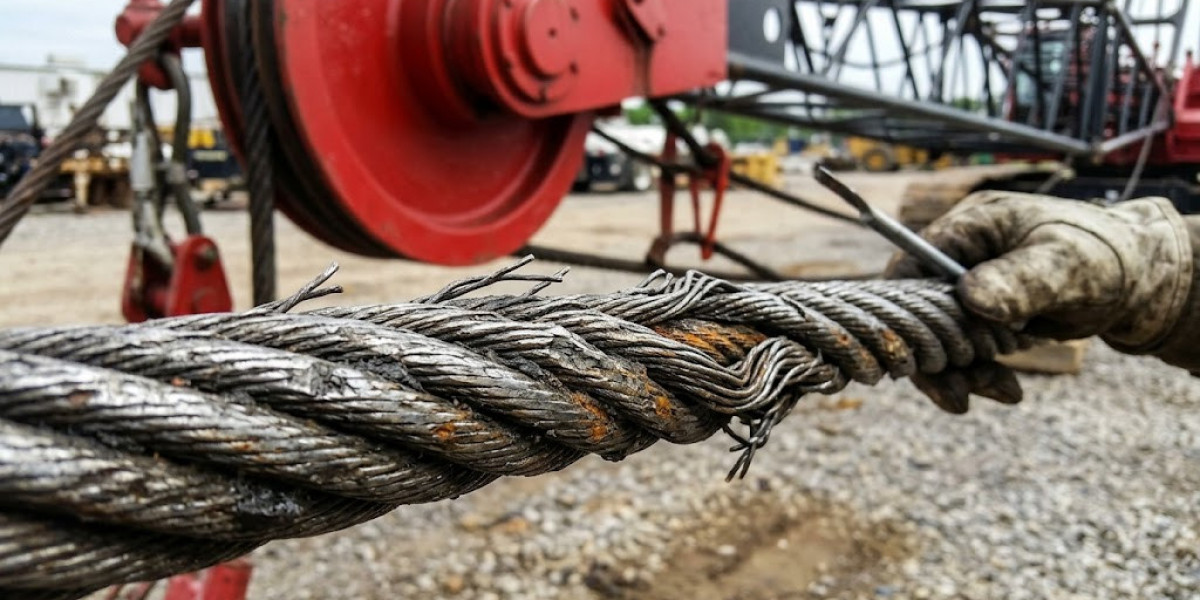
Most crews notice snapped wires first, and with good reason. The standard test counts breaks within one lay length of rope. Six or more in a single lay generally meets discard criteria. Fewer breaks can still matter when duty is severe.
Pattern tells you as much as the number. Breaks grouped in one zone usually indicate a local defect such as a scored sheave groove or a damaged drum wrap. Swapping the rope without correcting that defect just repeats history. The new line will fail at the very same spot.
Distributed breaks also deserve close tracking. Under load they escalate rapidly, and today's minor count can become a serious one quickly. When a rope's service history is unclear, crews often consult a crane parts supplier for the correct replacement construction. Written counts from each shift give you the trend before the trend becomes an incident.
Surface Abrasion and Metal Loss
Turn the rope slowly and study the outer strands. Flattening, mirror-like polish, and blurred strand edges all point to abrasive wear. Friction against worn grooves, misaligned drums, or trapped debris produces this pattern. Each contact event removes a small amount of metal.
Removed metal is removed capacity. Rope diameter is matched to a rated breaking strength at manufacture. As that diameter decreases, the line cannot carry what the load chart promises. Appearance alone will not reveal the shortfall.
Flat, shiny areas wider than about one third of a strand's width justify scheduling replacement. Record where the wear appears, since location often identifies the offending component. Resolve the rubbing source before fitting Manitowoc parts, otherwise the fresh rope inherits the same problem. A short groove inspection during that work costs little and saves repeat downtime.
Corrosion, Pitting, and Internal Rust
Steel corrodes when moisture and contaminants get the opportunity. Lubrication and galvanizing slow the process but never stop it fully. Coastal air, chemical vapors, and wash-down residue all shorten rope life. Corrosion prefers to work out of sight.
Wipe-test surface rust with a cloth. Light film that clears is mostly a cosmetic finding. Pitting, flaking, or rust visible between strands is structural and urgent. Internal strands can lose cross-section while the exterior still looks serviceable, so surface findings understate the damage.
Harbor, marine, and chemical sites should shorten inspection intervals beyond manual recommendations. Wherever possible, specify a corrosion-resistant construction with your crane parts supplier at the next change-out. Drier storage, better lubrication habits, and protective covers also extend service between replacements. Small handling changes often pay for themselves in rope consumed per year.
Kinks, Birdcaging, and Other Deformation
Geometry changes in a rope are never benign. A kink forms when rope bends tighter than its minimum radius, typically during installation or careless ground handling. Straightening the kink does not restore strength; the damage is permanent. The line reads normal while carrying a hidden defect.
Birdcaging is the bulging, basket-like separation of outer strands from the core. Shock loading or a sudden release of tension commonly triggers it. Afterward, strands share load unevenly and individual wires take more than their share. That rope should be removed rather than monitored.
Watch for crushed sections, protruding wires, and visibly narrowed spots as well. Each one reflects a mechanical breakdown already in progress. Handle suspect rope carefully during removal to protect the inspection crew. Tag it clearly so no one returns it to service by mistake.
Diameter Reduction Along the Length
Sound rope maintains its rated diameter throughout the working length. Localized thinning points toward core collapse or internal wear. In independent wire rope core design, the core braces the outer strands against deformation. Once that core crushes or corrodes, the strands settle inward and the measurement drops.
Take readings with a caliper at several locations, not just one. Loss approaching one third of nominal diameter is a removal condition. Reduced diameter equals reduced strength, and charts assume full-diameter rope. Nobody on the lift will sense the difference until it matters.
Document readings shift by shift so gradual changes stay visible. Where measurement technique is uncertain, ask Manitowoc parts specialists for the correct reference points for your rope class. Calibrated method and consistent placement make the numbers comparable. Sloppy technique creates false confidence in a worn line.
Ongoing Stretch in Service
New rope lengthens slightly as it settles, and that early movement is normal. Seasoned rope that keeps elongating is telling you something else. Repeatedly taking up slack on a line that should have stabilized points to internal elongation. Core and strand damage produce this behavior.
Stretch often travels alongside diameter loss because both trace to core failure. Rope that grows longer and thinner at once has passed its useful window. Hoist and boom hoist lines show this clearly during routine slack checks. Note any change in how the drum fills during reeving.
No adjustment compensates for a rope that will not stabilize. Planning the replacement early keeps the change-out inside a scheduled window rather than an emergency one. Coordinating delivery ahead of the outage prevents the crane from sitting idle waiting on freight. Predictable scheduling is half the value of good inspection habits.
Heat Damage and Discoloration
Normal duty does not heat wire rope. Bluing, dark bands, or burned lubricant all indicate excess temperature. Friction from slipping wraps or a seized sheave accounts for most cases. Welding current grounding through the crane is another frequent cause.
Heat treatment of this kind is unwanted and irreversible. Past roughly 200°F (93°C), tensile strength declines and cannot be recovered by lubrication or rest. That rope must be retired regardless of its outward appearance. Locate and correct the heat source first.
Check drum alignment, sheave rotation, and electrical grounding as part of the same job. Set the replacement Manitowoc parts beside the machine early so the swap happens in one pass. After installation, run the line and feel for abnormal warmth at the drum. A short temperature check on the first shift catches any recurrence.
Handling the Findings
Once a defect appears, the course is clear. Withdraw the rope from service, record its condition, and arrange replacement. Squeezing out one additional lift is a poor trade against the consequences of failure. Dropped loads, damaged structures, and injuries all cost far more than fresh rope.
Order to the exact specification for your model. Rope does not transfer freely between machines, so verify part numbers in the manual. Confirm diameter, construction type (6×19 or 6×36 class is common for load and boom hoist lines), and core style. For uncertain fitment, your crane parts supplier can check compatibility from the serial number.
While the rope is off, examine sheaves, drums, and fairleads in the same outage. Grooves must be smooth, correctly sized, and free of flat spots. Worn components paired with fresh rope only relocate the damage. Replace them together to protect the investment.
Close the loop in your records. Log date, operating hours, duty type, and the reason for removal. Patterns in that log reveal whether a particular rope or location is failing early. It also supports smarter planning the next time the same line is due.
Treat wire rope honestly as a consumable item. Inspect it on schedule, respond to the signs described here, and retire it before failure forces the decision. That discipline keeps production steady and crews protected. It also turns rope replacement into routine maintenance rather than an emergency.