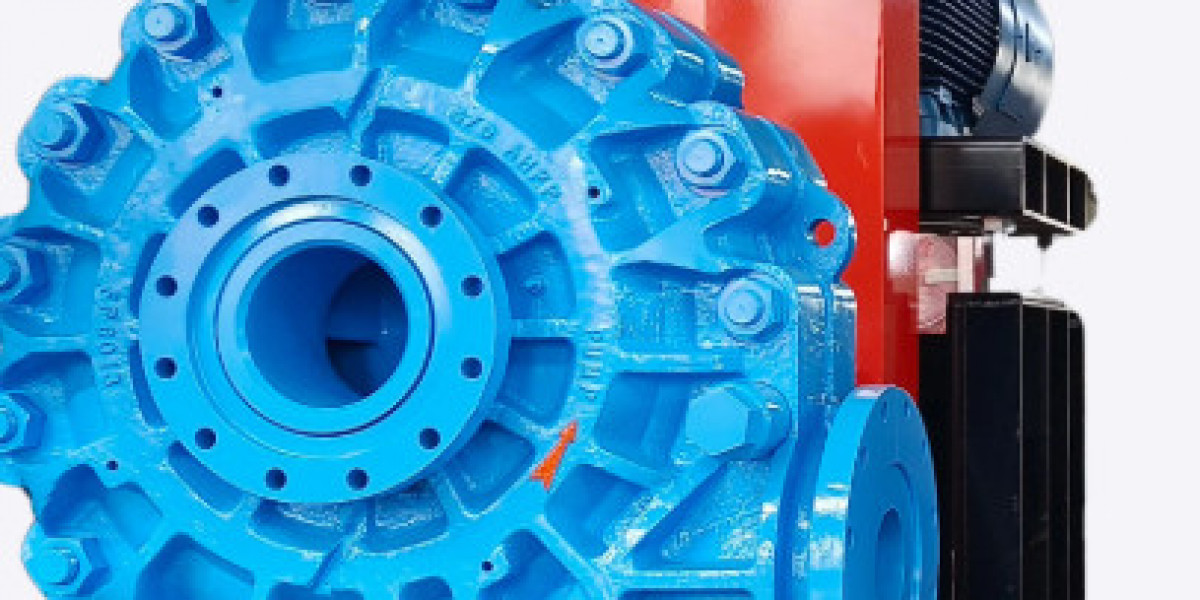

Behind every dependable slurry installation is a working principle that most operators understand in outline but rarely in detail, and that gap occasionally leads to poor decisions about installation, operation, and troubleshooting. A horizontal centrifugal slurry pump is not a mysterious device; it is a carefully arranged system that converts rotational energy into movement of a solid-laden liquid. CNSME Pump builds its range on these fundamentals, and walking through them step by step makes the pump's behaviour far easier to predict and manage in everyday service.
The Centrifugal Concept in Simple Terms
At the core of every horizontal slurry pump sits a rotating impeller enclosed within a stationary casing, and the interaction between the two produces the pumping action. Liquid enters at the centre of the impeller, is caught by the blades, and is flung outward as the impeller spins. This outward throw creates the energy that drives the mixture through the discharge. Nothing about this process requires pistons, valves, or positive displacement mechanisms, which is why centrifugal pumps are compact, smooth-running, and capable of moving very large volumes. The principles are the same ones that govern a household water pump; slurry duty simply scales up the forces and adds the complication of solids.
How Slurry Enters the Pump
The journey begins at the suction inlet, where the mixture flows toward the eye of the impeller. For the pump to work properly, the slurry must arrive with sufficient pressure to reach the impeller without vaporizing or stalling, a requirement captured by the concept of net positive suction head. CNSME advises customers on suction line design and installation height because a starved suction not only reduces performance but also invites cavitation that damages the impeller over time. The inlet is deliberately shaped and sized to guide solids smoothly toward the impeller rather than allowing them to settle or accumulate at the entrance.
Energy Transfer Inside the Impeller
Once inside the impeller, the mixture is subjected to rapid rotation, and the blades accelerate it outward while increasing its velocity and pressure. This is where the pump does its real work, converting the mechanical energy of the shaft into hydraulic energy in the fluid. The impeller's geometry matters enormously in slurry service, because wide channels allow coarse particles to pass without jamming, and the blade profile determines how efficiently the energy transfer occurs. CNSME designs its impellers to balance efficient energy transfer against the wear realities of abrasive media, since a design optimized purely for efficiency in clear water would erode rapidly in slurry duty.
Conversion of Velocity Into Pressure in the Volute
The mixture leaves the impeller at high velocity and enters the volute, the spiral-shaped channel that surrounds the impeller. As the mixture travels through the widening volute, its velocity decreases and its pressure rises, converting kinetic energy into the pressure needed to push the slurry through the discharge piping. The shape of this volute therefore has a direct bearing on the pump's head and efficiency. In slurry pumps, the volute is generously proportioned to keep solids moving and to avoid the localized high-velocity zones where erosion concentrates. A well-designed volute delivers smooth conversion with even wear.
The Role of Clearances and Wear Parts
The working principle depends on precise internal clearances between the impeller and the casing, and these clearances change as wear progresses. As the gap between the impeller and the throatbush or suction liner widens, more slurry recirculates internally instead of being discharged, and efficiency drops while wear accelerates. This is why replaceable wear parts and periodic clearance adjustment are built into the maintenance routine of any well-run slurry installation. CNSME designs its pumps so clearances can be checked and restored, keeping the pump operating near its intended hydraulic condition throughout its service life.
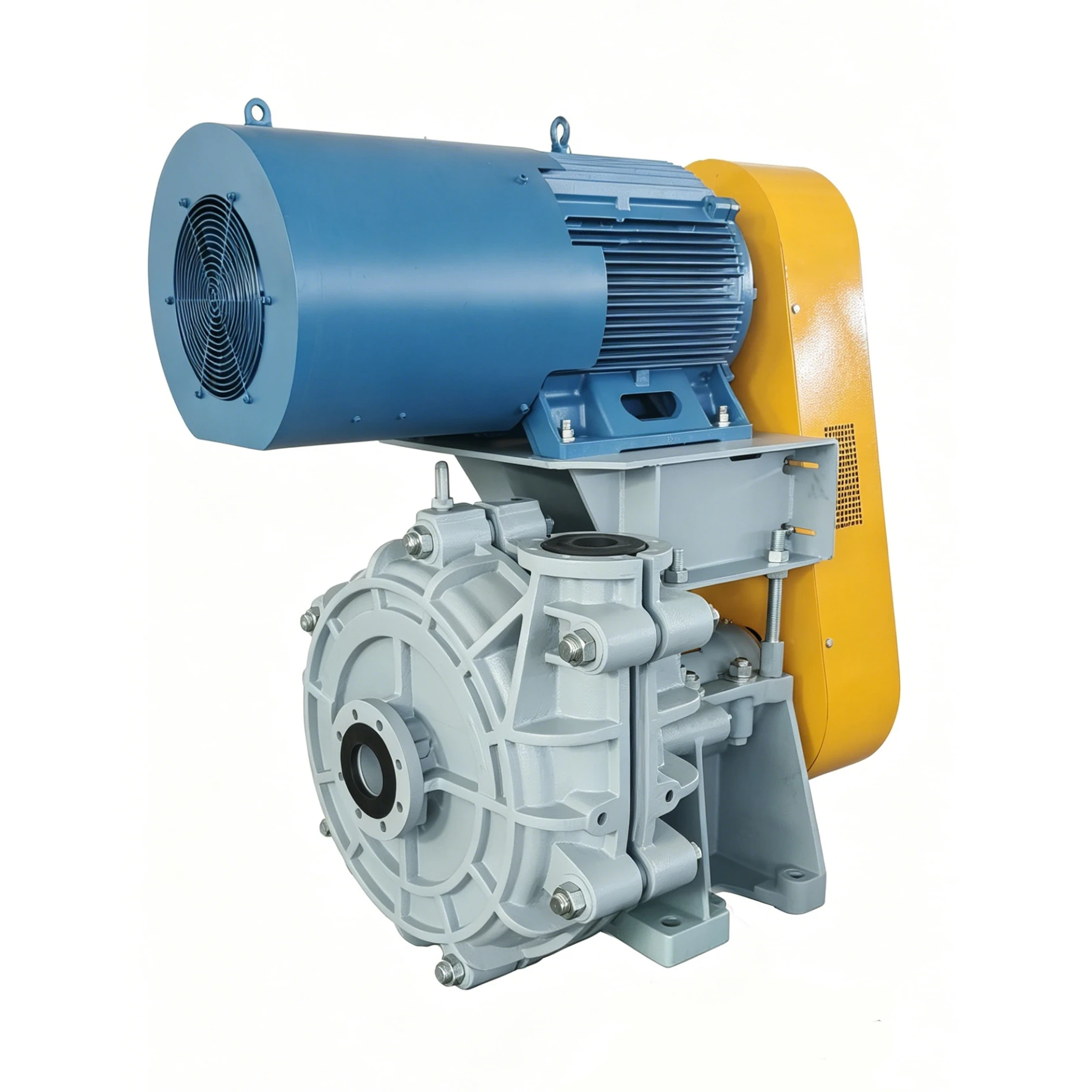
Sealing and Bearing Support in the Working System
The impeller must rotate freely while the abrasive mixture stays inside the casing, and that requirement places the seal and bearing systems at the heart of reliable operation. The seal prevents slurry from escaping along the shaft, while the bearings carry the radial and axial loads generated by the rotating assembly. CNSME offers several seal arrangements suited to different slurry conditions and builds its bearing housings to withstand the loads and vibration of slurry duty. When either system falters, the pump's performance suffers, so both are treated as integral parts of the overall working principle rather than accessories.
Putting the Principle Into Practice
Understanding how a horizontal centrifugal slurry pump works is not an academic exercise; it informs installation decisions, operating practice, and maintenance planning. Knowing that the impeller transfers energy, the volute converts it, the clearances preserve it, and the seal and bearings protect it gives operators a coherent framework for diagnosing problems and keeping equipment healthy. CNSME Pump supports customers with both the hardware and the application knowledge to apply this principle successfully, which is what transforms a simple mechanical concept into dependable slurry handling in the field.