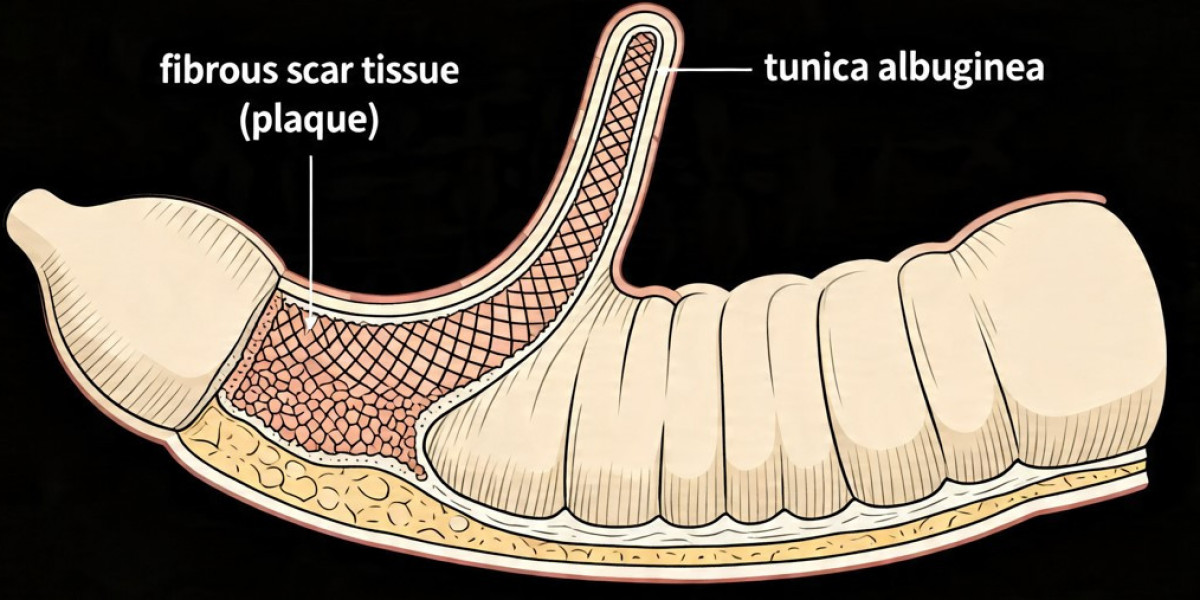

Peyronie’s disease is a condition that affects the structure of the penis and may cause it to curve abnormally during an erection. It develops when fibrous scar tissue forms inside the penis, limiting the normal expansion of the affected area. Depending on the severity, this condition can cause penile curvature, painful erections, shortening, erectile dysfunction, and difficulties with sexual intercourse.
For many men, changes in penile shape can be physically uncomfortable and emotionally challenging. Concerns about sexual performance, intimacy, and confidence may also affect relationships and overall well-being. However, Peyronie’s disease can often be managed with appropriate medical care, and several treatment options are available.
Recognizing the symptoms early and consulting a qualified urologist can help determine the nature of the condition and whether treatment is necessary. This article explores the causes, symptoms, diagnosis, treatment options, possible complications, and recovery considerations associated with Peyronie’s disease.
What Is Peyronie’s Disease?
Peyronie’s disease is a medical condition characterized by the formation of fibrous scar tissue, commonly called plaque, within the tunica albuginea. This is the strong layer of connective tissue surrounding the erectile chambers of the penis.
During an erection, blood fills the erectile chambers, allowing the penis to become firm and expand. Normally, the surrounding tissue stretches relatively evenly. When scar tissue develops in one section, that area may become less flexible and restrict expansion. As a result, the penis may bend toward the affected side.
The direction of the curvature depends on the location of the plaque. Some men develop an upward or sideways bend, while others experience downward curvature, indentation, or an hourglass-shaped deformity.
Peyronie’s disease is generally an acquired condition, meaning the curvature develops after a period when the penis was relatively straight. It is not a sexually transmitted infection and is not a form of penile cancer.
Not every curved penis indicates Peyronie’s disease. Mild curvature can be a normal anatomical variation. However, a new or worsening curve accompanied by pain, a firm lump, shortening, or difficulty with sexual activity should be evaluated by a healthcare professional.
Common Signs and Symptoms of Peyronie’s Disease
The symptoms of Peyronie’s disease vary according to the location of the plaque, the severity of the curvature, and the stage of the condition. Some men experience only minor changes, while others develop symptoms that interfere with sexual activity.
1. Curvature of the Penis
The most recognizable symptom is an abnormal bend during an erection. The curvature may be slight, moderate, or severe and can become more pronounced as the condition progresses.
In some cases, the bend makes penetration difficult or uncomfortable. The degree of curvature does not always correspond directly to the size of the plaque.
2. Painful Erections
Pain during erections is common during the active stage of Peyronie’s disease. Some men experience tenderness around the affected area, while others feel discomfort when the penis becomes erect.
Pain may improve as the condition stabilizes. However, a reduction in pain does not necessarily mean the scar tissue has disappeared or the curvature has corrected itself.
3. Firm Plaques Beneath the Skin
A man may notice a hard lump or thickened area beneath the skin of the penis. This plaque consists of fibrous tissue that restricts normal stretching.
The plaque may not always be easy to feel, making a professional examination important when symptoms suggest Peyronie’s disease.
4. Shortening of the Penis
Some men notice a reduction in penile length after the condition develops. Scar tissue may restrict normal expansion, while the curvature can also affect the apparent length of the penis.
Shortening can cause distress and may influence sexual confidence. The extent of the change varies between individuals.
5. Indentation or Hourglass Deformity
Peyronie’s disease may cause a narrow section along the penile shaft, creating an indentation or hourglass appearance.
This deformity can affect the stability of an erection. In more severe cases, the penis may bend or buckle at the affected area during sexual activity.
6. Erectile Dysfunction
Erectile dysfunction, or ED, refers to difficulty achieving or maintaining an erection firm enough for satisfactory sexual activity.
Some men with Peyronie’s disease also experience ED because of associated vascular problems, changes in erectile tissue, pain, or psychological stress.
Peyronie’s disease and ED are separate conditions, although they can occur together. A medical assessment can help determine whether one or both require treatment.
7. Sexual and Emotional Difficulties
Changes in penile shape and function can affect confidence, relationships, and emotional well-being. Some men become anxious about sexual performance or avoid intimacy because of discomfort or embarrassment.
These concerns are understandable. Discussing them with a healthcare professional can help patients receive appropriate physical and emotional support.
What Causes Peyronie’s Disease?
The exact cause of Peyronie’s disease is not fully understood. However, researchers believe that abnormal wound healing and fibrous tissue formation play important roles.
Penile Injury and Repeated Microtrauma
Small injuries can occur when the penis bends unexpectedly during sexual activity or other physical activities. In some men, these injuries heal with excessive fibrous tissue, eventually forming a plaque.
Not everyone remembers experiencing a penile injury before the symptoms began. The condition can develop even without a clearly identifiable traumatic event.
Abnormal Collagen Formation
Collagen is a structural protein involved in normal wound healing. In Peyronie’s disease, an abnormal healing response may cause excess collagen and fibrous tissue to accumulate in the tunica albuginea.
This tissue does not stretch like healthy tissue, which can result in penile curvature during an erection.
Genetic Factors
Some individuals may have an inherited susceptibility to abnormal scar formation. A family history of Peyronie’s disease or certain connective tissue disorders may increase the likelihood of developing the condition.
However, many men with Peyronie’s disease have no known family history.
Connective Tissue Disorders
Peyronie’s disease is associated with Dupuytren’s contracture, a condition that causes thickening and tightening of tissue in the palm of the hand.
This association suggests that certain men may have a greater tendency to develop fibrous tissue abnormalities.
Age and Other Health Conditions
Peyronie’s disease is more frequently diagnosed in middle-aged and older men, although it can occur in younger adults.
Diabetes, high blood pressure, vascular conditions, and erectile dysfunction may be relevant to a patient's overall sexual health. These associations do not establish that any one of these conditions directly causes Peyronie’s disease.
Risk Factors for Peyronie’s Disease
Several factors may be associated with an increased risk of developing Peyronie’s disease or experiencing related complications.
These include:
Increasing age.
Previous penile trauma or repeated minor injuries.
A family history of Peyronie’s disease.
Connective tissue disorders, such as Dupuytren’s contracture.
Erectile dysfunction or underlying vascular health problems.
Certain chronic medical conditions that affect general health.
Having one or more risk factors does not guarantee that the condition will develop. A proper clinical evaluation is needed to determine whether penile curvature is caused by Peyronie’s disease or another condition.
Understanding the Stages of Peyronie’s Disease
Peyronie’s disease is generally divided into two phases: the active phase and the stable phase. Understanding these stages can help patients and doctors decide which treatment options may be appropriate.
The Active Phase
During the active phase, the plaque develops and the curvature may change. Men may experience painful erections, tenderness, or progressive changes in penile shape.
This phase can last several months and sometimes extends to approximately 12–18 months, although the duration varies.
Treatment during this period often focuses on monitoring changes, managing pain, and considering suitable nonsurgical approaches.
The Stable Phase
During the stable phase, the curvature generally stops changing significantly. Pain often improves or disappears, although the scar tissue and resulting deformity may remain.
Some men continue to experience shortening, indentation, erectile dysfunction, or difficulty with sexual intercourse.
If a stable deformity significantly affects sexual function, a urologist may discuss selected injections or surgery, depending on the patient's circumstances.
The stage should be determined through medical assessment rather than time alone.
How Is Peyronie’s Disease Diagnosed?
Accurate diagnosis is important because not every case of penile curvature is caused by Peyronie’s disease. A urologist can assess the symptoms, identify possible scar tissue, and determine whether treatment is necessary.
Medical History
The doctor may ask when the curvature first appeared, whether it has changed, whether erections are painful, and whether sexual intercourse has become difficult.
Questions about previous injuries, changes in penile length, erectile function, and other medical conditions can help guide the evaluation.
Physical Examination
The specialist examines the penis for firm plaques, areas of thickening, tenderness, and other abnormalities. Penile length may also be measured when relevant to treatment planning.
Erection Photographs
A doctor may request photographs of the erect penis from appropriate angles. These images can help assess the degree and direction of curvature and document changes over time.
Patients should follow their clinician’s instructions for sharing any photographs securely.
Penile Ultrasound
Ultrasound may help identify the plaque, determine its location, and assess calcification. Doppler ultrasound can also evaluate blood flow when erectile dysfunction is present or a vascular assessment is needed.
Erection Assessment
In selected cases, medication may be administered in a clinical setting to produce an erection. This allows the specialist to evaluate the curvature and erectile function more accurately.
Not every patient requires all these investigations. The choice depends on the symptoms and the information needed to select an appropriate treatment.
Treatment Options for Peyronie’s Disease
Treatment aims to reduce pain, improve sexual function, and address significant curvature where possible. The appropriate approach depends on the severity of the deformity, whether it is changing, the presence of erectile dysfunction, and its effect on daily life.
Some men with mild symptoms need only observation, while others may benefit from traction therapy, injections, or surgery.
1. Observation and Medical Monitoring
Men with mild curvature, little or no pain, and no difficulty with sexual intercourse may not require active treatment.
A urologist can monitor the condition and recommend further management if the curvature worsens or begins affecting sexual function.
Observation is appropriate for selected patients, but it should involve medical guidance when symptoms are changing.
2. Penile Traction Therapy
Penile traction therapy involves using a specially designed medical device to apply controlled stretching to the penis.
For some patients, traction therapy may help reduce curvature, preserve penile length, or improve certain deformities. Results vary depending on the device, the prescribed schedule, and individual characteristics.
Treatment requires consistent use according to medical instructions. Excessive force or incorrect use can cause injury, so patients should consult a urologist before starting therapy.
3. Injectable Treatments
Some patients may be eligible for medication injected directly into the fibrous plaque.
Collagenase clostridium histolyticum: This medication breaks down collagen within scar tissue and is approved for specific patients in certain countries, including the United States. Availability and eligibility criteria vary by location.
Treatment usually involves a series of injections and clinician-directed penile modelling. Potential risks include bruising, swelling, pain, and, rarely, serious penile injury.
Verapamil: Verapamil has been used as an intralesional treatment, but the evidence supporting its effectiveness is inconsistent.
Interferon: Interferon injections may be considered in selected cases depending on availability and the specialist’s assessment.
These treatments are not suitable for everyone and should only be administered by appropriately trained healthcare professionals.
4. Oral Medications
No oral medication has consistently demonstrated reliable effectiveness in reversing established penile curvature caused by Peyronie’s disease.
A doctor may prescribe medication to manage pain or treat associated erectile dysfunction. However, improving erection firmness does not necessarily remove the plaque or straighten the penis.
Patients should be cautious about supplements marketed as guaranteed cures and should consult a healthcare professional before using unverified products.
5. Shockwave Therapy
Shockwave therapy uses acoustic waves directed toward tissue in the penis. It may help relieve penile pain in some patients, but it has not been shown reliably to correct the curvature.
It should not be considered a proven method for straightening the penis. A specialist can explain its limitations and whether it has a reasonable role in an individual treatment plan.
6. Surgical Treatment
Surgery may be considered when the curvature is stable and significantly interferes with sexual intercourse or causes substantial functional difficulties.
Common procedures include:
Penile plication: Sutures are placed on the side opposite the curvature to straighten the penis. This procedure can be effective for selected patients but may result in some penile shortening.
Plaque incision or partial excision with grafting: The surgeon releases the contracted tissue and may place a graft over the resulting defect. This approach may be considered for selected severe or complex deformities, but it carries risks, including erectile dysfunction and altered sensation.
Penile prosthesis implantation: Men with significant erectile dysfunction that does not respond adequately to other treatments may be candidates for a penile implant. Additional straightening procedures may be performed when necessary.
Surgery is not required for every patient. The choice depends on the curvature, penile length, erectile function, deformity complexity, and the patient's treatment goals.
The Relationship Between Peyronie’s Disease and Erectile Dysfunction
Peyronie’s disease and erectile dysfunction can occur together, but they are different medical conditions.
Some men maintain normal erections despite having penile curvature. Others experience difficulty achieving or maintaining an erection because of underlying vascular problems, changes in erectile tissue, pain, anxiety, or the mechanical effects of the deformity.
When both conditions are present, a urologist may recommend a combined treatment plan.
Depending on the clinical findings, treatment may include prescription ED medication, lifestyle changes, vacuum erection devices, treatment for the curvature, or penile prosthesis implantation in selected cases.
ED medication can improve erection firmness, but it does not directly dissolve the fibrous plaque. Men should seek medical advice before using these medicines, particularly if they take nitrate medication or have certain cardiovascular conditions.
Can Peyronie’s Disease Be Cured?
Peyronie’s disease can often be managed, but complete resolution is not guaranteed.
Pain may improve naturally as the condition stabilizes, while established curvature often persists. Complete spontaneous resolution is uncommon.
Some men achieve meaningful improvement with traction therapy or selected injections, while others may benefit from surgery. Men with mild curvature that does not interfere with sexual activity may not require treatment.
It is important to distinguish between relieving pain, improving curvature, restoring erectile function, and eliminating the plaque. These are different outcomes, and improvement in one does not necessarily mean that all symptoms will disappear.
A urologist can explain realistic expectations, potential risks, and the likely benefits of available treatments.
Can Peyronie’s Disease Be Prevented?
There is no proven method that prevents every case of Peyronie’s disease. Some men develop the condition without an identifiable injury.
However, avoiding unnecessary penile trauma may help reduce the risk of injury-related tissue damage.
Helpful precautions include:
Avoiding forceful bending or twisting of an erect penis.
Using adequate lubrication during sexual activity when needed.
Choosing positions that allow comfortable movement and control.
Stopping sexual activity if significant pain or an injury occurs.
Seeking medical assessment after a suspected penile injury.
Managing chronic health conditions according to medical advice.
These measures cannot guarantee prevention, but they can support general sexual health.
Lifestyle Recommendations for Men With Peyronie’s Disease
Lifestyle changes cannot reliably remove existing scar tissue, but they may support overall health and erectile function.
Maintain a Healthy Weight
Regular physical activity and balanced nutrition support cardiovascular health, which is important for normal erectile function.
Manage Chronic Health Conditions
Men with diabetes, high blood pressure, or vascular conditions should follow their healthcare professional’s recommendations. Managing these conditions supports general health and may improve associated erectile difficulties.
Avoid Smoking
Smoking contributes to vascular damage and can worsen erectile problems. Quitting smoking benefits cardiovascular and sexual health.
Avoid Unproven Remedies
Forceful massage, aggressive stretching, and unapproved devices can injure penile tissue. Treatment should be guided by a qualified healthcare professional.
Communicate With Your Partner
Open communication can help reduce anxiety and misunderstandings. Couples may benefit from discussing discomfort, comfortable positions, and ways to maintain intimacy while treatment is underway.
Seek Emotional Support
If Peyronie’s disease affects confidence, relationships, or mental well-being, speaking with a qualified counsellor or mental health professional may help.
When Should You See a Doctor?
Arrange an appointment with a urologist if you notice a new penile curve, a firm lump, painful erections, shortening, or difficulty with sexual intercourse.
Medical assessment is particularly important if the curvature is worsening or erectile function is changing.
Seek emergency medical care if a sudden injury during an erection is accompanied by a popping sound, immediate loss of erection, severe pain, significant swelling, or extensive bruising. These symptoms may indicate a penile fracture, which requires urgent evaluation.
Early assessment helps establish the diagnosis and determine the most appropriate treatment.
Frequently Asked Questions About Peyronie’s Disease
Is Peyronie’s disease dangerous?
Peyronie’s disease is generally a benign, noncancerous condition. However, severe curvature, pain, erectile dysfunction, and difficulty with sexual intercourse can affect quality of life. A urologist can determine the severity and recommend appropriate care.
Can Peyronie’s disease go away naturally?
Pain may improve as the disease stabilizes, but significant curvature frequently persists. Complete spontaneous resolution is uncommon. Men with worsening symptoms should seek medical advice.
Does Peyronie’s disease affect sexual intercourse?
Yes. Severe curvature or pain can make penetration difficult or uncomfortable. Erectile dysfunction can also contribute to sexual difficulties, although many men maintain satisfactory sexual relationships with appropriate care.
Can Peyronie’s disease cause infertility?
Peyronie’s disease does not usually directly affect sperm production. However, severe curvature or erectile dysfunction may make sexual intercourse and conception more difficult.
Can tablets straighten a curved penis?
Oral medications have not consistently demonstrated reliable effectiveness in reversing established Peyronie’s curvature. Selected injections may help eligible patients, while surgery can correct significant deformity in appropriately selected cases.
Is surgery necessary for every patient?
No. Some men require only monitoring, while others may benefit from traction therapy or selected injections. Surgery is generally considered when stable curvature significantly affects sexual function.
Which specialist treats Peyronie’s disease?
A urologist is the main specialist responsible for diagnosing and treating Peyronie’s disease. A urologist experienced in male sexual medicine may be particularly helpful when erectile dysfunction or complex curvature is present.
How long does treatment take?
Treatment duration varies according to the method and the individual’s condition. Monitoring may continue for months, traction therapy requires consistent use, injections may involve multiple visits, and surgical recovery depends on the procedure.
Can Peyronie’s disease return after treatment?
Curvature may persist, recur, or change after treatment, including surgery. Follow-up appointments help assess the outcome and identify any new concerns.
Is Peyronie’s disease contagious?
No. Peyronie’s disease is not contagious and is not transmitted through sexual contact. It involves fibrous scar tissue within the penis.
Conclusion
Peyronie’s disease is a condition involving fibrous scar tissue inside the penis that can cause curvature, painful erections, shortening, erectile dysfunction, and difficulties with sexual intercourse. Although it is not usually life-threatening, it can affect sexual function, confidence, and relationships.
Treatment depends on the severity and stability of the deformity, erectile function, and its impact on quality of life. Options include observation, penile traction therapy, selected injections, and surgery for appropriate candidates.
Men who notice a new or worsening penile curve should consult a qualified urologist rather than relying on unproven remedies. With an accurate diagnosis, appropriate treatment, and realistic expectations, many men can manage Peyronie’s disease and improve their comfort, sexual health, and overall well-being.
Medical disclaimer: This article is intended for educational purposes only and does not replace professional medical advice, diagnosis, or treatment. Treatment availability and regulatory approvals vary by country. Consult a qualified healthcare professional for personalized medical guidance.