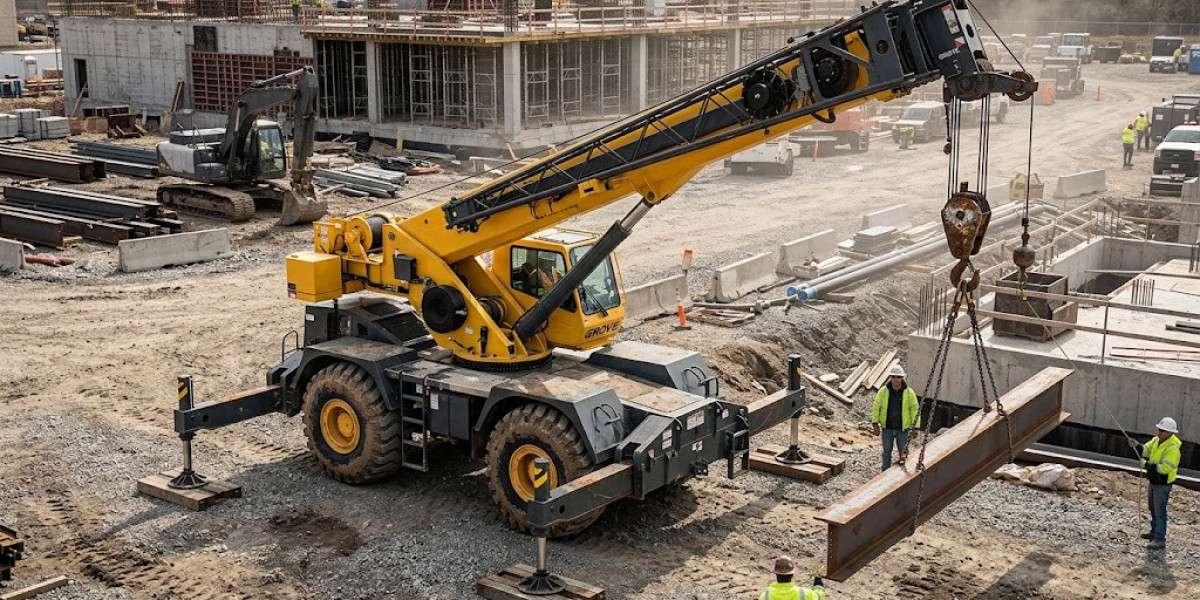

Every experienced operator develops an intuitive sense for their machine—the particular pitch of the hoist motor, the feel of the turntable under load, the way hydraulics respond to a lever push. That instinct is invaluable, but intuition alone cannot schedule replacements or stock shelves. The most effective maintenance programs pair that operator experience with a clear understanding of which components wear out first. This guide provides that roadmap.
Working conditions on a rough terrain job site are unforgiving. Dust infiltrates everything, mud accelerates corrosion, and temperature swings stress every seal and connection. Planning around these realities means knowing which parts fail, why they fail, and where to find quality replacements before a breakdown forces the issue.
The Lifting System
Nothing on the crane experiences more repetitive stress than the hoist and boom. These systems carry the machine's entire working purpose. When they degrade, the crane cannot fulfill its function.
Wire Rope: Wire rope failure develops gradually through abrasion, fatigue, and kinking over weeks of service. Daily inspection remains the most effective way to catch damage before it becomes hazardous. Match rope specifications to your crane model precisely—diameter, lay construction, and wire count all matter. An incorrect fit damages sheaves and shortens the new rope's own service life.
Sheaves and Bearings: The sheave groove is engineered to a specific profile that protects the rope passing through it. Once that profile erodes, rope life drops dramatically. Inspect groove depth and bearing function during planned service windows, and source compatible Grove parts to ensure replacements match your specifications. Regular bearing greasing prevents the rough surfaces that accelerate wear.
Brake and Clutch Assemblies: Hoist brakes operate through friction that gradually diminishes with each lift cycle. The first sign is usually subtle—a slight slippage under heavy load rather than a complete failure. Establishing a replacement schedule based on actual usage patterns protects against surprises. Waiting until a brake locks up is a gamble that costs far more than any preventive order.
Hydraulic Hoist Motors: The motors driving the hoist drum develop internal wear that manifests as declining output. Reduced speed under load and visible seepage at the motor housing are the primary indicators. Both symptoms signal the motor is approaching its service limit. Early replacement prevents the more disruptive scenario of complete failure during an active lift.
Hydraulics and Pneumatics
Hydraulic pressure is the energy source for nearly every movement on an RT crane. Boom extension, outrigger deployment, steering response—all depend on consistent fluid pressure. The hydraulic circuit also produces the majority of unplanned downtime when it fails.
Hose Assemblies: Hoses are the hydraulic system's most vulnerable component, and heat cycling plus constant flexing weaken the rubber until failure occurs. Maintain spare assemblies for the main pump, boom cylinder, and outrigger circuits. A quality crane parts supplier can provide pressure-matched fittings that meet each circuit's specific ratings. Choosing the wrong rating risks dangerous blowouts under operating pressure.
Cylinder Seals: Telescoping cylinders lose their sealing capability as internal seals harden and crack with age. Most cylinder leaks trace back to seal degradation rather than structural problems. A seal kit often restores performance without the expense of complete cylinder replacement. Matching the correct seal design to your machine's production year is essential—Grove revised these specifications at multiple points.
Pumps and Motors: Hydraulic pumps are engineered for thousands of hours of reliable service, but wear eventually degrades performance. Rising case temperatures, audible whining, and pressure instability are the three most common early indicators. Testing case drain flow provides a quantified measure of internal clearance loss. Monitoring these readings gives maintenance teams advance notice of pump degradation.
Drivetrain and Axles
The RT drivetrain operates in conditions that accelerate wear at every connection point. Rocks, ruts, and debris transmit impacts directly through the axles into the transmission. Each component in this chain requires targeted monitoring.
Tires: Tire wear on rough terrain cranes outpaces every other drivetrain component. Tread depth drops rapidly on abrasive surfaces, and sidewall cuts develop without visible warning. Weekly inspections remain essential despite the frequency requirement. Tire specifications must align with the drive system's design parameters exactly.
Hub Seals and Planetary Components: Hub seals keep gear oil inside the planetary housing while preventing contamination from entering. When these seals fail, oil loss begins and the planetary gear set overheats without lubrication. Replacing them proactively with correct Grove parts prevents the far more expensive damage a failure causes. Inspect the oil sight glass on every service visit.
Transmission: Hard or delayed shifting is an early indicator of transmission wear, typically originating in the valve body or clutch packs. Both conditions produce metallic particles that show up in the transmission fluid during inspection. Performing these checks on a regular schedule catches developing problems early. The transmission is one of the most expensive components to rebuild—proactive attention pays for itself.
Electronics and Controls
Modern RT cranes incorporate sophisticated electronic monitoring systems that manage safety, precision, and operator feedback. The shift from mechanical linkages to digital controls improved performance across the board. It also introduced maintenance challenges that did not exist a generation ago.
Load Moment Indicator: The LMI continuously calculates the crane's safe operating envelope based on load weight, boom angle, and radius. It functions as the primary safeguard against overloading during every lift operation. Sensor drift and display faults develop gradually without obvious warning. Run a full functional test at the start of each shift and document any anomalies.
Joystick Controllers and Wiring: Operator commands travel through the joystick to proportional valves that regulate hydraulic flow. When a joystick develops sticking or intermittent response, crane movements become unpredictable and unsafe. Controller replacement through a knowledgeable crane parts supplier restores precise operation. Inspect wiring harnesses for corrosion and moisture damage at every connection point, particularly at the boom tip.
Structure and Foundation
The outrigger system and surrounding structure provide the stable platform every safe lift requires. These components absorb enormous compressive and lateral forces during each operation. Wear accumulates silently in structural elements until tolerance limits are exceeded.
Outrigger Beams and Pads: The beams extend and retract under hydraulic pressure with each deployment cycle, and slide pads protect the beam surfaces from friction. Grinding during outrigger movement signals that pads have worn past their useful life. A dependable crane parts supplier can provide pad kits matched to your specific RT configuration. Beams damaged from impact require inspection before further deployment.
Pins and Bushings: Every pivot point on the crane contains pins and bushings that wear with each load cycle. Accumulated play in worn pins loosens the boom and reduces control precision. Pins and bushings should always be replaced together in matched sets. Mixing new pins with worn bushings recreates the excessive play immediately.
Turntable Bearing: The turntable bearing carries the crane's full rotational load through the chassis frame. Bolt torque verification and gear mesh inspection are essential maintenance tasks. Follow the lubrication schedule from your manual exactly—deviation shortens bearing life significantly. A turntable failure typically means the crane is beyond economic repair.
Routine Maintenance
The most economical maintenance strategy is one that prevents failures before they occur. Filters, fluids, and lubrication work behind the scenes to protect the crane's most expensive assemblies. Small maintenance habits compound into significant savings over the life of the machine.
Hydraulic Filters: Hydraulic filters capture abrasive particles that would otherwise destroy pumps, valves, and cylinders. A filter past its service life begins bypassing unfiltered oil directly into the system. Replace them at the manufacturer's recommended interval using compatible Grove parts to maintain filtration integrity. This routine is among the cheapest forms of insurance a crane can receive.
Air Filters: Job site dust and particulate matter clog engine air filters at rates far beyond normal design expectations. A restricted filter reduces engine power and starves hydraulic circuits of the energy they require. Monitor the air restriction gauge on a consistent schedule and replace the filter before reduced performance becomes noticeable. Clean air intake directly affects both engine longevity and hydraulic system performance.
Engine Belts and Hoses: The engine compartment produces sustained heat and vibration that degrade rubber components continuously. Cracked belts and softened hoses fail unpredictably, often shutting down the crane entirely. Inspect these items on every maintenance visit and replace them at the first sign of cracking or softening. An overheated engine causes damage well beyond the failed component.
Sourcing the Right Components
Selecting replacement parts involves balancing fitment quality against availability and cost. The decision between factory and aftermarket options varies depending on which system is being repaired. Each choice carries distinct implications for long-term reliability.
Factory Components: Original equipment parts are manufactured to Grove's exact material and dimensional specifications. They provide the highest assurance for safety-critical assemblies such as structural components and hydraulic circuits. Cost and lead time are the primary drawbacks—some specialized items take weeks to arrive. When a part directly affects load capacity or structural safety, OEM remains the responsible choice.
Aftermarket Options: The aftermarket for Grove cranes is broad and mature, with many manufacturers producing components to factory specifications. Hoses, seals, brake bands, and hydraulic parts are widely available from established producers. An experienced crane parts supplier can guide you toward aftermarket alternatives that meet your technical requirements. Quality varies across manufacturers, so evaluate sources carefully before committing to critical systems.
Serial Number Verification: Part identification is the most critical step in sourcing and the one most often overlooked. Grove revised seal designs and component configurations at multiple points during production. Always reference your serial number when ordering Grove parts to confirm compatibility with your specific machine. Catalog cross-referencing before purchase prevents the delays and returns that follow a mismatch.
Planning Ahead
Preventing crane breakdowns starts with identifying how each machine actually wears. Different models and duty cycles produce different failure patterns across the RT lineup. A crane operating on abrasive surfaces consumes different components than one working in an urban environment. Building a parts strategy around your fleet's real usage patterns keeps operations running when it matters most.
Stock high-turnover items like hoses, filters, and seal kits before they run out. Planning ahead ensures that when a component reaches the end of its life, the replacement is already available. The alternative—waiting for parts to arrive—costs money and momentum every day it continues.