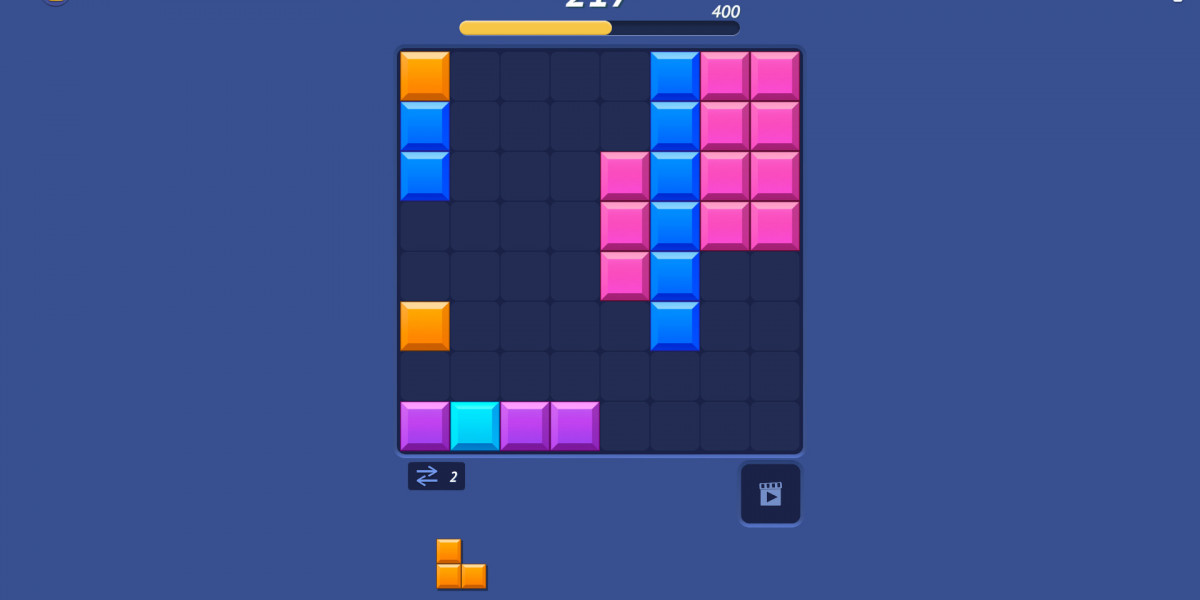

I started playing Block Blast on a random afternoon when I wanted something simple—one of those “open the browser, place a couple blocks, done” situations. The setup looked friendly enough: a clean grid, colorful shapes, and drag-and-drop controls. I honestly didn’t expect to get pulled into this.
My first few moves were… confident. Too confident. I’d place a piece where it looked like it “obviously” fit, clear a line (row or column), and feel like I was cruising. Then the board started filling in ways I didn’t fully account for. Suddenly, it wasn’t about where the block could go right now—it was about what that choice would do to the rest of the grid.
The part where “easy” turns into careful
Block Blast is a block placement puzzle game built around filling a full horizontal row or vertical column to clear cells. The mechanics feel straightforward, and there’s no falling pieces to worry about. You get the block shapes and you place them. That alone made it relaxing at first, because I wasn’t racing a timer or reacting to chaos in mid-air.
But once the board got crowded, I noticed something: the game becomes surprisingly challenging because your blocks can’t be rotated. So when you think, “Wait, why doesn’t this fit like I want it to?” the answer is usually, “Because the piece arrived like this and you’re stuck with it.”
What surprised me was how much I started thinking several moves ahead, even though I didn’t want to. The game kept handing me a “solution” that worked immediately… while quietly setting up a problem for later. And when that later moment arrived, it was usually too late to undo my earlier decision.
Keeping open space is basically the whole game
One of the first lessons I learned the hard way: open areas matter more than getting a satisfying clear right away.
When I left big gaps, I felt clever. When I accidentally created a tiny isolated space—like a little pocket that only matched one future shape—I’d get stuck. Those small awkward gaps start looking innocent, and then you realize you’re trying to fill them with blocks that never cooperate. Meanwhile, everything else is cluttered just enough to make “easy” placements impossible.
There were rounds where I thought I’d found a great quick clear, only to regret it immediately when the board changed and my next available piece had no good options. It’s a weird feeling. Like you’re winning a moment and losing the run.
The good news is that the game can also surprise you in the best way. I had a few placements where one move cleared multiple lines at once, and the whole board felt like it got “wiped clean” for a second. That’s when I’d start thinking, “Okay, I can salvage this.” And sometimes I actually could.
The game ends when your choices run out
The end condition is simple: the game finishes when none of the currently available pieces can fit on the remaining board. That part is brutal, because it makes every placement feel final. You’re not just managing the grid—you’re managing future possibilities.
And that’s probably why I kept going back. Even after losing, I’d immediately have a thought like, “Next time, I shouldn’t leave that weird gap,” or “I should’ve planned for the shape I’ll probably need later.” It wasn’t like I was chasing a high score—I was chasing a better decision.
Mistakes I made (and what they taught me)
My biggest mistake early on was treating each block like an isolated puzzle. I’d grab an easy placement, clear something if I could, and move on.
Then I started realizing that the game also makes you consider the set of available pieces as a group before you commit to your first move. Once I started doing that—actually pausing and looking at what I’d have to work with—I got better at choosing the placement that kept more options alive instead of grabbing whatever looked convenient.
The other mistake was chasing clears when I should’ve prioritized space. Clearing a line feels great, but sometimes it fills the board in a way that corners you. Saving room for the bigger blocks (and avoiding tiny “dead zones”) made my runs feel longer and way less tense.
A few casual tips I wish I knew sooner
If you’re just starting Block Blast, I’d say pay attention to two things: the unfilled space you’re creating, and the shape set you’re working with. Try not to get hypnotized by quick clears if they’re forcing the board into tight, awkward patterns.
Also, when you place a piece, ask yourself a simple question: “Can I still fit something in this area later?” If the answer feels shaky, rethink it. Even if it means waiting—because there’s no countdown timer, so you can take your time.
Final thoughts (and why I want you to try it)
After a handful of rounds, I realized I wasn’t playing “to finish.” I was playing to keep the grid open just long enough that future pieces could actually do something. That’s what made Block Blast fun for me: the planning, the small regrets, and the occasional relief when one move clears more than I expected.
If you’ve got a few minutes and you like puzzle games that make you think, give Block Blast a try. Then do me a favor—play a run and tell me the moment you realized you’d made an awkward gap. I’ll be here starting “one more game,” trying to keep my board alive.