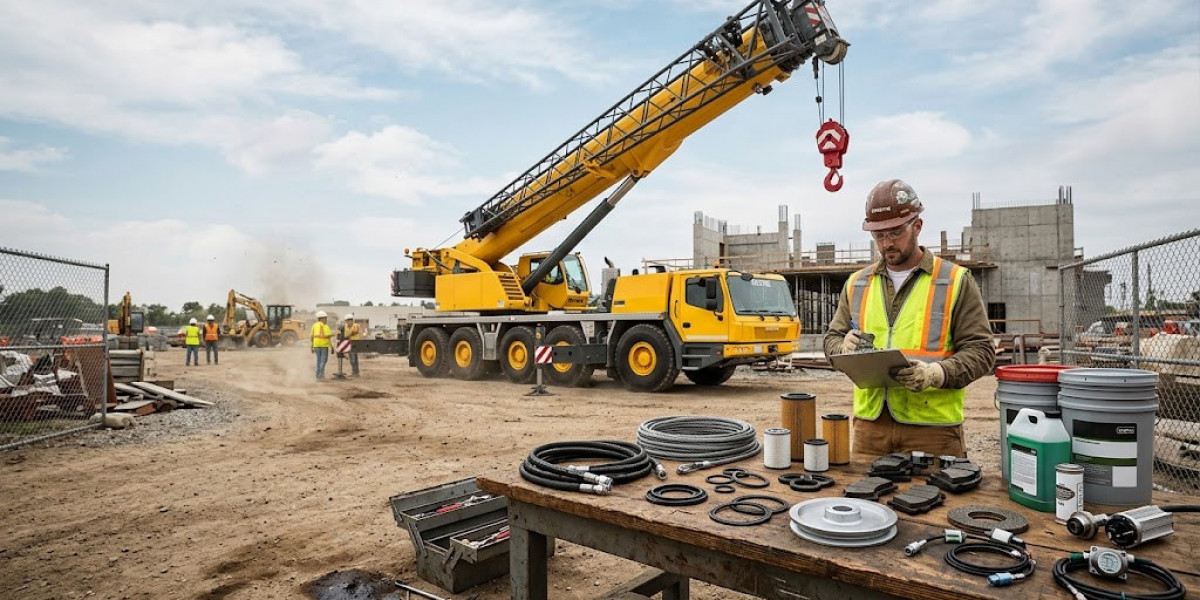

Lifting work is a steady withdrawal from a component's life. Every pick, every transit, and every idle hour in the sun leaves a mark. The marks stay invisible at first. Then one morning a rope, a hose, or a switch decides the shift for you.
Most operators know their machines well. They can tell when a pump sounds different or a lever feels slow. Trouble begins when small warnings get filed away under "later."
The ten wear points below deserve a fixed place on your maintenance calendar. Each entry explains what to inspect, what the warning signs look like, and when to schedule the work. Use the list to replace guesswork with a repeatable routine.
1. Wire Rope and Rigging Gear
The rope supports the load and absorbs the shock of every pick. It works outdoors where grit, moisture, and sunlight all contribute to wear. Nothing about this duty is gentle. Inspect it at the start of each shift without exception.
Look for broken wires, kinks, crushed strands, and rust bloom. Internal fatigue and stretch develop well before surface fraying shows up. Track replacement by working hours and by the heaviest lifts logged.
Slings, shackles, and master links age on a similar curve. Many shops handle crane parts of this type every week, so keeping a spare set on the shelf is practical. Retire anything with stretched eyes or distorted pins at once. Early swaps cost far less than a load released mid-air.
2. Hydraulic Hoses and Cylinder Seals
Pressurized fluid drives boom lift, extension, and outrigger spread. It travels through hoses and seals that face heat, vibration, and abrasion every shift. Rubber ages from the inside even while the outside still looks sound. A burst line stops work and puts hot oil on the ground.
Walk the machine and check for cracks, blisters, and damp fittings. Cylinder weeping is a reliable sign that a seal has expired. Fit fresh O-rings whenever a joint is opened during service.
Hoses, seals, and adapters rank among the most frequently requested Grove parts in any service operation. Keep the common sizes on hand so a repair does not wait on shipping. Record pressure ratings and material grades when you order replacements. Matching the specification is more important than matching the price.
3. Filtration for Hydraulic, Air, and Fuel Systems
Filters keep contamination away from tight tolerances inside the machine. They capture grit, water, and fine metal before those particles circulate. A blocked filter restricts flow and starves the engine or pump. Output drops and temperatures start to rise.
Change hydraulic filters whenever the fluid is serviced. Air and fuel filters follow their own intervals in the manual. Skipping those intervals shortens engine life more than many owners expect.
Log the date, the part number, and the machine hours at each change. That record turns filter work from guesswork into a schedule. Media quality varies widely, so match the specification exactly.
4. Service, Park, and Swing Brakes
Controlled stopping deserves as much attention as controlled lifting. Service brakes, park brakes, and swing brakes each manage heavy rotating mass. Friction material thins gradually with every application. Longer stopping distances and squealing noises appear as the first hints.
Replace pads, shoes, and discs before they reach the backing plate. Running them into metal damages drums and rotors behind them. Those assemblies take longer to source and cost more to correct.
Inspect lines, actuators, and hardware while the unit is apart. A small leak can imitate worn friction material surprisingly well. Solve the underlying fault before fitting new pads.
5. Hoist Brake Bands and Clutch Plates
No assembly in the crane handles as much heat and torque as the hoist. It raises, holds, and lowers every load on the job. Bands and clutch plates slip by design to control a descending load. That deliberate slip removes a little lining each time.
When a suspended load starts to creep downward, the lining is thin. Treat the sign as urgent and book the repair immediately. Crew members working below depend on that hold completely.
Hoist brake bands and clutch plates are widely stocked crane parts at most dealerships. While the hoist is open, inspect drums for scoring and springs for tension. Uneven wear patterns often hint at trouble deeper in the gearing.
6. Slewing Bearing and Swing Ring
Rotation under load rests on a single large bearing. Boom weight, counterweight, and the suspended load all pass through it. Thrust forces and tipping moments concentrate there during each lift. Lubrication and inspection belong permanently on the service calendar.
This bearing lasts far longer than a filter or a hose, yet it still wears. Grinding noise or clear play during rotation points to advancing damage. Reduce the duty cycle and arrange a teardown before it worsens.
Swing ring replacement is a major undertaking with extended downtime. Keep inspection notes, torque figures, and grease logs in one place. Reviewing them together reveals trends a single reading cannot show.
Seals and fasteners for this assembly are typical Grove parts to order before disassembly. Having them ready prevents a half-finished machine sitting on the yard.
7. Hook Blocks, Sheaves, and Hooks
The hook block is where the crane finally meets the load. Sheaves inside guide the rope through every lift and hold. Groove wear grows wherever the rope crosses the same contact points. A damaged groove starts cutting into the rope beneath it.
Check the hook for stretch, twist, or bending near the throat. Test the safety latch for spring tension and free movement. A throat that has opened indicates the yield point has been passed.
Record measurements at each inspection and compare them season to season. Numbers expose wear that a quick look will always conceal. Replace blocks and sheaves once readings fall outside tolerance.
8. Tires and Outrigger Support
On a mobile crane, tires perform two distinct jobs. They carry the machine between lifting positions on the road. They also hold static weight while the boom is working. Pressure shifts with temperature and duty, so check it often.
Cuts, bulges, and uneven tread wear each justify replacement. Outrigger pads absorb the reaction load at every setup. Steel pads bend under concentrated loading. Composite pads splinter, crack, or separate along the edges.
Inspect pads before each lift and retire anything structurally damaged. Choose pad area to suit the ground and the load chart. Timber or matting spreads pressure across soft or saturated soil.
Tires, pads, and outrigger hardware are everyday Grove parts worth keeping within reach. Replacing them is inexpensive compared with recovery after settlement. A few minutes of checking prevents a long afternoon of trouble.
9. Sensors, Switches, and LMI Electronics
Modern cranes depend on electronics to enforce safe working limits. Load moment indicators read sensors to warn before stability is lost. Limit switches stop the boom at full extension and near the drum. Rain, mud, and vibration attack this hardware throughout every shift.
Corroded connectors and stuck switches account for most reported faults. When the LMI shows false values, begin with the sensor circuit. Verify wiring, grounds, and calibration before pointing at the display.
Spare harnesses and switches cost little next to a lost shift. Swap them during planned shutdowns so the safety system stays current. Log every change to keep calibration records complete and traceable.
10. Hydraulic Oil, Engine Oil, and Coolant
Fluids perform three duties inside every working machine. They lubricate, transmit force, and carry heat away from hot areas. Oil and coolant both degrade with time and accumulated hours. Additives break down and moisture enters through seals and reservoirs.
Contaminated oil quickly erodes pumps, valves, and precision surfaces. Damage begins quietly and later surfaces as an expensive failure. Follow the manual's intervals and shorten them under severe duty.
Send a used sample to a laboratory at each drain. The report names which internal assemblies are shedding material. Use only specified grades and keep stored fluid sealed and labeled.
Clean handling during transfer matters as much as the fluid choice. Laboratory reports often read like a summary of crane parts already in decline. That early warning gives you time to order before a shutdown.
Putting the Plan into Practice
Nothing on a crane wears evenly, and that makes planning both harder and more valuable. Some items fail by the hour, others by the lift, and a few by the season. A schedule that respects those differences protects the budget and the crew.
Turn the ten points above into a checklist for the next service window. Keep common Grove parts in a clean, dry rack where they will not degrade. Simple storage discipline prevents new components from failing before installation.
Arrange a dependable source for rigging gear and specialist fittings before you need one. A known supplier shortens the wait when a machine is already idle. Compare lead times and technical documentation before making a commitment.
Follow the schedule, document every change, and train crews to report symptoms early. Small replacements handled on time prevent the repairs nobody can plan around. Your people work with confidence, and the machine stays productive.