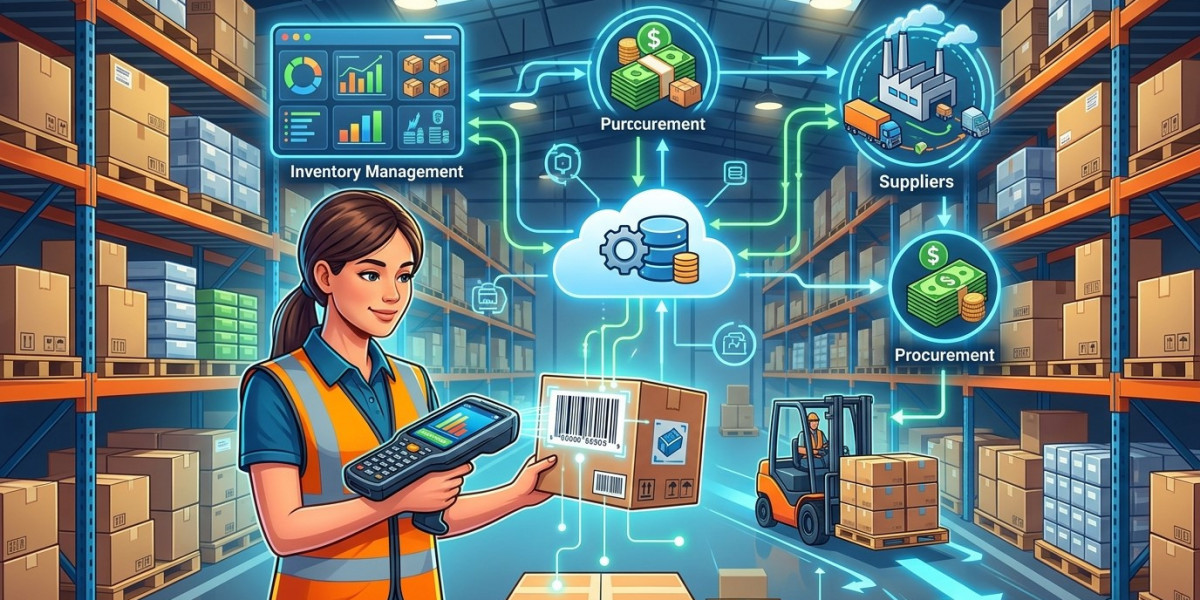

Maintaining the right amount of inventory is essential for businesses that want to fulfill customer orders efficiently while avoiding unnecessary storage costs. Too little stock can lead to stockouts, delayed orders, and lost sales, while excessive inventory can tie up capital and increase storage expenses. A barcode-based stock replenishment system provides businesses with a practical way to monitor inventory levels, identify replenishment requirements, and maintain better control over stock movement.
With barcode labels, scanners, printers, mobile computers, and inventory management software working together, businesses can automate many of the activities involved in stock replenishment. Pointus Solutions provides technology solutions that can help organizations improve inventory identification and warehouse workflows. Businesses looking to Shop Barcode equipment can also explore suitable Printing Products for creating reliable product and inventory labels.
What Is a Barcode-Based Stock Replenishment System?
A barcode-based stock replenishment system uses barcode technology to monitor inventory and support the process of replacing products when stock reaches a defined level.
Each product is assigned a barcode that represents information such as a product number, SKU, or other identifier. Employees can scan products during receiving, picking, sales, transfers, returns, and inventory counts.
The captured information is sent to inventory management software, where stock quantities can be updated. When inventory reaches a predefined reorder point, the system can notify employees or trigger a replenishment workflow.
A typical system consists of:
- Barcode labels
- Barcode printers
- Barcode scanners
- Mobile computers or handheld terminals
- Inventory management software
- Warehouse Management Systems (WMS)
- ERP or business management software
- Purchasing and replenishment workflows
Together, these components create a connected approach to inventory management.
Why Stock Replenishment Is Important
Stock replenishment ensures that products are available when they are needed. Businesses must balance product availability with the cost of holding inventory.
Poor replenishment practices can create several problems.
Stockouts
When inventory reaches zero before new stock arrives, businesses may be unable to fulfill customer orders.
Overstocking
Ordering too much inventory can increase storage costs and tie up working capital.
Excessive Manual Work
Employees may spend considerable time checking spreadsheets, counting stock, and manually calculating reorder requirements.
Inaccurate Inventory Records
If inventory transactions are not recorded correctly, replenishment decisions may be based on incorrect information.
Delayed Purchasing
When low stock is identified too late, businesses may need to place urgent orders or wait longer for replenishment.
Barcode technology helps provide more accurate inventory information, which can support better replenishment decisions.
How Barcode Technology Supports Stock Replenishment
Barcode systems capture inventory movements at different stages of the product lifecycle.
For example, when a shipment arrives, employees can scan the incoming products. When items are picked for an order, another scan can reduce available stock. Returned products can also be scanned back into inventory.
This creates a continuous record of inventory activity.
A simplified workflow looks like this:
Receive → Scan → Store → Pick → Scan → Inventory Update → Reorder Point → Replenishment
Because inventory data is captured electronically, businesses can reduce dependence on manual stock updates.
1. Accurate Inventory Identification
The foundation of a replenishment system is accurate product identification.
A barcode provides a standardized way to identify products. Instead of manually entering a long SKU or product code, employees can scan the barcode attached to the item.
This can reduce common data-entry problems such as:
- Incorrect product codes
- Typing errors
- Duplicate entries
- Confusion between similar products
- Incorrect quantities
Consistent product identification helps create more reliable inventory records.
2. Real-Time or Timely Stock Updates
Barcode scanning can update inventory whenever a transaction occurs.
For example, when a product is picked for an order, scanning the item can automatically record the movement. When new stock arrives, receiving staff can scan it into inventory.
This allows the inventory system to reflect stock changes more quickly than processes based entirely on manual data entry.
Timely information is particularly valuable when businesses manage fast-moving products.
3. Automated Reorder Point Monitoring
A business can establish minimum stock levels for individual products.
For example, a company might define:
- Product A: Reorder at 100 units
- Product B: Reorder at 50 units
- Product C: Reorder at 25 units
When the inventory quantity reaches the designated reorder point, the software can flag the product for replenishment.
The exact replenishment method depends on the business and software configuration. Some organizations may generate purchase recommendations, while others may create internal transfer requests between warehouses.
4. Faster Stock Counting
Regular inventory counts are important for verifying stock accuracy.
Barcode scanners can speed up cycle counting by allowing employees to scan products rather than manually recording product codes.
Employees can scan:
- The warehouse location
- The product barcode
- The quantity
- Any relevant batch or serial information
The system can compare the physical count with the recorded inventory.
This helps businesses identify discrepancies that could otherwise affect replenishment decisions.
5. Better Multi-Warehouse Replenishment
Businesses operating multiple warehouses can use barcode technology to monitor inventory across different locations.
For example, Warehouse A may have excess stock while Warehouse B has reached its reorder point.
Instead of immediately purchasing additional inventory, management may determine whether stock can be transferred between locations.
Barcode scanning can record:
- Source warehouse
- Product
- Quantity
- Transfer date
- Destination warehouse
- Receiving confirmation
This improves visibility into inventory movement and supports more organized replenishment processes.
Components of a Barcode Replenishment System
A successful system generally combines hardware, software, labels, and standardized processes.
Barcode Labels
Labels provide the product identification that employees scan during inventory transactions. Labels can be applied to individual products, cartons, pallets, shelves, bins, and storage locations.
Barcode Printers
Barcode printers create labels according to the requirements of the business. Thermal printing is commonly used for producing inventory and product identification labels.
Businesses should select the appropriate printer based on printing volume, label size, connectivity, resolution, and operating environment.
Barcode Scanners
Scanners capture barcode information quickly and accurately. Handheld scanners are suitable for many general applications, while wireless and rugged industrial models can provide additional flexibility for demanding warehouse environments.
Mobile Computers
Mobile computers allow employees to scan products while accessing inventory applications directly from the warehouse floor.
Inventory Software
The software maintains product information, inventory quantities, reorder points, purchase information, and transaction records.
Setting Effective Reorder Points
Barcode technology can improve data collection, but businesses still need appropriate replenishment rules.
A reorder point should take factors such as these into account:
Average Demand
Understand how quickly the product is normally sold or consumed.
Supplier Lead Time
Consider how long it takes for replacement inventory to arrive.
Safety Stock
Maintain additional inventory where necessary to protect against unexpected demand or supply delays.
Seasonal Demand
Some products experience significant changes in demand during holidays, promotions, or particular seasons.
Warehouse Capacity
Replenishment decisions should also consider available storage space.
For example, a business with high demand and long supplier lead times may need a higher reorder point than a business with predictable demand and short lead times.
Integrating Barcode Replenishment With ERP and WMS
Barcode systems become more useful when integrated with existing business applications.
Integration with an ERP or WMS can allow barcode transactions to flow directly into inventory records.
For example:
Barcode Scan → WMS → Inventory Update → Reorder Alert → Purchasing/Transfer Workflow
This reduces the need to enter the same information into multiple systems.
Integration can also provide management with better visibility into stock levels, purchase requirements, warehouse activity, and product movements.
Benefits of Barcode-Based Stock Replenishment
A barcode-driven replenishment system can provide several operational benefits.
| Benefit | Impact |
|---|---|
| Improved inventory accuracy | Better replenishment decisions |
| Faster stock counting | Less time spent on manual counting |
| Better product identification | Fewer data-entry mistakes |
| Timely stock updates | Improved inventory visibility |
| Reorder monitoring | Better control of minimum stock levels |
| Multi-warehouse tracking | More efficient stock transfers |
| Automated data capture | Reduced administrative work |
| Better reporting | Improved operational planning |
The actual results depend on system design, data quality, employee training, and the level of integration.
Best Practices for Implementing Barcode Replenishment
Businesses should follow a structured approach when implementing a barcode-based replenishment system.
Standardize Product Codes
Use consistent SKU and barcode identification across warehouses, stores, and other inventory locations.
Label Storage Locations
Assign barcodes to shelves, racks, bins, and warehouse zones so inventory can be tracked by location.
Train Employees
Make sure employees understand when products should be scanned and how to handle exceptions.
Maintain Barcode Quality
Unreadable labels can interrupt the workflow. Use suitable label materials, print quality, and printer settings for the operating environment.
Review Reorder Rules
Reorder points should be reviewed periodically based on demand, supplier performance, lead times, and business requirements.
Monitor Inventory Discrepancies
Investigate repeated differences between physical stock and system quantities to identify process problems.
Choosing the Right Barcode Equipment
The equipment required depends on the size and nature of the business.
A small warehouse may need a thermal label printer, handheld barcode scanners, and basic inventory software. A larger distribution operation may require industrial scanners, mobile computers, high-volume printers, wireless infrastructure, and a fully integrated WMS.
Before selecting equipment, businesses should evaluate:
- Daily scanning volume
- Label printing volume
- Barcode types
- Required scanning distance
- Warehouse environment
- Wireless connectivity
- Software compatibility
- Durability requirements
- Future scalability
Choosing equipment based on actual workflow requirements helps businesses build a system that can grow with their operations.
Conclusion
Barcode-based stock replenishment systems provide businesses with a structured way to monitor inventory, identify low-stock products, and support more efficient replenishment workflows. By capturing inventory transactions through barcode scanning, businesses can improve product identification, maintain more accurate stock records, and gain better visibility into inventory movement.
When barcode labels, printers, scanners, mobile computers, and inventory software are integrated into a single workflow, replenishment can become more organized and data-driven. Businesses operating multiple warehouses can also use barcode technology to monitor stock across locations and coordinate internal transfers.
Pointus Solutions can help businesses explore barcode and Auto-ID technologies designed for modern inventory and warehouse operations. Organizations can Shop Barcode scanners, printers, and related Printing Products to create reliable identification and replenishment workflows suited to their operational requirements.
With standardized processes, accurate barcode data, appropriate reorder rules, and suitable technology, businesses can build a scalable stock replenishment system that supports better inventory control and more efficient warehouse management.