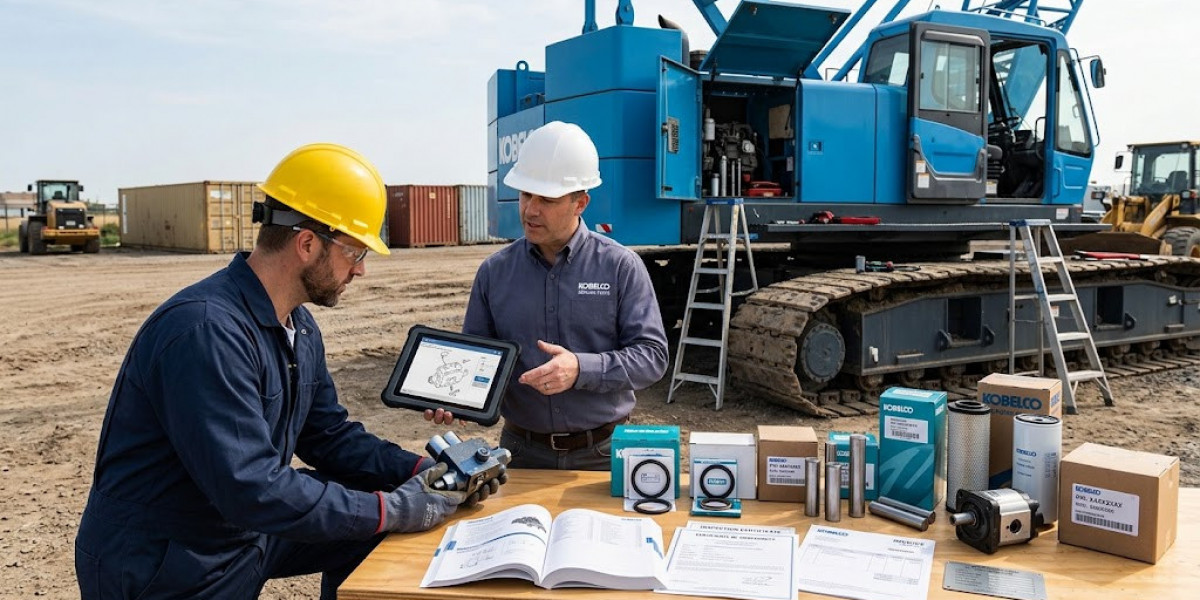

Your Kobelco crane is sitting idle. Maybe the swing motor on your CKE series has started acting up, or the boom cylinder seals on your rough-terrain model finally gave out. Every hour that machine sits still costs you real money.
So you do what most operators do. You pull the part number, open your laptop, and start searching for a crane parts supplier who can get it to you fast. You find a listing. The price looks reasonable. Your cursor hovers over "add to cart."
Stop for thirty seconds.
Sourcing Kobelco parts isn't like picking up a filter at the auto store. The tolerances are tight. The model variants are numerous. A component that looks correct but doesn't match the original specification can cost you ten times more than the part itself once it's installed, fails, and has to come back out.
A four-hundred-dollar hydraulic valve has turned into a six-thousand-dollar downtime event because someone skipped a single phone call. So before you place that order, ask these five questions. Write them down if you need to. They'll keep you out of serious trouble.
1. "Is This OEM, or Aftermarket — and Who Actually Manufactured It?"
There's nothing wrong with choosing aftermarket. Many replacement components perform identically to factory originals and cost considerably less. But you need to know exactly what you're purchasing.
If the listing says "OEM equivalent" or "direct replacement," push for specifics. A trustworthy crane parts supplier will tell you the actual manufacturer name, the brand, and whether the item was built to Kobelco's original drawings or reverse-engineered from a copy.
For high-stress items like wire ropes, boom pins, swing bearings, and hydraulic pumps, stick with OEM or a well-established aftermarket brand. For seals, filters, and wear plates, a quality alternative can serve without issue. The key is making an informed choice rather than guessing.
2. "Can You Cross-Reference This Part Number Against My Exact Model and Serial Number?"
Kobelco has been manufacturing cranes for decades. The CK, CKE, RK, and SL series all carry multiple revisions and running changes. A part that fits a 2014 CKE2500G may not bolt onto a 2019 CKE2500G-2 without modifications.
Share your full model designation, serial number, and year of manufacture with the seller. Ensuring compatibility across Kobelco parts requires more than a surface-level part number match. A competent source will consult the catalog and verify fitment against your specific machine. A careless one will simply match the digits you read off the old component and ship it.
If they can't or won't verify against your serial number, that's a red flag. You need someone with access to Kobelco's own parts breakdowns, not just a database search. This matters even more for hydraulic and electrical components, where physically identical solenoid valves may operate on different voltages or feature different port configurations between model years.
3. "What Is the Actual Lead Time, and Is This Part Physically in Your Warehouse Right Now?"
The phrase "in stock" carries different meanings depending on who's using it. For some sellers, it means the item sits on a shelf in their own facility. For others, it means they can order it from a distributor within two weeks and call that "available."
Ask directly: "Is this on your shelf, or are you sourcing it?" If sourcing, where from? A domestic warehouse will deliver much faster than an overseas depot. What's the realistic delivery window to your job site?
If your crane is down and you're losing money by the day, you need a hard answer — not "usually ships in three to five business days." You need confirmation that the Kobelco parts in question are physically present and ready to ship today.
Also ask about shipping arrangements. Boom sections, counterweights, and full hydraulic assemblies are heavy and awkward to handle. Freight logistics matter. A seller who can arrange same-day or expedited freight becomes invaluable when you're under pressure.
4. "What Is the Warranty, and What Does the Return Process Actually Look Like?"
Every seller claims they stand behind their products. Few will clearly explain what happens when something goes wrong.
Get specifics in writing or via email. How long does the warranty last? What does it cover — manufacturing defects only, or does it include premature wear under normal conditions? If a return is necessary, who bears the shipping cost? A dependable crane parts supplier will have clear, documented answers to all of these.
For aftermarket components, ask if there's a fitment guarantee. If the part arrives and doesn't match your machine despite the seller's earlier verification, who absorbs the return freight and restocking fee? You don't want to discover the answer when a two-thousand-dollar pump shows up with the wrong flange pattern.
5. "Can You Provide Documentation — Test Certificates, Material Specs, or Traceability Records?"
This question separates professional operations from casual resellers. For critical load-bearing or safety-related components — wire ropes, hooks, sheaves, structural pins, hydraulic cylinders — proper paperwork is essential.
Material test reports, load test certificates, and proof of ISO or JIS compliance should accompany the shipment. If your project falls under a regulated environment or your site requires compliance documentation, this isn't optional. You need that paper trail.
Even for less critical items, a seller who can provide a spec sheet or datasheet demonstrates genuine product knowledge. They understand what they're selling beyond a listing description. Ask plainly: "Can you send the certification or spec sheet with the shipment?" If they hesitate or promise to "check with the manufacturer," note that. It reveals how deep their expertise actually runs.
Why These Questions Matter
None of this is meant to be confrontational. You're not interrogating anyone. You're exercising the same diligence you'd apply before starting any shift — checking fluid levels, inspecting rigging, walking around the machine.
A reputable crane parts supplier will welcome these questions. They signal that you're a knowledgeable buyer who takes the work seriously. It also builds a foundation for future interactions, so when you call at dawn with a blown hose and a deadline, someone picks up. Properly sourced Kobelco parts backed by an accountable seller give you exactly that confidence.
Those who dodge these questions, give vague answers, or rush you toward a quick transaction — those are the ones to walk away from. Your Kobelco has earned its reputation through hard work. It deserves components that fit right, last long, and come with someone standing behind them. Five questions. Two minutes on the phone. That's all it takes.