
Leadership at the highest level is not simply about knowing more. Executives, founders, advisors, and institutional leaders already have years of experience and access to extensive information. The real challenge is often understanding the systems behind the information—and recognizing how those systems influence decisions, performance, growth, and long-term impact.
That is the foundation of Antomius Wise's approach to keynotes, workshops, and executive education.
His engagements are designed to do more than deliver an inspiring presentation. They are built to challenge assumptions, introduce new ways of thinking, and give leaders practical mental models for understanding complex environments.
The goal is not just to inform an audience.
It is to change how the room thinks.
Leadership Requires More Than Motivation
Traditional leadership programs often focus on familiar themes such as communication, teamwork, motivation, and personal development. While these subjects remain valuable, executive leadership increasingly requires something deeper.
Leaders must understand the structures in which they operate.
Every organization has systems of incentives, authority, accountability, governance, capital, and decision-making. These systems influence behavior, often without being explicitly recognized.
A leader may believe a performance problem is caused by an individual when the underlying issue is actually structural. A growth challenge may appear to be a marketing problem when the real constraint is governance. A philanthropic initiative may have good intentions but limited long-term impact because the surrounding economic infrastructure has not been considered.
Understanding these relationships can fundamentally change how leaders approach problems.
This is why Antomius Wise focuses on making the invisible visible.
Make the Invisible Visible
One of his signature keynote and executive programs, Make the Invisible Visible, explores the forces that often operate beneath organizational outcomes.
The program examines how incentives, governance, economic structures, and institutional design influence value creation and long-term growth.
Instead of looking only at what is happening, leaders are encouraged to ask why it is happening.
What incentives are shaping behavior?
How are responsibilities and authority distributed?
What structures are encouraging or limiting growth?
Where does institutional leverage exist?
Which unseen forces are influencing the organization's decisions?
These questions can help executives move beyond surface-level solutions and identify the mechanisms that are actually driving results.
For organizations dealing with complicated challenges, this type of structural awareness can become an important leadership advantage.
Rethinking Strategic Philanthropy
Philanthropy is another area where systems thinking can create a different perspective.
Charitable giving is often evaluated through immediate outcomes: how much was contributed, who received the support, or what project was funded. Strategic philanthropy can require a broader view.
Antomius's Strategic Philanthropy & Economic Impact program explores how leaders can think about philanthropy through the lenses of governance, economic infrastructure, institutional development, and sustainable value.
The question is not simply, "How much can we give?"
It is also:
"What kind of institutional impact can this capital create?"
That shift in perspective can be particularly valuable for foundations, philanthropic networks, wealth advisors, and leaders responsible for long-term community or institutional outcomes.
When philanthropy is connected to stronger governance, economic infrastructure, and institutional capacity, its potential impact can extend well beyond a single initiative.
Leading When the System Is Complex
Complexity is now a defining characteristic of executive decision-making.
Leaders must often balance competing stakeholders, economic pressures, regulations, organizational priorities, technological changes, and unpredictable external conditions. In these environments, simple answers can be misleading.
Antomius's Leadership Inside Complex Systems program addresses this reality directly.
The program explores decision-making, accountability, discipline, and structural awareness in situations where the stakes are high and the environment is constantly changing.
Strong leaders do not simply react to complexity. They learn to understand it.
They recognize relationships between different parts of an organization. They understand that changing one variable can affect several others. Most importantly, they develop the discipline to examine the larger system before making consequential decisions.
This approach can help leaders become more deliberate, adaptable, and effective.
Lessons From Two High-Performance Worlds
Antomius Wise brings an unusual combination of experiences to his leadership work.
His From the Field to the Secret Service keynote draws on his journey from professional football to the U.S. Secret Service, connecting two demanding environments where preparation, discipline, adaptability, and performance under pressure are essential.
Professional athletics teaches individuals how to prepare for moments when performance is measured immediately. Federal service provides a different perspective on responsibility, authority, preparation, and operating within complex institutional environments.
Together, these experiences provide a distinctive framework for discussing leadership.
The lessons extend beyond football or federal service.
They apply to executive teams facing difficult decisions, entrepreneurs building organizations, professionals operating under pressure, and leaders responsible for outcomes that affect more than themselves.
Preparation creates confidence.
Discipline creates consistency.
Adaptability creates resilience.
And purpose provides direction when circumstances become difficult.
Designed Around the Audience
Effective executive education cannot be completely separated from the people sitting in the room.
A keynote for a university audience may require a different approach from a private executive session. A conversation with wealth advisors may focus on different structural questions than a workshop with founders or civic leaders.
That is why Antomius's engagements are designed around the specific audience and environment.
His programs are particularly suited for:
- Executive leadership teams
- Wealth advisors and trust networks
- Chambers and civic leadership groups
- Philanthropic networks and foundations
- Founders and entrepreneurs
- Universities and academic organizations
- Financial services and insurance firms
- Private executive gatherings
Whether the format is a keynote, workshop, or multi-session executive education program, the objective remains consistent: provide ideas and frameworks that leaders can apply after they leave the room.
From the Stage to Executive Education
Antomius's work extends beyond traditional speaking engagements.
Executive education creates an opportunity for deeper conversations—ones that allow participants to examine institutional systems, governance, economic structures, strategic philanthropy, and leadership from multiple perspectives.
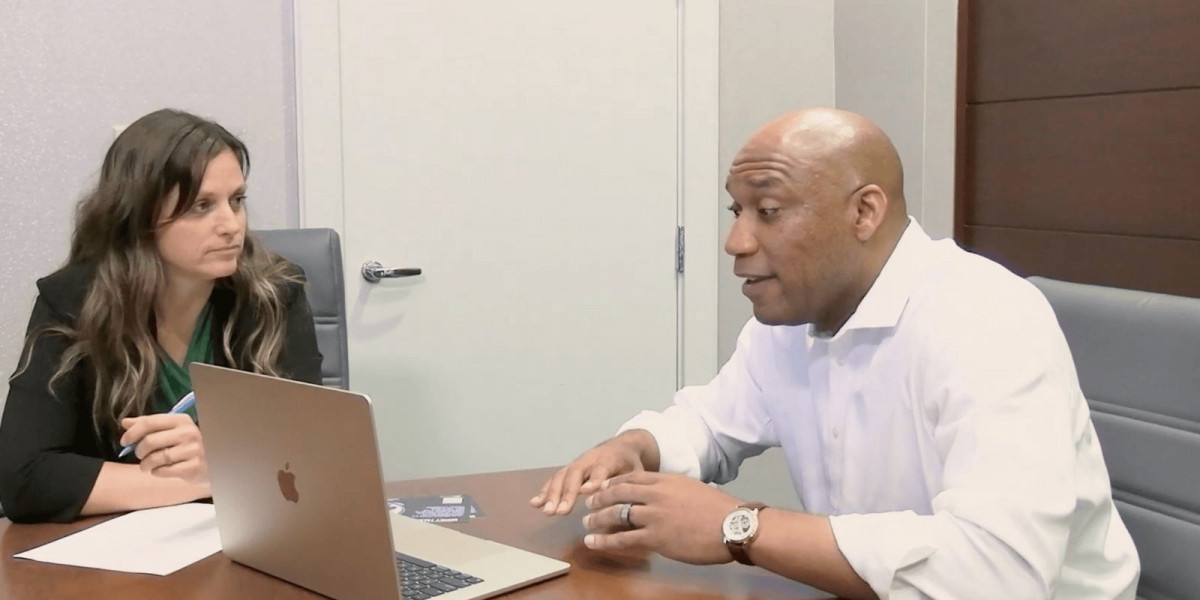
A recent executive education engagement at George Washington University illustrates how these subjects can come together in an academic and leadership environment.
The purpose of this type of engagement is not to give participants a predetermined set of answers.
Instead, it is to help them develop better questions.
What is really driving this outcome?
What assumptions are influencing our decisions?
Where does the structure need to change?
What incentives are producing the behavior we are seeing?
How can today's decisions create stronger institutional value tomorrow?
These questions can lead to a deeper form of leadership awareness.
The Value of Seeing Differently
The strongest executive education experiences often create a shift in perspective.
A familiar challenge suddenly looks different.
A recurring organizational problem reveals a structural cause.
A philanthropic opportunity becomes an institutional strategy.
A leadership decision becomes part of a larger system.
That change in perspective can be more valuable than simply receiving another set of leadership tips.
Antomius Wise's work is built around this principle.
Through keynotes, workshops, and executive programs, he brings leaders into conversations about the forces that shape institutions, decisions, performance, and impact.
The goal is not to simply occupy a stage or deliver information.
The goal is to make complex systems easier to see, understand, and navigate.
Because when leaders can see what was previously invisible, they can make better decisions about what comes next.
And ultimately, that is what meaningful executive education should accomplish: not just changing what leaders know, but changing how they think.