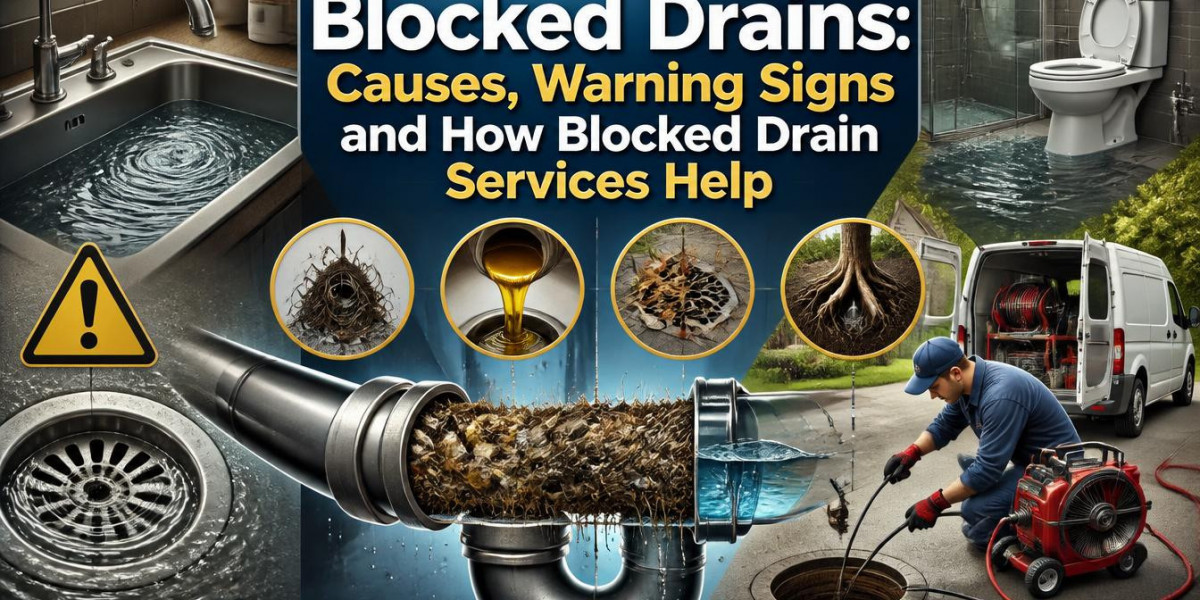

Nobody thinks about their drains until the sink stops emptying and there's two centimetres of greasy water sitting in the bottom of it. By that point the problem has usually been building for weeks. A slow drain, a faint smell near the laundry, a gurgle when the washing machine kicks in, these are all early hints that something's narrowing inside the pipe. Catch it early and it's a quick fix. Ignore it and you're looking at blocked drain services and a much bigger bill.
This article covers what actually causes blockages in Australian homes, the warning signs worth watching for, and what a proper fix looks like once DIY has stopped working.
What Actually Causes a Blocked Drain?
Most blocked drains come down to grease and fat solidifying in kitchen pipes, hair and soap building up in bathroom drains, wipes and hygiene products flushed down the toilet, or tree roots working into older sewer lines through cracked joints. Blockages rarely happen overnight. It's usually small, repeated habits catching up with the plumbing.
The Usual Suspects Behind a Blocked Drain
Ask any plumber and they'll name the same handful of culprits.
Kitchen sinks tend to be the worst offenders. Cooking oil and fat go down as a liquid, feel harmless, then hit cooler pipe walls further along and set, thickening over months and grabbing food scraps as they pass. Sydney Water is blunt about it: only water and soap should go down a kitchen sink.
Bathrooms have their own version, just with hair instead of oil. It tangles with soap scum into a mat inside the P-trap, and builds up fast in a shared bathroom.
Then there's what gets flushed. Wipes marketed as "flushable" are a genuine headache for the whole wastewater network. Sydney Water reports non-flushable wipes are behind as much as 75% of the blockages it deals with, often teaming up with grease to form what the industry calls a fatberg.
Older homes carry a different risk: tree roots. Roots chase moisture, and a hairline crack in an ageing clay pipe is exactly what they're after. Once a root gets a foothold it keeps growing. Pipework from before the 1980s, clay or cast-iron especially, is far more prone to this.
Outside, it's simpler: leaves and garden debris blocking stormwater grates after a storm.
Warning Signs You Have a Blocked Drain
Blockages rarely arrive without warning. Keep an eye out for:
Water draining more slowly than usual
Gurgling noises from drains, toilets or gully traps
A sewage-like smell that lingers
Water pooling around outdoor drains after rain
Several fixtures backing up around the same time
That last one matters most. If only the kitchen sink is slow, the issue's probably local. If the sink, shower and toilet all act up together, that usually points to a shared line or the main sewer, and it's not a DIY job at that stage.
DIY Fixes vs Professional Blocked Drain Services
Plenty of blockages can be handled at home. Others genuinely can't, no matter how much bicarb soda gets thrown at them.
Approach | Best suited for | Limitations |
Plunger | Simple, single-fixture clogs | Won't touch roots or deep blockages |
Bicarb and vinegar flush | Light build-up, routine upkeep | Doesn't shift solid clogs or collapsed pipe |
Boiling water | Light grease, metal/copper pipes only | Can warp PVC and melt joint glue |
Chemical drain cleaners | Occasional, minor clogs | Can eat away at older pipes over time |
Blocked drain services (CCTV, jetting, relining) | Recurring, multi-fixture or structural issues | Paid callout, but fixes the actual cause |
A decent rule of thumb: if a blockage comes straight back within weeks, or it's affecting more than one fixture, that's your plumbing telling you the problem is structural, not something a plunger will ever solve.
How a Blocked Drain Specialist Diagnoses the Problem
A good specialist doesn't just guess. First comes the camera: a CCTV drain camera gets fed through the pipe so the technician can see exactly what's causing the blockage. From there, high-pressure hydro-jetting clears grease, scale and roots without damaging the pipe. If the pipe is cracked or collapsed, jetting won't fix that, and relining takes over, fitting a resin sleeve inside the existing pipe, usually without digging up the garden.
Plumbing work in Australia has to comply with the Plumbing Code of Australia and state licensing rules. In NSW, drain repair needs to be carried out or supervised by a licensed plumber, worth checking before anyone touches your pipes.
Blocked Drains in Ryde and Older Sydney Suburbs
Ryde is a good example of the conditions that make root intrusion common: established trees along the streets, and housing stock built well before PVC pipe became standard. Put those together and you get pipes more likely to crack right where a root is waiting.
Homeowners in these older, leafier pockets of Sydney often notice a slow sink or gurgling toilet after heavy rain, and more often than not, roots rather than grease are behind it. A CCTV inspection settles the question quickly.
How to Stop a Blocked Drain Before It Starts
None of this is complicated, it's mostly a habit.
Let cooking oil and fat cool, then bin it, don't pour it down the sink
Fit a hair strainer over the shower and bath drain, and actually clean it weekly
Stick to the "3 Ps" down the toilet: pee, poo and paper. Everything else goes in the bin
Keep grates clear of leaves and debris, especially after storms
If buying an older place with big trees nearby, get a CCTV inspection first
When It's Time to Call Professional Blocked Drain Services
A single slow drain is usually fine to handle yourself. But once blockages keep coming back, more than one fixture is affected, or there's a smell that won't shift, that's the point where blocked drain services stop being optional. Chemical cleaners and repeat DIY attempts tend to paper over a structural problem rather than fix it.
Nothing, DIY or professional, stops every blockage from happening again. Roots don't stop growing and old pipes don't stop aging. Regular maintenance and an early inspection cut the risk substantially, but they're not a guarantee.
Frequently Asked Questions
Why does my drain keep blocking even after I clear it?
Usually something structural is behind it, a root that's found its way in, or a cracked pipe joint. Clearing the surface clog feels like a fix, but it isn't if the actual cause is still sitting there.
Are flushable wipes actually safe to flush?
Not really. They're a major contributor to wastewater blockages even when labelled "flushable," because they don't break down like toilet paper. Only wipes meeting the Australian Flushable Products Standard (AS/NZS 5328:2022) come close to being safe to flush.
How do I know if a blocked drain is an emergency?
Sewage backing up inside the house, several fixtures backing up together, or water pooling around internal drains, that's an emergency. One slow sink usually isn't, but a gurgling toilet paired with a backed-up shower is worth calling someone about.
Can tree roots really break through a pipe?
Yes, more often than people expect. Roots chase moisture, and once one finds a hairline crack in an older clay pipe it keeps growing, eventually cracking or collapsing the pipe.
How much does a CCTV drain inspection cost in Australia?
It depends on the state, property and how much pipe needs inspecting, so a national average isn't much use. Getting a quote from a licensed local plumber is the only way to get a real figure.