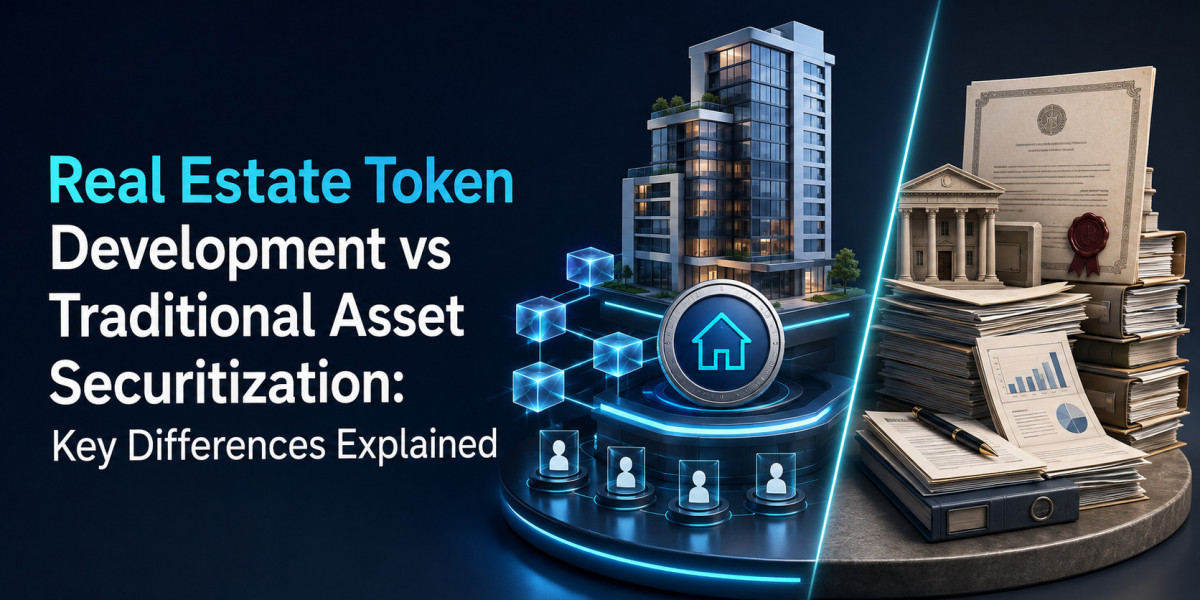

Real estate investing has traditionally required substantial capital, lengthy paperwork, and access to established investment networks. Crowdfunding changed that model by allowing multiple investors to participate in property projects without purchasing an entire asset. More recently, real estate token development has introduced another approach by representing ownership interests or economic rights through blockchain-based tokens.
Both models can give investors access to property opportunities with lower capital requirements than conventional property ownership. However, they differ in how ownership is represented, how investors participate, how transactions are handled, and how secondary trading may work.
For property businesses, fund managers, developers, and investment platforms, choosing between crowdfunding and tokenization requires a close look at the business model, target investors, regulatory environment, technology requirements, and expected market activity. This article compares both approaches and explains where real estate tokenization may fit within the modern property investment market.
What Is Real Estate Crowdfunding?
Real estate crowdfunding allows several investors to contribute capital toward a property or development project. The platform collects investments from participants and allocates the funds toward a selected property, development project, debt arrangement, or real estate fund.
Investors may receive returns through rental income, interest payments, property appreciation, or a combination of these methods. Depending on the structure, investors may own an interest in a legal entity holding the property or simply participate in a debt or revenue-sharing arrangement.
Crowdfunding platforms generally manage investor onboarding, property information, investment collection, reporting, and distributions. The investor experience can therefore resemble an online investment marketplace, although the actual legal structure varies between platforms and jurisdictions.
What Is Real Estate Token Development?
Real estate token development involves creating blockchain-based tokens that represent defined rights connected with a property or real estate investment structure. The token can represent fractional ownership, an interest in a special purpose vehicle, revenue rights, debt claims, or another legally structured interest.
The process usually involves property selection, legal structuring, investor compliance procedures, token design, smart contract development, wallet integration, investor dashboards, transaction management, and ongoing reporting.
A real estate tokenization company may develop a platform where investors can review properties, complete identity checks, purchase tokens, monitor holdings, receive distributions, and potentially transfer eligible tokens through approved markets.
The model does not remove legal requirements from property investment. Instead, the blockchain layer becomes part of a broader legal, financial, and operational framework.
Real Estate Token Development vs Crowdfunding: Main Difference
The biggest difference is how investment interests are represented and managed.
In a conventional crowdfunding model, an investor's participation is normally recorded through platform databases, legal agreements, securities records, or ownership records maintained by the relevant entities. The platform acts as the primary digital interface for investment activity.
With real estate tokenization, ownership or investment rights can also be represented through blockchain tokens. Transactions involving those tokens can be recorded on a blockchain, subject to the legal and compliance structure of the offering.
This difference affects several areas, including investor access, transferability, automation, record management, settlement, and platform architecture.
Investment Accessibility
Crowdfunding has already made property investment more accessible by allowing investors to participate with smaller amounts than direct property purchases often require. The exact minimum investment depends on the platform and offering.
Real estate tokenization can also support fractional participation. A property valued at millions of dollars can potentially be divided into a large number of digital units, allowing investors to purchase smaller interests when permitted by the legal structure.
However, accessibility is not determined by technology alone. Securities laws, investor eligibility rules, geographic restrictions, minimum investment requirements, and platform policies can still limit participation.
For businesses considering real estate tokenization development, the intended investor group should therefore be defined before deciding how the token model will operate.
Ownership Structure
Crowdfunding can use several ownership structures. Investors may hold shares in a company that owns the property, participate in a fund, provide a loan, or receive contractual rights tied to property income.
Tokenization follows similar legal structures but adds a blockchain representation to the investment interest. For example, a special purpose vehicle may hold the property while digital tokens represent investor interests in that entity.
This means tokenization is not necessarily a replacement for legal ownership structures. In many cases, it is a digital layer placed around an existing legal and financial arrangement.
A real estate asset tokenization company needs to coordinate legal counsel, financial professionals, compliance specialists, and blockchain developers so that the token's rights correspond with the underlying investment arrangement.
Liquidity and Secondary Trading
Liquidity is one of the most discussed differences between the two models.
Traditional real estate crowdfunding investments can be difficult to sell before the project reaches its planned exit. Some platforms may provide secondary marketplaces, but availability varies considerably.
Tokenized real estate may support secondary transfers through compliant trading venues or controlled peer-to-peer mechanisms. If the applicable legal framework permits transfers, investors may have more opportunities to trade their interests before the property is sold.
Still, tokenization does not automatically create liquidity. There must be buyers, sellers, appropriate market infrastructure, legal permission to transfer the asset, and sufficient market activity.
Therefore, businesses should treat liquidity as a market design issue rather than simply a blockchain feature.
Investor Management
Crowdfunding platforms usually handle investor registration, investment records, communications, payment processing, and reporting through a centralized system.
A tokenized platform can include these functions while connecting them with blockchain wallets and smart contracts. Investor balances may be reflected through token holdings, while distributions and certain transaction rules can be automated through programmed logic.
A real estate tokenization platform development project may therefore include modules for KYC and AML checks, investor onboarding, property listings, token purchases, portfolio tracking, distribution management, wallet services, compliance controls, and administrative reporting.
The result is a more technology-intensive investment environment, which also means the platform operator must manage blockchain-related risks in addition to ordinary investment-platform responsibilities.
Transaction Settlement
Crowdfunding transactions typically depend on conventional payment systems, banking infrastructure, and centralized platform records.
Tokenized transactions can use blockchain networks for recording token movements and settling eligible transactions. Depending on the selected network and architecture, settlement can occur without relying on the same sequence of manual reconciliation processes used in conventional systems.
Smart contracts can also apply predefined rules to certain transactions. For example, a contract may restrict transfers until an investor has passed required compliance checks.
However, these functions require careful testing. An error in smart contract logic can affect investor balances or transaction execution, making technical audits and operational controls important parts of real estate token development.
Platform Development Requirements
A crowdfunding platform can be developed using conventional web application architecture. Its primary components may include user accounts, property listings, payment processing, investor dashboards, document management, compliance workflows, and administrative tools.
A tokenized platform generally requires additional components. These can include blockchain network integration, token contracts, wallet functionality, custody arrangements, token transfer rules, blockchain monitoring, smart contract administration, and potentially integration with compliant secondary markets.
For this reason, real estate tokenization platform development often requires cooperation between property specialists, financial professionals, compliance teams, and blockchain developers.
Businesses that do not want to create the complete infrastructure internally may work with a real estate tokenization development company that provides platform architecture, token contracts, investor interfaces, and related services.
Cost Considerations
Crowdfunding may have a relatively familiar technology cost structure because the platform can rely on conventional software, payment gateways, databases, and compliance tools.
Tokenization can involve additional expenses related to blockchain development, smart contract audits, wallet infrastructure, custody, token issuance, compliance technology, blockchain transactions, and specialist development.
However, development cost should not be judged only by the initial software budget. Businesses should also consider operational costs, legal work, compliance processes, security audits, investor support, property administration, and ongoing technology maintenance.
A real estate tokenization development company can help businesses estimate these expenses according to the number of assets, investor types, blockchain network, jurisdictions, trading requirements, and platform features.
Regulatory Requirements
Neither crowdfunding nor tokenization operates outside financial regulation.
Depending on the jurisdiction and structure, property investments may fall under securities, financial promotion, investment management, anti-money laundering, consumer protection, tax, and property laws.
Tokenization adds another layer because regulators may treat a digital token according to the rights it represents rather than its technical format.
Businesses should therefore determine the legal nature of the investment before beginning software development. Legal documentation, investor eligibility, transfer restrictions, reporting requirements, and custody arrangements should be considered during the planning stage rather than after the platform has been developed.
Security Considerations
Crowdfunding platforms face familiar cybersecurity risks such as account compromise, payment fraud, database attacks, and unauthorized access.
Tokenized platforms face those risks plus blockchain-specific concerns. Smart contract vulnerabilities, wallet security, private-key management, incorrect token permissions, and malicious transactions can create additional exposure.
Security should therefore cover the entire platform rather than only the blockchain contract. Application security, access controls, wallet protection, smart contract audits, transaction monitoring, backup systems, and incident response procedures all deserve attention.
For a real estate tokenization platform development company, security testing should be included throughout the development lifecycle.
Investor Experience
Crowdfunding may be easier for investors who are already familiar with conventional online investment platforms. Users can register, complete verification, select a property, invest, and monitor their position through a standard web or mobile interface.
Tokenization can offer a similar experience while introducing wallets, digital tokens, blockchain transactions, and potentially secondary trading.
The difference is that the technology should remain in the background from the investor's perspective. A complicated wallet or transaction process can discourage users who have little blockchain experience.
A successful real estate tokenization platform should therefore focus on making investment workflows understandable while maintaining the technical infrastructure required behind the interface.
When Crowdfunding May Be the Better Choice
Crowdfunding may be suitable for businesses that want a relatively conventional digital property investment model. It can work well when the investment period is fixed, secondary trading is not a major requirement, and investors prefer familiar payment and account-management methods.
It may also be appropriate when the business wants to launch a smaller property investment marketplace without introducing blockchain infrastructure.
For some property developers, funds, and investment managers, the simplicity of the crowdfunding model may outweigh the additional capabilities offered by tokenization.
When Real Estate Token Development May Be the Better Choice
Real estate token development may make more sense when a business plans to support fractional property interests across multiple assets, serve a digitally oriented investor base, record investment interests on blockchain infrastructure, or develop compliant secondary transfer capabilities.
It can also be considered when the business intends to create a broader digital asset ecosystem rather than operate only a single property crowdfunding website.
The model becomes particularly interesting for businesses planning multiple property offerings, international investor participation where legally permitted, automated distribution processes, or integration with wider digital asset infrastructure.
How to Choose Between the Two Models
The decision should begin with the investment structure rather than the technology.
First, determine what investors are actually purchasing. Next, identify the applicable regulations and investor restrictions. Then consider how investors will enter and exit positions, how income will be distributed, and whether secondary transfers are required.
After these questions are answered, the business can compare the technology requirements of crowdfunding and tokenization.
Businesses should also evaluate development budgets, internal technical expertise, expected transaction volume, security requirements, investor demographics, and long-term platform plans.
The best choice is not necessarily the model with more technology. It is the model that fits the legal structure, investment strategy, investor expectations, and operating resources of the business.
Role of a Real Estate Tokenization Company
A real estate tokenization company can support businesses throughout the technical side of launching a tokenized property investment platform. Services may include token contract development, platform development, wallet integration, investor dashboards, compliance-related modules, property management interfaces, payment integration, and blockchain connectivity.
When selecting a provider, businesses should examine previous project experience, security practices, supported blockchain networks, development methodology, maintenance arrangements, and understanding of real estate investment structures.
Searching for Top real estate tokenization companies or Best real estate tokenization companies can provide a starting point, but businesses should evaluate providers based on actual technical and regulatory requirements rather than rankings alone.
Future Outlook for Property Investment Models
Crowdfunding and tokenization are likely to remain relevant because they address different needs within digital property investment.
Crowdfunding provides a familiar framework for pooling capital around property projects. Tokenization introduces blockchain-based representation, programmable transaction rules, and potential secondary market functionality.
The two models may also converge. A future property investment platform could use a crowdfunding-style investor experience while maintaining tokenized investment records behind the scenes.
As digital asset infrastructure develops, real estate businesses may have more choices regarding how properties are divided, offered, managed, and transferred digitally.
Conclusion
Real estate token development and crowdfunding both provide ways to bring more investors into property markets, but they serve different operational needs. Crowdfunding may suit businesses seeking a familiar investment marketplace with conventional infrastructure, while tokenization may suit companies planning fractional digital property interests, blockchain-based records, and potential secondary trading. The right approach depends on legal structure, investor requirements, market strategy, technology budget, and long-term platform plans. Businesses should assess these factors before selecting a development model rather than choosing blockchain simply because it is a newer technology. A suitable real estate tokenization development company can assist with the technical architecture, token contracts, platform modules, and blockchain integrations required for such projects. Blockchain App Factory provides Real estate tokenization development services for businesses planning property tokenization platforms and digital investment ecosystems.
FAQs
1. What is the difference between real estate tokenization and crowdfunding?
Crowdfunding pools investor capital through an online investment platform, while real estate tokenization represents investment interests through blockchain-based tokens. Both can support fractional property investment, but their technology and transaction structures differ.
2. Is real estate tokenization better than crowdfunding?
Neither model is universally better. Crowdfunding may suit businesses seeking a conventional investment platform, while tokenization may suit businesses that require blockchain-based ownership records, digital asset functionality, and potential secondary transfers.
3. Does real estate tokenization create instant liquidity?
No. Tokenization can support secondary trading when legally permitted and when suitable marketplaces and buyers exist. A token does not automatically create a liquid market.
4. What does real estate token development include?
Real estate token development can include token smart contracts, investor dashboards, property listings, wallet integration, compliance workflows, payment systems, distribution modules, administrative tools, blockchain integration, and security testing.
5. Can crowdfunding and tokenization be used together?
Yes. A business can use a crowdfunding-style investment experience while representing eligible investment interests through blockchain tokens. The exact structure depends on legal, regulatory, and technical requirements.
6. How much does real estate tokenization development cost?
The cost varies according to platform features, blockchain network, number of assets, investor requirements, compliance systems, wallet functionality, security testing, and secondary trading requirements. A detailed project scope is normally needed before estimating the development budget.
7. What should businesses look for in a real estate tokenization development company?
Businesses should review blockchain experience, real estate project knowledge, smart contract security practices, compliance awareness, previous work, platform architecture, post-launch support, and the provider's ability to handle the required integrations.
8. Are tokenized real estate investments regulated?
They can be. The applicable rules depend on the legal rights represented by the token, the jurisdiction, the investor type, and the offering structure. Businesses should obtain qualified legal advice before launching an offering.