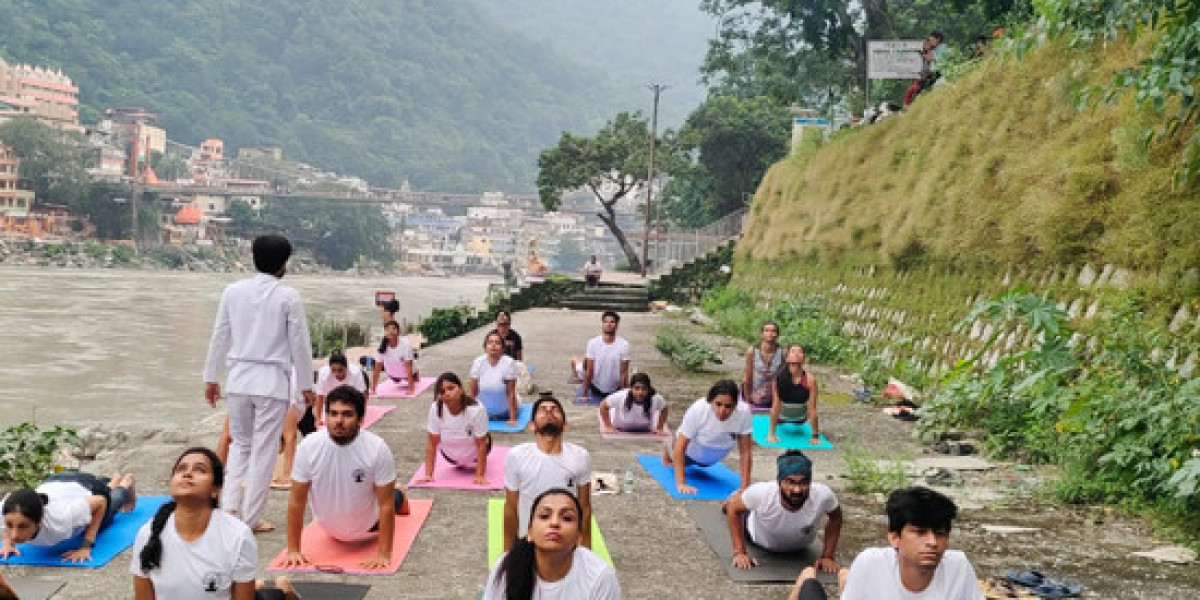

Yoga has grown from an ancient Indian discipline into a worldwide practice followed by millions of people. Today, yoga teachers work in studios, wellness centers, retreats, resorts, fitness spaces, private practices, and online communities across many countries. As the profession has expanded internationally, students and employers increasingly look for structured teacher education that demonstrates serious knowledge, practical ability, and professional preparation.
This is one reason 300 Hour Yoga Teacher Training India has become an attractive choice for experienced yoga practitioners who want to deepen their skills and build an international teaching career. India offers something particularly valuable: the opportunity to study yoga in the culture and environment where many of its traditional systems developed, while also following modern educational standards.
What Is a 300 Hour Yoga Teacher Training Program?
A 300 Hour Yoga Teacher Training program is an advanced course intended for practitioners who already have a foundation in yoga education, commonly through a 200-hour teacher training program. Rather than simply repeating beginner-level concepts, the advanced course allows students to explore yoga with greater depth.
Students may study advanced asanas, pranayama, meditation, sequencing, anatomy, philosophy, subtle-body concepts, teaching methodology, and practical classroom instruction. The exact syllabus differs from one school to another, so students should always examine the curriculum and accreditation status before enrolling.
The purpose of advanced training is not simply to collect another certificate. It is to develop greater confidence, awareness, teaching precision, and the ability to work with different types of students.
India Provides a Unique Learning Environment
One of the strongest reasons international students choose India is its connection with the history and traditions of yoga. Although modern yoga is practiced throughout the world, studying in India can provide students with direct exposure to traditional approaches, Indian philosophy, meditation practices, Sanskrit terminology, yogic lifestyle, and different teaching lineages.
Cities such as Rishikesh have become especially popular among international yoga students. The combination of established yoga schools, teachers, ashrams, spiritual traditions, and a strong international student community creates an environment where students can experience yoga beyond the physical practice.
International Standards Add Professional Credibility
The global reputation of a 300 Hour course depends heavily on the school offering it and the standards under which the program is registered. A certificate from any yoga school should not automatically be described as universally accepted. Recognition depends on the organization, credential, school registration, employer expectations, and country-specific requirements.
For students interested in an internationally portable credential, checking whether a school is registered with an established organization such as Yoga Alliance is an important step.
Yoga Alliance currently lists RYS 300 as one of its school credential options. Its standards require advanced programs to address five major educational categories: techniques, training and practice; teaching methodology; anatomy and physiology; yoga philosophy, lifestyle and ethics; and practicum.
A 300 Hour Course Can Support the RYT 500 Pathway
Another important reason advanced training attracts international students is its relationship to the 500-hour teaching credential.
According to current Yoga Alliance requirements, a teacher can complete a 500-hour training through a single RYS 500 program or by completing a 200-hour training with an RYS 200 followed by a separate 300 Hour advanced training with an RYS 300.
This makes the 300 Hour course particularly useful for teachers who have already completed their foundational 200-hour education and want to continue their professional development.
However, students should understand that completing a 300 Hour course by itself does not necessarily mean they automatically become an RYT 500. The applicable registration requirements must be fulfilled, including the relevant previous training and teaching experience requirements. Yoga Alliance currently states that applicants for RYT 500 must also meet its teaching-experience requirements.
Deeper Knowledge of Yoga Anatomy
Advanced yoga education also receives international interest because modern yoga teaching increasingly requires instructors to understand the body responsibly.
In a 300 Hour program, students can move beyond memorizing basic anatomical terminology and explore how movement, alignment, biomechanics, breathing, mobility, and individual differences influence yoga practice.
This knowledge can help teachers understand why a particular posture may feel different for different students. It can also encourage more thoughtful sequencing and safer modifications.
A knowledgeable teacher understands that yoga is not about forcing every student into an identical shape. Instead, effective teaching considers individual anatomy, experience, mobility, limitations, and goals.
Advanced Teaching Methodology
Knowing how to perform an asana and knowing how to teach it are two different abilities.
A strong 300 Hour program therefore places considerable attention on teaching methodology. Students may practice verbal instructions, demonstrations, sequencing, class planning, adjustments, observation, pacing, and communication.
Teaching practice is particularly important because it allows students to discover areas that need improvement. Feedback from experienced instructors and classmates can help a trainee become clearer, more confident, and more adaptable.
Yoga Philosophy Remains an Important Foundation
International recognition is not based only on physical training. Yoga has a rich philosophical background, and advanced teacher education often encourages students to explore that side of the tradition more deeply.
Students may study concepts from classical yoga philosophy, meditation traditions, yogic ethics, the Yoga Sutras, Bhagavad Gita, and other sources depending on the school's lineage and curriculum.
This philosophical education can help teachers understand the broader purpose of yoga and communicate its principles more thoughtfully.
What Makes a 300 Hour Training Truly Valuable?
The number of hours alone does not determine the quality of an education.
A valuable 300 Hour program should combine knowledgeable instructors, a well-organized curriculum, meaningful practice, teaching opportunities, feedback, philosophical study, anatomy education, and a supportive learning environment.
Students should also verify whether the program is actually registered under the credential they are seeking. Yoga Alliance provides specific standards for RYS credentials, and its certificate requirements are used when graduates apply for relevant teacher registration.
This is why researching the school is just as important as choosing India as the destination.