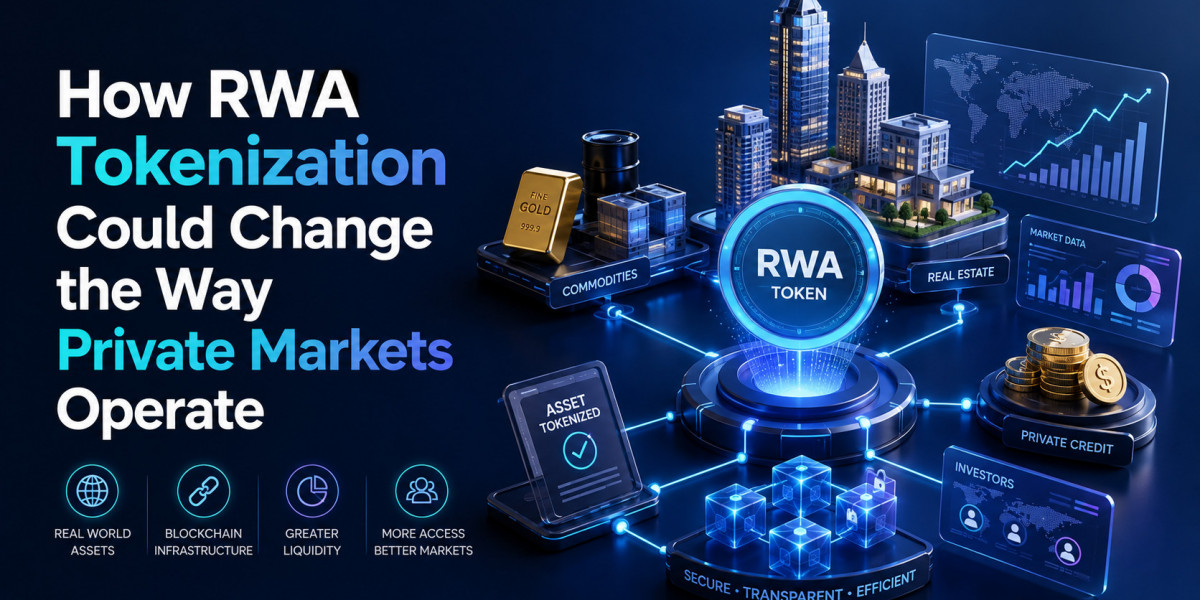

Private markets have traditionally been associated with high investment thresholds, lengthy transaction processes, limited liquidity, and restricted access to information. Private equity, venture capital, private credit, real estate, infrastructure, and other alternative assets often involve complex structures that can make participation difficult for smaller investors. Investors may also need to deal with lengthy onboarding procedures, manual documentation, intermediaries, and limited opportunities to trade their interests.
RWA Tokenization is gaining attention as a possible way to address some of these challenges. By representing ownership rights or economic interests in real-world assets through blockchain-based tokens, private market participants can manage investment records and transactions through digital infrastructure. The concept does not remove the legal and regulatory requirements associated with private assets. Instead, it introduces another method for representing, issuing, transferring, and managing those interests.
As financial institutions, asset managers, and technology companies continue to examine Real World Asset Tokenization, private markets could become one of the areas where the technology has a meaningful impact. From fundraising and investor onboarding to secondary trading and reporting, token-based systems could change how several parts of the private market process are handled.
What Does RWA Tokenization Mean for Private Markets?
RWA Tokenization involves creating blockchain-based digital representations of rights connected to physical or financial assets. In a private market setting, this could include real estate interests, private credit instruments, company shares, infrastructure projects, funds, collectibles, or other investment products.
For example, a private real estate fund could issue digital tokens representing a defined economic interest in the fund. Investors who meet the applicable eligibility requirements could purchase those tokens through a digital platform. Ownership records could then be maintained through blockchain infrastructure rather than relying entirely on conventional databases and paperwork.
The exact structure depends on the asset, jurisdiction, investor type, and applicable securities regulations. A token does not automatically create legal ownership simply because it exists on a blockchain. Legal agreements, custody arrangements, investor rights, compliance procedures, and asset ownership structures still matter.
1. Lower Barriers to Private Market Participation
Private investments often require substantial capital commitments. Tokenization could allow some investment products to be divided into smaller digital units, subject to regulatory requirements and the structure of the offering.
Suppose a private property fund represents a $20 million asset through 20,000 digital units. Instead of requiring every investor to participate with a large amount, the fund could design an offering around smaller denominations where legally permitted. This may create opportunities for a broader range of qualified investors.
The result could be a different approach to private market participation. Asset managers may have more flexibility when designing investment products, while investors may gain access to opportunities that previously required larger commitments.
2. Faster Investor Onboarding
Private market transactions often involve identity verification, accreditation checks, subscription documents, agreements, payment processing, and compliance reviews. These activities can involve several parties and systems.
A tokenization platform can bring many of these functions into a single digital workflow. Investors can complete identity verification, submit required documents, review offering information, and receive tokens after the necessary checks have been completed.
Smart contracts can also define certain transaction conditions. For example, a transfer may be permitted only when the receiving wallet belongs to an approved investor. This type of rule-based transaction process can reduce repetitive administrative work while keeping compliance requirements in place.
3. More Digital Ownership Records
Ownership records are particularly important in private markets because investments can involve multiple parties, legal agreements, and different classes of rights.
Blockchain-based records can provide a shared transaction history for authorized participants. Each transfer can be recorded against the relevant token, creating an accessible history of ownership activity.
This does not mean every participant should automatically see sensitive investor information. Privacy controls, permission systems, identity management, and data protection remain necessary. A properly designed RWA tokenization system can separate publicly visible blockchain information from private investor and transaction data.
For asset managers, this may reduce dependence on disconnected record-keeping systems. Investors can also receive a more convenient digital view of their holdings and transaction history.
4. New Possibilities for Secondary Markets
Liquidity has long been a challenge in private markets. Investors may hold an investment for several years before receiving an exit opportunity. Traditional secondary transactions can require negotiations, approvals, legal reviews, and specialized intermediaries.
Tokenization could support digital secondary market infrastructure where regulations and market conditions permit. Instead of transferring ownership through an entirely manual process, eligible investors could trade tokenized interests through a regulated marketplace.
Smart contracts could apply transfer rules automatically. For instance, a token could be restricted from being transferred to an unapproved investor or outside a permitted jurisdiction.
However, tokenization does not automatically create liquidity. A secondary market still needs buyers, sellers, suitable regulations, market infrastructure, pricing mechanisms, and investor demand. The technology can support the process, but market participation remains a separate requirement.
5. Changes in Private Fundraising
Fundraising could also see changes as tokenized investment structures become more common. Asset managers could create digital representations of fund interests and distribute them through compliant platforms.
Investors could review offering details, complete onboarding, transfer funds, and receive their investment tokens through a digital process. This could reduce the number of manual steps involved in traditional fundraising.
For fund managers, token-based issuance may also provide a more organized way to track subscriptions and investor positions. Distribution can still be restricted according to investor eligibility, regulatory rules, geographic limitations, and fund documents.
A RWA Tokenization Company may provide the technical infrastructure required for these processes, while legal and financial professionals handle the regulatory and investment structure.
6. Private Credit Could Become More Digital
Private credit is another area where tokenization could have practical applications. Private credit products involve loans, repayment schedules, interest payments, collateral, and investor claims.
A tokenized private credit instrument could represent an investor's interest in a loan or pool of loans. Smart contracts could record important events associated with the instrument, while payment systems could support scheduled distributions.
For example, if investors hold tokens representing interests in a private credit pool, the platform could maintain records of token ownership and associated payment rights. Investors could access their holdings through a digital interface rather than relying solely on traditional statements.
The legal documentation behind the credit instrument would remain important. Tokenization works as an additional technological layer rather than a replacement for lending agreements.
7. More Efficient Asset Servicing
Private market investments require ongoing administration after issuance. Investors may receive reports, income distributions, notices, tax documents, valuation updates, and other communications.
Real World Asset Tokenization Services can include infrastructure for managing these post-issuance activities. A tokenization platform may connect asset data, investor records, payment systems, compliance tools, and reporting functions.
This could make asset servicing more digital and organized. For investors with positions across multiple private assets, a single dashboard could provide information about holdings, transactions, distributions, and relevant documents.
8. Greater Interest in Private Real Estate
Real estate is one of the most frequently discussed applications of tokenization because individual properties can involve large capital requirements and complex ownership arrangements.
A property owner could create a legal structure around an asset and issue tokens representing approved economic interests. Depending on the jurisdiction and offering model, investors could acquire those interests through a compliant platform.
This model could apply to commercial buildings, residential developments, hotels, industrial properties, and other real estate categories. Investors may gain access to smaller investment positions, while property owners may reach a wider pool of eligible participants.
A well-designed rwa tokenization platform development project would need to consider investor management, property data, smart contracts, payment processing, custody, compliance, reporting, and secondary transfer functionality.
9. Compliance Will Remain Central
Tokenization does not remove financial regulations. Private market operators still need to follow applicable securities laws, investor eligibility requirements, anti-money laundering procedures, tax rules, reporting requirements, and data protection standards.
This makes compliance architecture an important part of RWA tokenization development services. Platforms may need identity verification, wallet screening, investor classification, transaction monitoring, transfer restrictions, audit records, and permission controls.
For this reason, businesses considering RWA Tokenizaion development should begin with the legal structure of the investment product before deciding how the technology will operate. The token model should reflect the legal rights associated with the underlying asset.
10. What Businesses Need From Tokenization Platforms
A private market tokenization platform needs more than token issuance. It may require investor onboarding, KYC and AML procedures, smart contract management, asset documentation, wallet integration, payment processing, portfolio management, reporting, custody connections, and administrative controls.
An RWA tokenization development company can provide the technical components required for these functions. Depending on the business model, the platform may support multiple asset categories or focus on one area such as real estate, private credit, private equity, or investment funds.
RWA token development also needs careful consideration of token standards, blockchain selection, security testing, permissions, transfer rules, and integration with off-chain systems. The technical architecture should match the legal and operational requirements of the investment product.
11. Potential Changes for Investors
For investors, tokenized private markets could offer a more digital investment experience. Instead of managing every investment through separate portals and paper-based processes, investors could potentially view multiple holdings through a unified interface.
Digital tokens may also make ownership transfers easier where secondary trading is legally permitted. Investors could receive automated records of transactions and distributions while maintaining access to relevant investment documentation.
Still, investors would need to assess the underlying asset, issuer, valuation, fees, legal rights, liquidity conditions, custody arrangements, and regulatory status. A tokenized investment is still an investment, and the technology does not remove market risk.
12. The Role of RWA Tokenization Companies
The growth of tokenized private markets is likely to create demand for specialist technology providers. An RWA Tokenization Company can help businesses plan token models, develop smart contracts, create investor portals, integrate compliance systems, and manage digital asset infrastructure.
RWA Tokenization Services may also cover token issuance, wallet management, investor administration, marketplace functions, asset monitoring, and post-issuance management. The exact service package depends on the asset type and business model.
For companies entering this market, selecting a development partner requires attention to blockchain experience, financial application knowledge, security practices, compliance integrations, smart contract capabilities, and post-launch support.
Future Outlook for Private Markets
Private markets are unlikely to move from traditional systems to tokenized infrastructure overnight. The transition will depend on regulation, institutional adoption, investor demand, technology standards, custody models, and the availability of suitable secondary markets.
However, tokenization could gradually change how private assets are issued, recorded, distributed, and transferred. Fund managers may experiment with tokenized fund interests. Real estate owners may consider fractional digital investment structures. Private credit providers may examine token-based lending instruments. Investors may gain more digital access to selected private market products.
As these use cases develop, the distinction between traditional financial infrastructure and blockchain-based systems may become less significant. Instead, businesses may use both systems together to manage different parts of the investment lifecycle.
Conclusion
RWA Tokenization could bring significant changes to private markets by introducing digital methods for representing ownership interests, managing investor records, issuing investment products, handling transfers, and supporting asset servicing. Its impact could be particularly relevant to private equity, private credit, real estate, infrastructure, and investment funds where high entry requirements and lengthy administrative processes remain common. At the same time, tokenization is not a substitute for legal structures, investor protections, compliance procedures, custody, or market demand. Businesses need to consider these areas alongside technology when planning a tokenized private market product. As adoption develops, RWA tokenization development services may become increasingly relevant for financial businesses looking to create regulated digital investment infrastructure. Blockchain App Factory provides RWA tokenization development services for businesses planning tokenized asset platforms and digital investment ecosystems.
FAQs
1. What is RWA Tokenization in private markets?
RWA Tokenization refers to representing rights or interests connected to real-world assets through blockchain-based digital tokens. In private markets, this can apply to real estate, private credit, funds, company interests, and other investment products.
2. Can tokenization make private markets more liquid?
It can support secondary trading infrastructure where regulations permit it. However, liquidity also depends on investor demand, market participation, transfer rules, pricing, and the availability of buyers and sellers.
3. What private assets can be tokenized?
Potential examples include real estate, private credit, private equity interests, infrastructure projects, investment funds, and other assets with suitable legal structures.
4. Does tokenization remove private market regulations?
No. Tokenized investments can still be subject to securities laws, KYC and AML requirements, investor eligibility rules, tax requirements, and other financial regulations.
5. What are RWA Tokenization Services?
RWA Tokenization Services can include token creation, smart contract development, investor onboarding, compliance integrations, wallet management, asset administration, payment processing, and marketplace development.
6. Why is RWA token development important for private markets?
RWA token development provides the technical layer for representing investment interests digitally. It can support ownership records, transfer rules, investor management, distributions, and other functions associated with tokenized assets.
7. What does rwa tokenization platform development involve?
rwa tokenization platform development can involve blockchain integration, smart contracts, investor dashboards, KYC and AML systems, wallet connectivity, payment processing, token management, reporting, and administrative features.
8. How can businesses choose an RWA tokenization development company?
Businesses should assess the provider's blockchain experience, smart contract expertise, financial application knowledge, security practices, compliance integrations, platform features, and ongoing technical support.