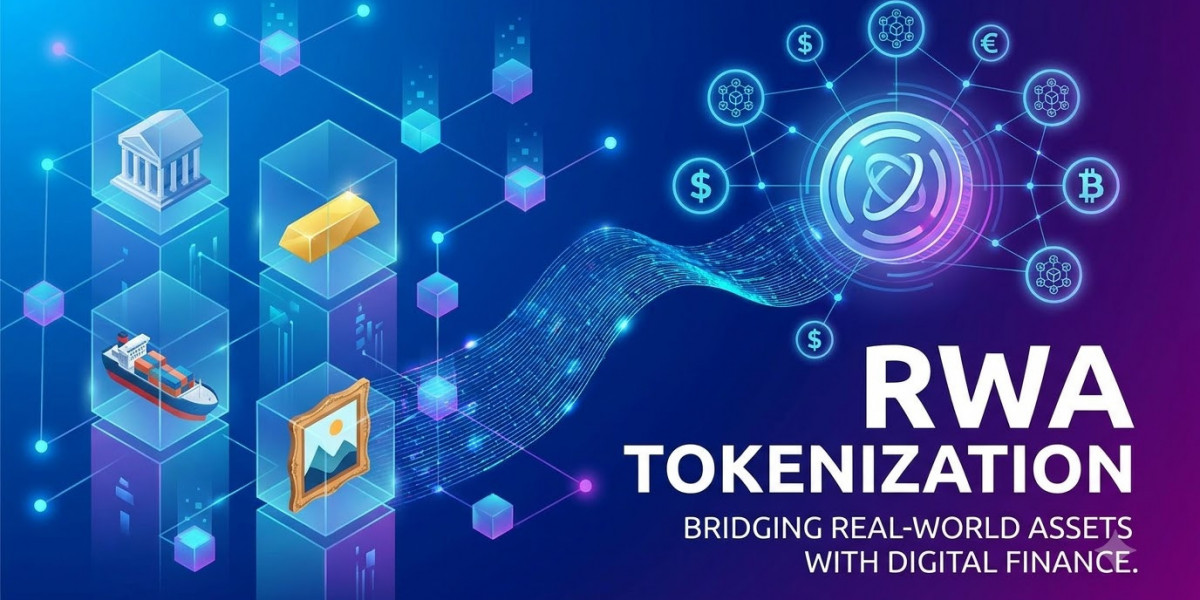

Real-world asset (RWA) tokenization is emerging as one of the most significant applications of blockchain technology beyond cryptocurrencies. The concept involves representing ownership or economic rights to physical or traditionally off-chain assets as digital tokens recorded on a blockchain. These assets can include real estate, government bonds, private credit, commodities, art, infrastructure, and other forms of value.
The growing interest in tokenization is driven by a simple proposition: assets that have traditionally been difficult to divide, transfer, or access can potentially become more programmable and digitally accessible through blockchain infrastructure. According to a 2024 report from Boston Consulting Group and ADDX, the market for tokenized assets could reach approximately $16 trillion by 2030, illustrating the scale of expectations surrounding the sector.
However, tokenization is not simply a matter of creating a blockchain token. A successful RWA ecosystem requires asset verification, legal structuring, compliance, smart contracts, custody arrangements, investor management, and reliable connections between off-chain assets and on-chain records.
What Is RWA Tokenization?
RWA tokenization is the process of converting rights associated with a real-world asset into digital tokens that can be issued, managed, and transferred using blockchain technology.
For example, consider a commercial property valued at $10 million. Traditionally, investing in the property might require purchasing the entire asset, acquiring shares in a specialized investment vehicle, or participating through a private fund. Through tokenization, the economic rights associated with the property could potentially be represented by a large number of digital tokens.
If 1 million tokens represent the asset, each token could correspond to a defined fraction of the underlying economic interest, depending on the legal structure. Investors could potentially purchase smaller positions while the platform maintains ownership records and distributes income according to predefined rules.
The important distinction is that the blockchain token itself does not automatically create legal ownership. The relationship between the token and the underlying asset must be established through enforceable legal agreements and an appropriate ownership structure.
This makes RWA tokenization both a blockchain and financial infrastructure challenge.
Why Is RWA Tokenization Gaining Attention?
Traditional assets often operate within fragmented systems. Real estate transactions may involve brokers, lawyers, banks, registries, custodians, and administrators. Securities can involve issuers, transfer agents, clearing systems, custodians, and multiple intermediaries.
Blockchain can potentially simplify parts of this infrastructure by providing a shared digital ledger where ownership records, transactions, compliance conditions, and automated processes can interact.
One of the biggest attractions is fractionalization. An expensive asset can potentially be divided into smaller investment units, lowering the capital requirement for participation where regulations permit it.
Tokenization may also improve transaction efficiency. Smart contracts can automate functions such as ownership transfers, dividend or rental distributions, vesting schedules, and compliance checks. Because blockchain networks operate digitally, transactions can potentially be processed continuously rather than being limited to traditional market hours.
Major financial institutions have also begun exploring tokenized assets. For example, BlackRock launched its USD Institutional Digital Liquidity Fund (BUIDL) in 2024, using blockchain technology to represent interests in a fund investing in cash, U.S. Treasury bills, and repurchase agreements. The development demonstrated that tokenization is moving beyond experimental startups and into institutional financial markets.
Key Benefits of RWA Tokenization
The strongest argument for tokenization is not simply that assets become “digital.” Its value comes from combining digital ownership infrastructure with programmable financial logic.
Fractional Ownership
Tokenization can divide economic interests into smaller units. This can make certain asset classes more accessible to investors who cannot afford to purchase an entire property, bond portfolio, or other high-value asset.
For asset owners, fractionalization can also expand the potential investor base, although securities laws and eligibility requirements still determine who can legally participate.
Improved Liquidity
Many real-world assets are inherently illiquid. Real estate, private equity, private credit, and collectibles may take weeks or months to sell.
Tokenized representations can potentially make transfers more efficient and create secondary-market infrastructure. However, tokenization alone does not guarantee liquidity. A functioning marketplace, sufficient buyers and sellers, regulatory compliance, and appropriate trading infrastructure are still required.
Greater Transparency
Blockchain records can provide a transparent history of transactions and token movements. Depending on the implementation, participants may be able to verify ownership changes and other activities without relying entirely on separate databases.
This can improve auditability and reduce certain forms of recordkeeping friction.
Automation Through Smart Contracts
Smart contracts can automate business rules associated with tokenized assets. For example, a tokenized property platform could use smart contracts to calculate rental distributions, enforce transfer restrictions, manage investor eligibility, or execute scheduled payments.
This programmability is one of the most important differences between conventional digital records and blockchain-based asset infrastructure.
Global Accessibility
Subject to applicable laws and investor restrictions, tokenized assets can potentially reach investors across different geographical markets through digital platforms. This creates opportunities for asset issuers to build broader distribution channels while maintaining compliance controls.
How Does RWA Tokenization Work?
RWA tokenization generally involves several interconnected stages rather than a single token-generation process.
1. Asset Selection and Evaluation
The first step is determining which asset will be tokenized. The asset must have identifiable ownership, measurable value, and a clear legal basis for tokenization.
Due diligence may include valuation, ownership verification, financial analysis, title checks, risk assessment, and documentation review.
2. Legal and Regulatory Structuring
This is one of the most critical stages. Developers and businesses must determine what legal rights the token represents.
Depending on the asset and jurisdiction, the token could represent ownership in an entity holding the asset, a claim on cash flows, debt rights, or another contractual interest.
Securities laws, KYC/AML requirements, tax regulations, investor restrictions, and licensing requirements may apply.
3. Token Design
The next stage involves defining the token's technical and economic structure.
Important considerations include:
- Blockchain network selection
- Token standard
- Supply and denomination
- Transfer rules
- Investor eligibility
- Redemption mechanisms
- Distribution logic
- Governance requirements
For regulated assets, permissioned token standards or transfer-control mechanisms may be particularly important.
4. Smart Contract Development
Smart contracts provide the programmable infrastructure behind the token. They can manage issuance, transfers, ownership records, compliance restrictions, distributions, and other functions.
Security is essential because vulnerabilities in smart contracts can create financial and operational risks.
5. Asset Custody and Verification
The platform needs reliable mechanisms for confirming that the underlying asset actually exists and remains properly controlled.
This may involve custodians, banks, trustees, property managers, auditors, or other trusted entities. Oracles and off-chain data systems can also help communicate asset-related information to blockchain applications.
6. Token Issuance and Distribution
Once legal, technical, and compliance requirements are satisfied, tokens can be issued and distributed to eligible investors.
The platform may include investor onboarding, identity verification, wallet management, payment processing, and portfolio dashboards.
7. Secondary Trading and Lifecycle Management
A mature RWA platform must also address what happens after issuance. Investors may need mechanisms for transferring, redeeming, or selling tokens.
Asset income, valuation changes, corporate actions, refinancing, and eventual liquidation must also be managed throughout the asset's lifecycle.
Major Use Cases of RWA Tokenization
Real Estate
Real estate is one of the most frequently discussed applications. Buildings, rental properties, commercial developments, and real estate funds can potentially be represented through digital tokens.
Tokenization can enable fractional participation and automate income distribution while creating a digital ownership layer around traditionally complex assets.
Government Bonds and Treasury Assets
Tokenized government securities have become another important institutional use case. Blockchain-based representations of Treasury-related assets can potentially provide faster settlement and programmable investment infrastructure.
Private Credit
Private credit is particularly relevant because loan agreements and repayment schedules can be represented through programmable digital structures. Tokenization can potentially improve transparency around lending and repayment activity.
Commodities
Gold, agricultural commodities, energy-related assets, and other physical commodities can potentially be connected to blockchain-based ownership or claims, provided custody and verification mechanisms are robust.
Art and Collectibles
High-value artwork and collectibles can be fractionalized or represented digitally, potentially expanding access to investment opportunities. However, valuation, authenticity, custody, and legal ownership remain crucial considerations.
Challenges and Risks
Despite its potential, RWA tokenization has several major challenges.
The first is regulatory uncertainty. Different jurisdictions classify digital assets differently, and tokenized securities can be subject to extensive financial regulations.
The second challenge is the oracle problem. Blockchain networks can verify transactions occurring on-chain, but they cannot inherently determine whether an off-chain property exists, whether its value has changed, or whether a borrower has made a payment. Reliable external data infrastructure is therefore essential.
Liquidity is another concern. Creating tokens does not automatically create an active market. Platforms still need sufficient demand, appropriate trading venues, market makers, and regulatory permission.
Security is equally important. Smart contract vulnerabilities, compromised wallets, inadequate access controls, and poor integration design can expose tokenized assets to significant risks.
Finally, there is the issue of legal enforceability. A blockchain record may show that someone owns a token, but the legal system must recognize what rights that token actually represents. Strong legal documentation and clearly defined relationships between digital tokens and underlying assets are therefore fundamental.
Choosing an RWA Tokenization Development Partner
Businesses entering this market need more than conventional blockchain development expertise. A capable RWA tokenization development company should understand token architecture, smart contracts, compliance-oriented infrastructure, wallet systems, asset management, investor dashboards, and blockchain security.
An experienced RWA tokenization company should also be able to connect technical architecture with the underlying business model. This includes determining how assets are represented, how investors are onboarded, how ownership restrictions are enforced, and how asset-related income or redemption is handled.
The right development partner should therefore approach tokenization as an end-to-end financial technology project rather than simply deploying a cryptocurrency token.
The Future of RWA Tokenization
RWA tokenization is likely to become increasingly integrated with traditional financial infrastructure. The long-term opportunity is not merely replacing paper certificates with blockchain tokens. It is creating programmable financial assets that can interact with digital markets, automated compliance systems, decentralized applications, and institutional settlement networks.
As regulatory frameworks mature and institutions gain greater confidence in blockchain infrastructure, tokenization could become an important layer connecting traditional assets with digital financial markets.
The most successful projects will likely be those that solve practical problems around settlement, access, transparency, compliance, and asset management rather than tokenizing assets simply because blockchain technology is available.
Conclusion
RWA tokenization represents a significant evolution in how real-world assets can be structured, distributed, and managed in digital financial ecosystems. From real estate and government securities to private credit and commodities, tokenization can introduce fractional ownership, programmable transactions, improved transparency, and potentially more efficient settlement. At the same time, its success depends on strong legal frameworks, reliable asset verification, regulatory compliance, secure smart contracts, and genuine market demand. Businesses looking to build these solutions need a development partner capable of combining blockchain technology with financial and compliance requirements. Blockchain App Factory provides best RWA tokenization services, helping businesses develop secure, scalable, and feature-rich tokenization solutions tailored to their asset and business requirements.
FAQs
1. What is RWA tokenization?
RWA tokenization is the process of representing ownership or economic rights associated with real-world assets through blockchain-based digital tokens.
2. What assets can be tokenized?
Real estate, bonds, private credit, commodities, artwork, infrastructure, funds, and other assets with clearly defined ownership or economic rights can potentially be tokenized.
3. Does tokenization guarantee liquidity?
No. Tokenization can make assets easier to transfer, but actual liquidity depends on market demand, trading infrastructure, regulation, and the availability of buyers and sellers.
4. Why are smart contracts important for RWA tokenization?
Smart contracts can automate token issuance, transfers, compliance rules, distributions, redemption mechanisms, and other asset-management functions.
5. Is RWA tokenization legally regulated?
It can be. Depending on the asset, structure, and jurisdiction, tokenized assets may fall under securities, financial-services, KYC/AML, tax, and other regulations.