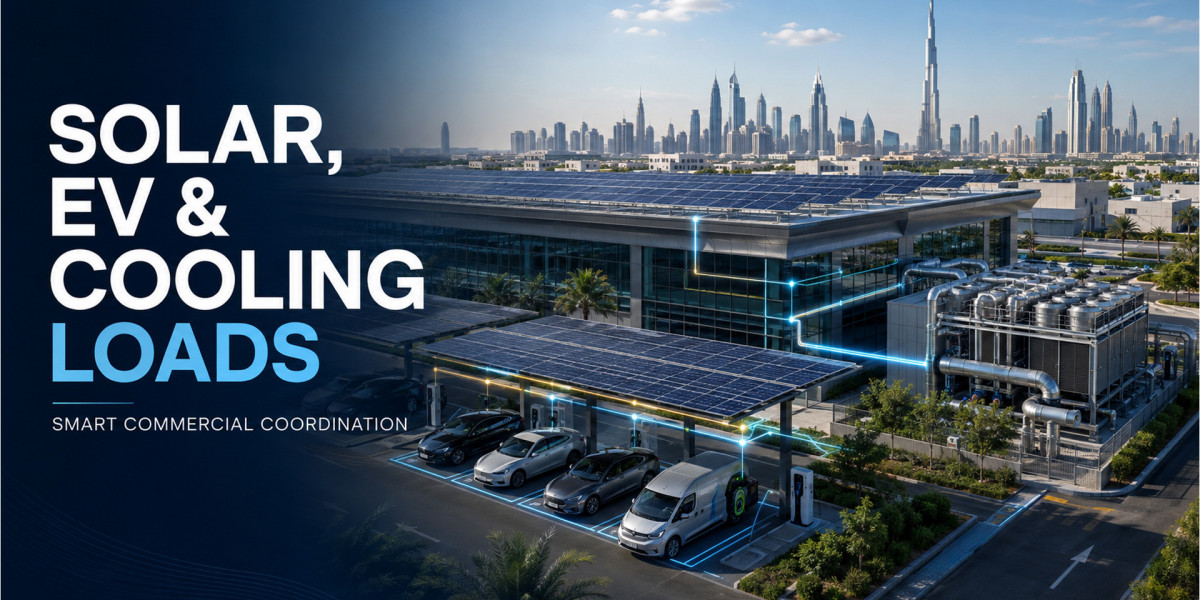

Commercial buildings are adding new electrical demands while also looking for ways to control energy use.
EV chargers are appearing in car parks. Solar panels are being installed on roofs and shade structures. Chillers continue to serve as major cooling assets in hotels, offices, warehouses, retail properties and industrial facilities.
These systems are often purchased through separate projects. The solar contractor focuses on generation, the EV charging supplier focuses on vehicles, and the cooling team focuses on temperature control.
The property then discovers that all three systems depend on the same electrical infrastructure.
A stronger approach is to plan solar generation, EV charging and cooling loads together.
Why Separate Planning Creates Problems
A commercial building has a limited electrical supply.
When projects are developed independently, each design team may assume that spare capacity is available. The combined demand may not become clear until equipment has already been selected.
This can result in:
- Unexpected transformer limitations
- Switchboard upgrades
- Higher peak demand
- Restricted charger output
- Solar energy being poorly matched to building demand
- Difficulty adding future equipment
- Conflicting control systems
- Unplanned operational costs
Integrated energy planning creates one view of how the building produces, consumes and manages electricity.
Understand the Building’s Load Profile
The first step is to understand when and how the property uses energy.
A load profile should examine:
- Base electrical demand
- Cooling demand
- Daily peak periods
- Weekday and weekend patterns
- Seasonal changes
- Occupancy
- Industrial or process loads
- Existing backup systems
- Future tenant or operational growth
Chillers may create a significant daytime load during warm periods. Office EV charging may also occur during the day, while fleet charging may rise in the evening when vehicles return.
Solar generation follows another profile, generally increasing after sunrise, reaching its strongest period around the middle of the day and declining toward evening.
The project should compare these patterns rather than evaluating annual energy totals alone.
Solar Energy Is Most Valuable When the Site Can Use It
A commercial solar system produces the greatest practical value when the property can use a meaningful portion of the electricity while it is being generated.
Suitable daytime loads may include:
- Chillers
- Ventilation
- Lighting
- Pumps
- Office equipment
- Industrial machinery
- Water treatment
- Employee EV charging
- Cold storage
- Hotel operations
A warehouse with a large roof but low daytime consumption may have a different solar opportunity from a hotel with continuous cooling and operational demand.
System sizing should therefore consider usable generation, not just the maximum number of panels that can fit on the roof.
RBC Engineering’s service structure brings together solar systems, EV charging, chillers, water systems and industrial equipment, making coordinated facility planning a relevant alternative to treating each upgrade as an isolated purchase.
Cooling Demand Can Align With Solar Production
Cooling loads often increase during hot, sunny periods, which may create useful alignment between solar generation and chiller demand.
This does not mean solar panels will automatically power the entire cooling system. The actual contribution depends on:
- Solar-system capacity
- Chiller efficiency
- Building heat load
- Operating hours
- Weather
- Other electrical demand
- Available roof or carport area
The important point is that daytime solar generation may offset part of an existing cooling load before additional energy is allocated to EV charging or other uses.
A facility should therefore understand its cooling demand before deciding how much solar capacity is available for new loads.
Chiller Efficiency Changes the Energy Plan
An inefficient cooling system can consume electricity that might otherwise support other building needs.
Energy planning should examine:
- Chiller age
- Operating condition
- Part-load performance
- Controls
- Pumps
- Cooling towers or heat rejection
- Maintenance history
- Temperature settings
- Building operating schedule
Improving cooling-system performance can sometimes release electrical capacity or reduce daytime demand without adding generation.
The objective is not to replace every older unit immediately. It is to understand whether maintenance, control changes, system balancing or equipment replacement would improve the overall facility energy plan.
RBC’s chiller services cover supply, installation and maintenance for commercial and industrial cooling applications, while its newer guides discuss energy-efficient chiller planning for UAE facilities.
EV Charging Should Follow Parking Behaviour
The power required for EV charging depends on more than the number of charging bays.
The facility should assess:
- Number of vehicles
- Vehicle types
- Daily energy requirements
- Arrival and departure times
- Parking duration
- AC or DC charging needs
- Simultaneous charging
- Future EV adoption
An office where vehicles remain parked for eight hours may be able to use managed AC charging during solar-generation periods.
A logistics facility may have vehicles on the road during the day and returning in the evening. In that case, direct solar contribution to charging may be lower unless the property uses battery storage or adjusts vehicle schedules.
The charging plan must follow real vehicle behaviour.
Smart Charging Can Respond to Building Demand
A managed charging system can reduce or increase charger output according to the property’s electrical conditions.
For example, the system may:
- Increase workplace charging when solar generation is strong
- Reduce charging when chiller demand rises
- Delay non-urgent sessions
- Prioritise fleet vehicles with early departures
- Maintain a maximum site-demand limit
- Distribute available power across several chargers
This makes charging more responsive to the building.
It does not remove the need for adequate electrical capacity, but it can prevent all chargers from operating at maximum output during the property’s busiest period.
Do Not Allocate the Same Solar Energy Twice
Energy plans sometimes assume that the same solar production will reduce the building’s electricity bill, power the cooling system and charge the vehicle fleet.
Solar electricity can support all these loads, but the total contribution cannot exceed the energy produced at that moment.
The design should establish a priority or control strategy.
For example:
- Solar generation first serves active building loads.
- Available surplus supports vehicle charging.
- Remaining surplus charges a battery or is exported where permitted.
- The grid supplies any remaining demand.
Another project may prioritise fleet charging during specific periods.
The correct sequence depends on the commercial objective.
Solar Carports Can Combine Generation and Charging Space
Parking structures can provide useful locations for both solar panels and EV charging equipment.
Potential benefits include:
- Electricity generation
- Vehicle shading
- Defined charger locations
- Use of existing parking space
- Visible sustainability investment
The design must still consider:
- Structural loads
- Wind conditions
- Drainage
- Cable routes
- Charger positioning
- Vehicle clearance
- Lighting
- Maintenance access
- Impact protection
- Future expansion
Solar and charging layouts should be designed together to avoid unsuitable cable paths or blocked service access.
Battery Storage Needs a Defined Role
Battery storage may improve an integrated energy system, but it should have a clear purpose.
Possible objectives include:
- Storing excess solar generation
- Reducing short demand peaks
- Supporting evening vehicle charging
- Managing limited grid capacity
- Providing controlled backup for selected loads
These objectives require different battery sizes and control strategies.
A battery intended to reduce a brief charging peak may be very different from a system expected to operate a large cooling load during an outage.
The project should define what the battery must do before selecting capacity.
Use One Energy-Management View
Facilities may operate separate platforms for solar monitoring, EV charging and building controls.
Where practical, the property should create a combined view of:
- Solar generation
- Grid import
- Building demand
- Chiller demand
- EV charging
- Battery status
- Peak demand
- Equipment alarms
The systems do not always need to come from one manufacturer. They do need a clear control and reporting strategy.
Facility teams should know which platform controls each function, who receives alarms and how the systems respond when communications fail.
Expansion Should Be Included From the Start
Commercial properties rarely install every future EV charger or solar panel in one phase.
The first project should consider:
- Future charger quantities
- Additional solar capacity
- Chiller replacement
- Spare electrical-panel capacity
- Cable routes
- Metering
- Communication networks
- Battery integration
- Building expansion
A phased approach can control initial investment while preserving a practical path for growth.
The property should avoid using all available distribution space or cable capacity in the first phase without considering future demand.
A Practical Integrated Planning Process
A commercial facility can coordinate these systems through a structured process.
Step 1: Collect Existing Energy Data
Review utility bills, interval data, equipment schedules and seasonal demand.
Step 2: Identify Major Loads
Separate cooling, process, lighting, EV charging and other significant consumers.
Step 3: Assess Equipment Condition
Determine whether maintenance or efficiency improvements could reduce demand.
Step 4: Review Solar Potential
Examine roof, carport and ground space along with structural and electrical conditions.
Step 5: Model EV Charging
Calculate vehicle energy demand and charging windows.
Step 6: Test Operating Scenarios
Compare normal days, peak cooling days, fleet peaks and reduced solar production.
Step 7: Define Controls
Set priorities for charging, solar use, battery operation and maximum demand.
Step 8: Plan Expansion
Reserve suitable power, space, communications and cable routes.
Information a Facility Should Prepare
Before requesting an integrated proposal, the owner should collect:
- Project location
- Building type
- Utility consumption data
- Maximum demand
- Transformer information
- Chiller details
- Cooling operating schedule
- Available roof and parking area
- Existing solar equipment
- Number and type of vehicles
- Charging schedules
- Future expansion plans
- Required monitoring and reporting
- Maintenance expectations
This allows the project team to evaluate how the systems interact instead of quoting each component separately.
Better Coordination Produces Better Infrastructure
Solar power, EV charging and chillers are different technologies, but they share one important resource: the property’s electrical system.
Planning them together can help a facility avoid duplicated assumptions, manage peak demand and create a clearer route for expansion.
The goal is not to force every building into one standard energy model. It is to understand when the building needs power, when solar energy is available, how cooling affects demand and when vehicles must be ready.
A coordinated plan turns separate equipment purchases into a more useful facility strategy.