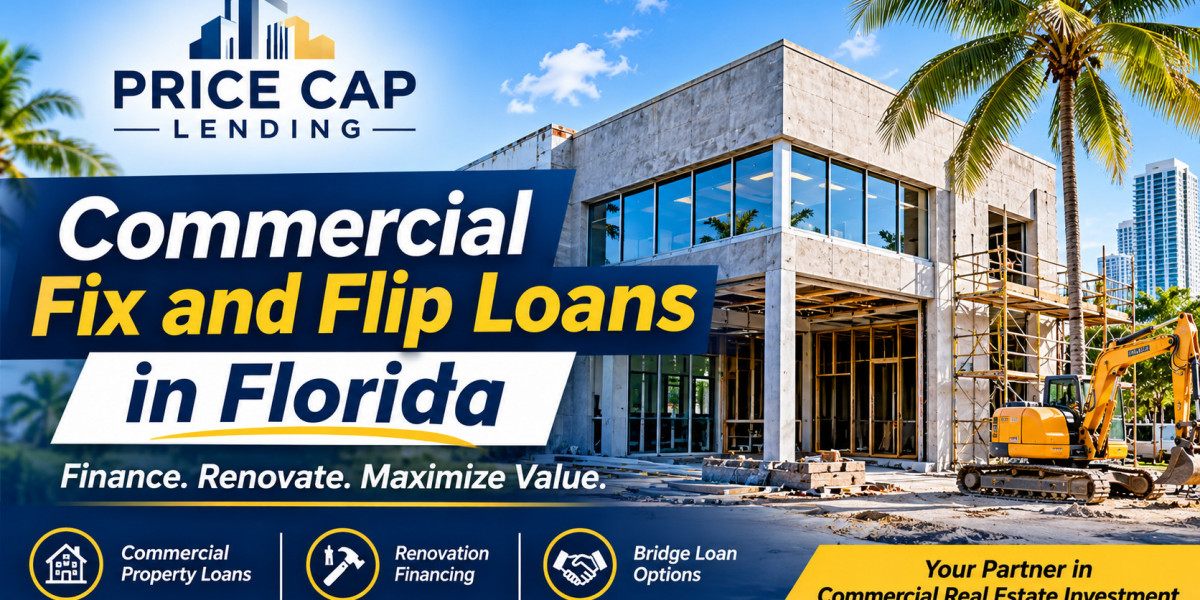

Commercial Fix and Flip Loans in Florida: Financing Property Investment Projects
Commercial real estate investors often look for opportunities to purchase properties, improve their condition, and increase their market value. However, acquiring and renovating a commercial property requires careful planning, sufficient capital, and an appropriate financing strategy.
Commercial fix and flip loans in Florida are a financing topic worth understanding for investors considering commercial property acquisition and renovation projects. Depending on the property, transaction structure, and lender requirements, short-term commercial financing may help eligible investors pursue these opportunities.
Price Cap Lending helps clients explore business-purpose commercial real estate financing options, including potential bridge financing solutions for eligible properties and transactions.
What Are Commercial Fix and Flip Loans?
Commercial fix and flip loans are generally short-term financing arrangements associated with purchasing, improving, and eventually selling commercial real estate.
Unlike traditional long-term commercial mortgages, this type of financing is commonly considered for investment projects where the borrower plans to improve a property's condition or functionality before selling or refinancing it.
A commercial property renovation project may involve:
Purchasing an undervalued commercial property
Renovating an existing industrial building
Improving a warehouse or distribution facility
Updating an eligible business-purpose property
Increasing a property's potential marketability
Preparing a commercial asset for resale or refinancing
The financing structure depends on the property, renovation scope, borrower qualifications, and lender guidelines.
How Commercial Fix and Flip Financing Works in Florida
Commercial fix and flip financing generally involves several stages. Investors should understand each stage before committing to a property acquisition or renovation project.
1. Identify a Commercial Investment Property
The first step is finding a property with potential for improvement. Investors may consider industrial buildings, warehouses, flex properties, and other eligible commercial real estate assets.
Property location, current condition, occupancy, comparable sales, and potential demand are important considerations.
2. Evaluate Acquisition and Renovation Costs
Before purchasing a property, investors should estimate the total project cost.
This may include:
Commercial property purchase price
Inspection and due diligence expenses
Construction and renovation costs
Permits and professional fees
Insurance, taxes, and carrying expenses
Contingency reserves
A realistic budget helps investors evaluate whether a project makes financial sense.
3. Review Potential Financing Options
Commercial real estate investors may explore different financing structures depending on their objectives.
Commercial bridge loans Florida investors consider may provide short-term financing for eligible acquisition or refinancing transactions. However, renovation costs, construction draws, and other funding requirements must be confirmed with the applicable lender.
4. Complete the Renovation Plan
A detailed renovation plan helps establish the work required to improve the property.
Investors should identify necessary repairs, expected project costs, contractor requirements, and the anticipated completion schedule.
5. Establish an Exit Strategy
Before beginning a fix-and-flip project, investors should identify how they intend to exit the investment.
Common strategies may include selling the improved property, refinancing into longer-term financing, or retaining the asset as an income-producing commercial property.
The exit strategy should account for market conditions, project costs, financing expenses, and potential delays.
Commercial Property Renovation Loans: What Investors Should Know
Commercial property renovation loans may be relevant when an investment property requires improvements before it can meet the investor's objectives.
However, not every commercial loan includes renovation funding. Some financing arrangements may cover property acquisition or refinancing only, while others may have separate requirements for construction or improvement expenses.
Before selecting a financing structure, investors should confirm:
Whether renovation expenses are eligible
Whether funds are released upfront or through draws
Whether contractor estimates are required
Whether inspections are part of the funding process
Whether permits and approvals are necessary
What conditions apply to additional funding
Understanding these details can help avoid unexpected financing gaps during a project.
Types of Commercial Properties Investors May Consider
Florida offers different commercial real estate investment opportunities. The suitability of a property depends on its location, condition, market demand, and intended use.
Industrial Properties and Warehouses
Industrial buildings and warehouses may attract investors looking to improve functional space, update facilities, or reposition properties for future use.
Potential improvements may include roof repairs, electrical upgrades, loading-area improvements, interior modifications, and other property-specific work.
Flex Commercial Properties
Flex properties combine different commercial uses and may require improvements to office areas, warehouse sections, utilities, or building systems.
Investors should evaluate the property's layout and potential demand before purchasing.
Business-Owned Commercial Buildings
Some commercial properties are acquired or renovated for business operations rather than immediate resale.
In these situations, business-purpose real estate financing may be considered based on the property's use and the transaction structure.
Understanding ARV in Commercial Fix and Flip Projects
After Repair Value, commonly known as ARV, refers to the estimated value of a property after planned improvements have been completed.
ARV is an important concept in commercial property investment financing because it helps investors evaluate a property's potential after renovation.
Investors may consider:
Comparable commercial property sales
Location and surrounding market conditions
Property size and functionality
Current property condition
Planned improvements
Potential buyer or tenant demand
ARV is an estimate, not a guaranteed selling price. Actual market value and resale proceeds may differ depending on market conditions and the completed renovation.
Commercial Bridge Loans Florida Investors May Explore
Commercial bridge loans are short-term financing solutions that may help investors address temporary funding needs associated with eligible commercial real estate transactions.
For example, an investor may need financing to acquire a property while preparing for a future sale or longer-term refinancing.
Commercial real estate bridge financing may be worth exploring when:
A property acquisition requires short-term financing
An investor is refinancing an existing commercial property
A transaction involves a time-sensitive purchase
A property needs improvements before a planned exit
Long-term financing is not immediately suitable
Not all bridge loans include renovation funding. Investors should review the lender's specific loan structure, eligible uses of funds, repayment requirements, and underwriting criteria.
Important Factors Lenders May Review
When evaluating commercial fix and flip financing in Florida, lenders may consider several factors related to the borrower, property, and proposed project.
Property value: Current market value, comparable sales, and potential value after improvements.
Property condition: Existing repairs, structural concerns, and the overall scope of work.
Borrower experience: Relevant commercial real estate investment or renovation experience.
Project budget: Acquisition expenses, renovation estimates, reserves, and other costs.
Exit strategy: The proposed method of repayment, such as selling or refinancing the property.
Location: Market demand, property accessibility, and the characteristics of the surrounding area.
The importance of each factor varies by lender and financing program.
Commercial Fix and Flip Financing Opportunities in Florida
Florida's commercial real estate market includes industrial properties, warehouses, flex buildings, and other business-purpose assets that investors may evaluate for acquisition or improvement.
Investors researching Florida commercial property financing should compare opportunities based on property fundamentals rather than relying only on projected resale value.
A successful project requires a clear understanding of acquisition costs, renovation requirements, financing expenses, market demand, and the intended exit strategy.
Whether considering a commercial property in South Florida or another Florida market, investors should review the complete transaction before proceeding.
Discuss Commercial Real Estate Financing With Price Cap Lending
Price Cap Lending focuses on business-purpose commercial real estate financing opportunities, including eligible commercial property acquisition and refinancing requests.
If you are evaluating a commercial investment property in Florida, you can discuss your transaction, property details, and financing objectives with our team.
Potential financing options depend on the property, borrower qualifications, transaction structure, and applicable lender guidelines.
Explore our commercial real estate loan programs or learn more about South Florida bridge loans to understand the financing options that may be relevant to your project.
Frequently Asked Questions
What are commercial fix and flip loans in Florida?
Commercial fix and flip loans are generally short-term financing arrangements associated with acquiring and improving commercial properties before selling or refinancing them. Availability and terms depend on the property, borrower, and lender.
Can I use commercial bridge loans for a fix and flip project?
Commercial bridge loans may be considered for eligible property acquisition or refinancing transactions. Renovation funding is not automatically included, so investors should confirm the permitted use of funds with the lender.
What types of commercial properties may qualify?
Depending on the lending program, eligible properties may include industrial buildings, warehouses, flex commercial properties, and other business-purpose commercial real estate.
What is ARV in commercial real estate investing?
ARV stands for After Repair Value. It is an estimate of a property's potential market value after planned improvements are completed. It is not a guaranteed selling price.
What should I prepare before requesting commercial property financing?
Investors should be prepared to provide property details, purchase price or current value, renovation estimates if applicable, existing debt information, borrower details, and a proposed exit strategy.
Does Price Cap Lending guarantee commercial fix and flip loan approval?
No. Financing approval is not guaranteed. Any potential financing is subject to property eligibility, borrower qualifications, lender underwriting, due diligence, and applicable terms.
Explore Your Commercial Real Estate Financing Options
Planning a commercial property acquisition or renovation project requires a financing strategy that reflects your investment goals and the property's characteristics.
Contact Price Cap Lending to discuss your business-purpose commercial real estate financing needs and explore potential options for your Florida investment property.
Financing Disclaimer: Information in this article is provided for general educational purposes and does not constitute a commitment to lend or an offer of financing. Loan availability, terms, eligible property types, and permitted uses of funds vary by lender and transaction. All financing is subject to underwriting, due diligence, and applicable approval requirements.