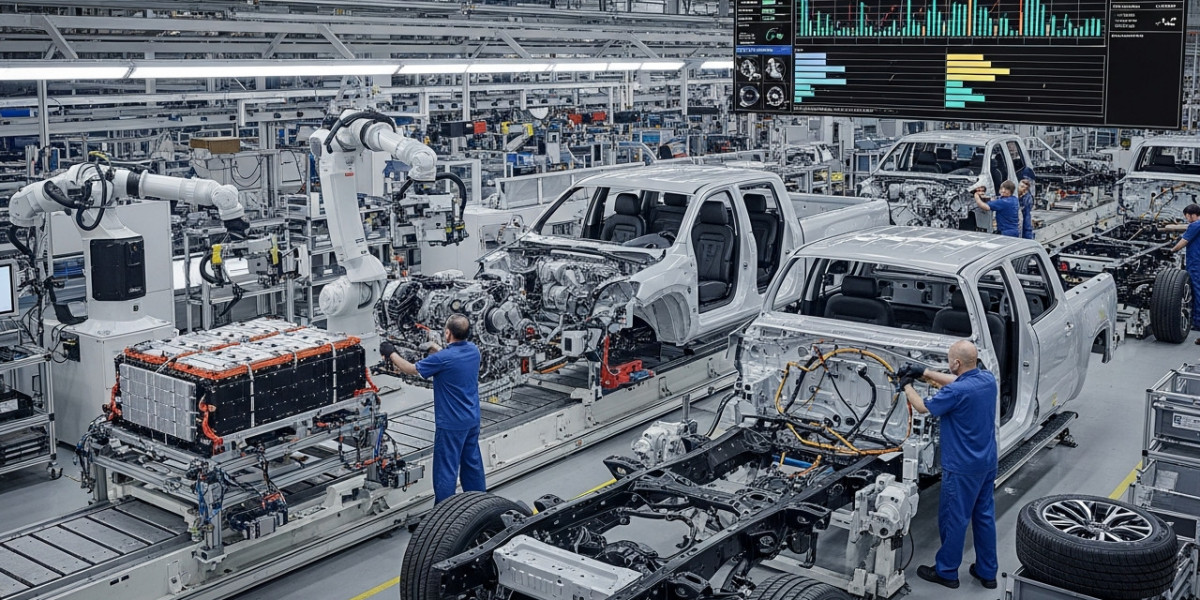

Choosing the right production method is one of the most important decisions in product development. Every component, material, and manufacturing requirement can influence production costs, product quality, delivery schedules, and long-term performance. Effective manufacturing process selection helps businesses identify production methods that match their technical requirements while making the best use of available resources. manufacturing process selection provides a useful starting point for exploring manufacturing approaches, understanding production considerations, and evaluating the options available for turning product designs into finished goods.
Understanding the Importance of Manufacturing Process Selection
Manufacturing involves different techniques, each designed to meet particular production needs. Selecting an unsuitable process can increase expenses, create unnecessary production difficulties, and affect the consistency of finished products. For this reason, manufacturers should evaluate their requirements before investing in machinery, tooling, or production services.
The decision should consider the product's intended function, physical dimensions, required accuracy, material properties, and expected production volume. A process that works well for a small prototype may not be economical for thousands of identical products. Similarly, a method suitable for simple components might not provide the flexibility required for complex designs.
A structured evaluation makes it easier to identify practical solutions and avoid expensive changes during later production stages.
1. Evaluate Product Design and Technical Requirements
The first step is understanding the product being manufactured. Review its drawings, dimensions, geometry, functional requirements, and assembly characteristics. These details help determine which production methods can create the desired component accurately.
Design complexity is particularly important. Some processes are better suited to simple shapes, while others can accommodate intricate geometries, internal features, and customized dimensions. Required tolerances should also be considered because different manufacturing methods offer different levels of dimensional accuracy.
Designers should communicate with manufacturing specialists when evaluating difficult features. Small adjustments to a product design can sometimes make production easier without affecting its intended functionality.
2. Consider Material Compatibility
Material selection and manufacturing methods are closely connected. Metals, plastics, ceramics, and composite materials behave differently during production, so not every process is appropriate for every material.
For example, CNC machining can produce accurate metal and plastic components, while injection molding is commonly used for producing plastic products in larger quantities. Sheet metal fabrication is suitable for many metal enclosures and structural components, whereas casting can support the production of complex metal shapes.
Consider the material's strength, flexibility, temperature resistance, surface characteristics, and availability. It is also important to understand how the material responds to cutting, heating, molding, or other manufacturing operations.
3. Compare Available Manufacturing Processes
Several manufacturing methods may be suitable for the same product. Comparing their advantages and limitations helps businesses make informed decisions.
Common options include:
Subtractive manufacturing: Processes such as CNC milling and turning remove material to create precise components.
Additive manufacturing: 3D printing builds objects layer by layer and is useful for prototypes, customized designs, and complex geometries.
Other options include injection molding, forging, casting, extrusion, stamping, and laser cutting. Each method has different tooling requirements, production capabilities, and cost structures.
Manufacturers should compare the processes according to product specifications, production quantities, required finishing, and available equipment.
4. Analyze Production Volume and Manufacturing Costs
Expected production volume can significantly influence the most appropriate manufacturing method. Some processes involve substantial initial tooling or setup expenses but become more economical when producing large quantities.
Other methods require less initial investment and are better suited to prototypes or smaller production runs. CNC machining and 3D printing, for example, can offer flexibility when producing limited quantities, while injection molding may become attractive for high-volume plastic production.
Cost analysis should include more than the price of producing an individual component. Consider tooling, labor, materials, machine operation, inspection, finishing, packaging, and transportation.
A complete cost comparison provides a clearer understanding of the financial implications of each option.
5. Consider Production Speed and Scalability
Production schedules are another important consideration. Businesses should evaluate how long each manufacturing process takes, including preparation, setup, processing, finishing, and inspection.
A process that produces components quickly may be beneficial when delivery deadlines are demanding. However, production speed should not come at the expense of product quality.
Scalability also deserves attention. If demand increases, the selected manufacturing method should be capable of supporting higher output without creating unnecessary operational difficulties. Discuss future production requirements with suppliers before making long-term commitments.
6. Evaluate Quality and Sustainability
Product quality must remain a priority throughout the selection process. Different manufacturing methods produce different levels of accuracy, surface finish, and consistency. Establish clear inspection requirements and determine how each supplier manages quality control.
Environmental considerations can also influence the decision. Evaluate material waste, energy consumption, recyclability, and the environmental impact of production activities. Choosing efficient processes and appropriate materials can support more responsible manufacturing operations.
Conclusion
Successful manufacturing depends on choosing production methods that match product requirements, material characteristics, budget, and expected demand. A careful evaluation of design complexity, manufacturing costs, production speed, quality, and scalability helps businesses make informed decisions. A structured approach to manufacturing process selection can reduce production challenges, improve resource utilization, and support consistent product development. By comparing available technologies and consulting experienced manufacturing professionals, businesses can establish efficient production strategies that meet present requirements while allowing room for future growth.